

On a workbench in a Denpasar workshop, a row of surfboard fins sits neatly arranged, each no larger than a hand, waiting to be fitted onto a freshly finished board. Most visitors experience Bali’s surf culture at the water’s edge, watching surfers take on the waves at places like Canggu, Uluwatu, and Padang Padang. Far fewer realise that many of the boards and components that guide those rides are manufactured just a few kilometres inland.
Over the past few decades, Bali has developed into one of Southeast Asia’s most recognised surfboard-making hubs, with local shapers, craftsmen, and suppliers supporting both homegrown surfers and international riders. From foam blanks to the small pieces of equipment that influence performance, every part plays a role in creating a surfboard.
Among these components, surfboard fins may be small, but their impact is significant. They control how a board turns, holds speed, and responds to different waves. To understand where these essential pieces come from, it helps to follow the journey of a surfboard from the very beginning.
It Starts With a Blank
Every surfboard begins as a blank, a lightweight foam core that provides the foundation for the board’s final shape. Most modern surfboards use either polyurethane (PU) or expanded polystyrene (EPS) foam, with each material offering distinct characteristics in weight, flexibility, and buoyancy.
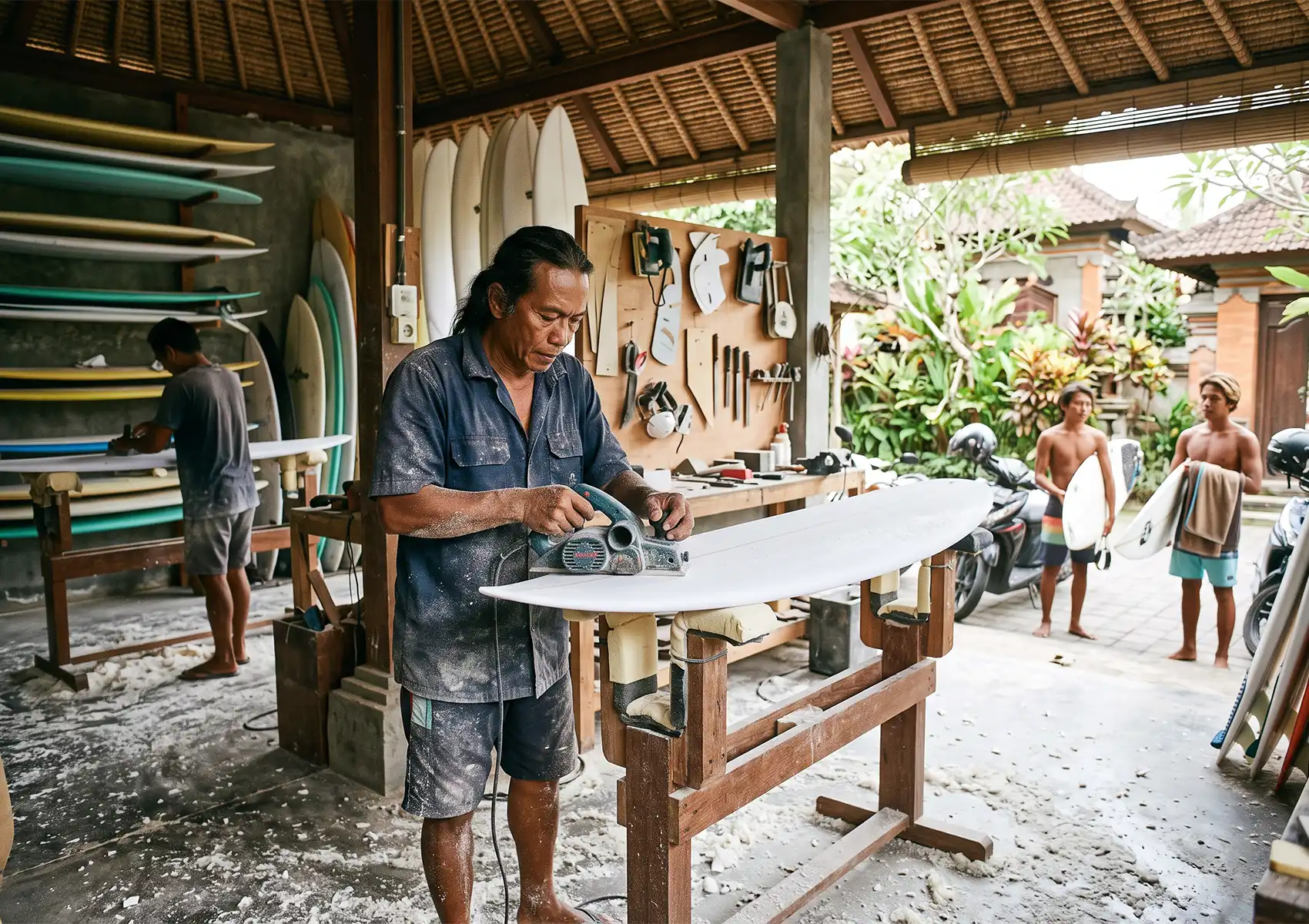
The shaping process is a careful balance between precision and experience. A shaper gradually removes foam, transforming a simple block into a functional surfboard with carefully designed curves, rails, and contours. The bottom of the board may include features such as concaves or channels, which influence how water flows beneath it and how the board performs on a wave.
While the finished board may look simple, every curve and adjustment has a purpose.
Glassing Gives It Strength
A shaped blank is still fragile. Glassing is the stage that turns it into something that can survive a reef. Layers of fibreglass cloth are laid over the foam and soaked in resin, usually epoxy or polyester, then left to cure. Glass weight matters here. A lighter cloth makes a livelier, more responsive board, while heavier cloth adds durability for beach breaks and daily use. This is the least glamorous part of the process and the one where small mistakes, an air bubble or an uneven coat show up later as a weak spot.
Surfboard Fins Decide How It Feels
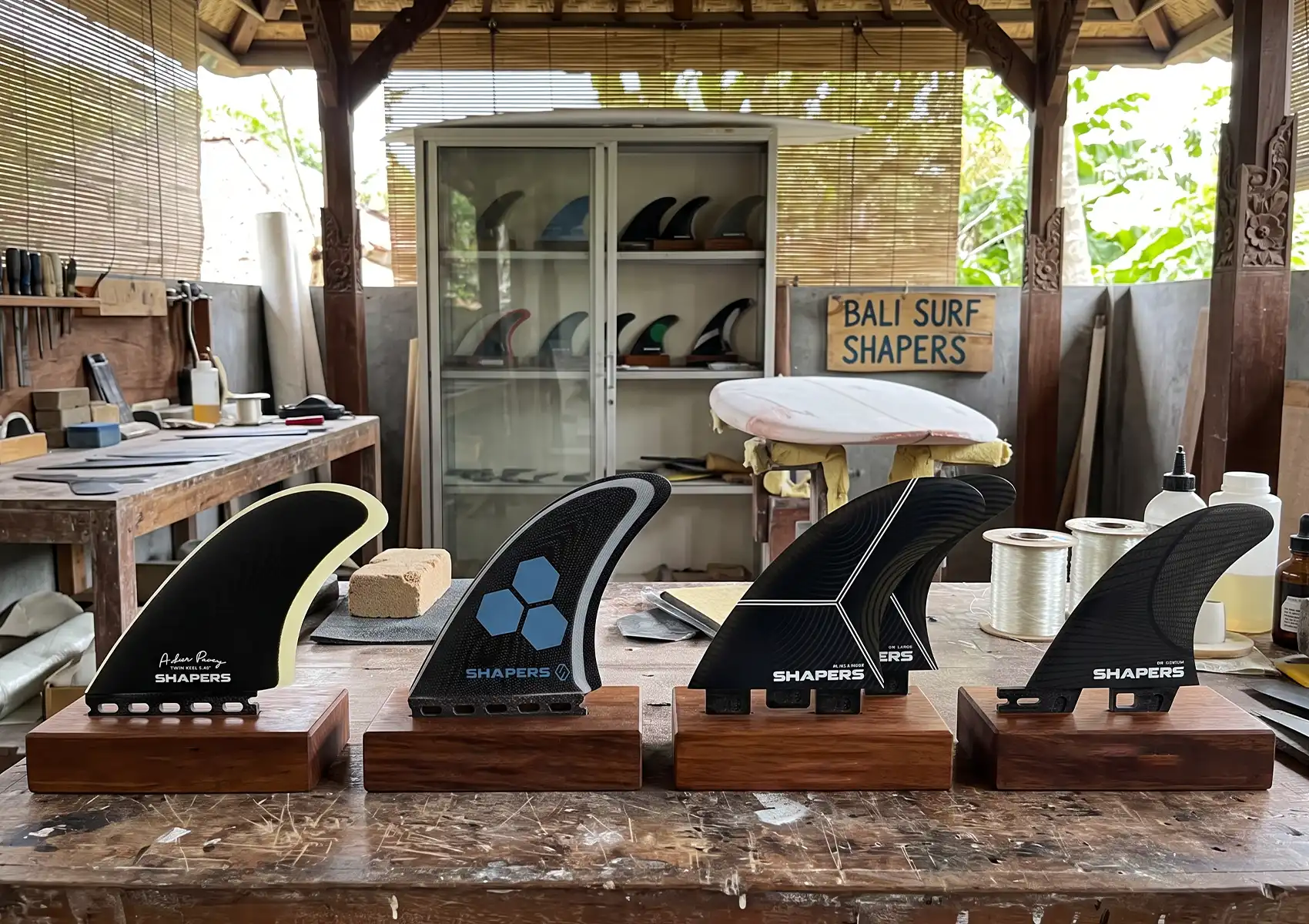
The final decision is often the one riders notice most: the surfboard fins. Fins are what let a board turn, hold in the pocket, and stay stable at speed. A single fin feels smooth and drawn out, a twin setup feels loose and fast, a thruster gives control, and a quad can feel quick down the line. Two systems dominate, FCS and Futures, and the box moulded into the board decides which fins will fit it.
Because so many boards are finished on the island, surfboard fins are something both local shapers and travelling surfers tend to source in Bali rather than carry from home. Shapers Bali, a Denpasar-based supplier of surfboard fins and surf hardware, stocks everything from twin and thruster sets to longboard fins, in the systems most boards are built around. For a visitor who ends up buying or repairing a board mid-trip, knowing this hardware is available locally can save a lot of trouble.
Why This Craft Matters to Travellers
Understanding the process can make choosing a rental board or buying equipment in Bali a more informed experience.
Instead of focusing only on the board’s appearance, surfers can ask about important details such as the foam type, construction method, glassing strength, and fin setup. These factors often make a bigger difference in how a board feels in the water.
The next time you pass through areas such as Canggu, Kerobokan, or Denpasar, look beyond the surf breaks and notice the smaller workshops behind Bali’s famous surf scene. Inside these spaces, craftsmen are shaping boards that will eventually travel to beaches around the island and beyond.
The Craft Behind Every Wave
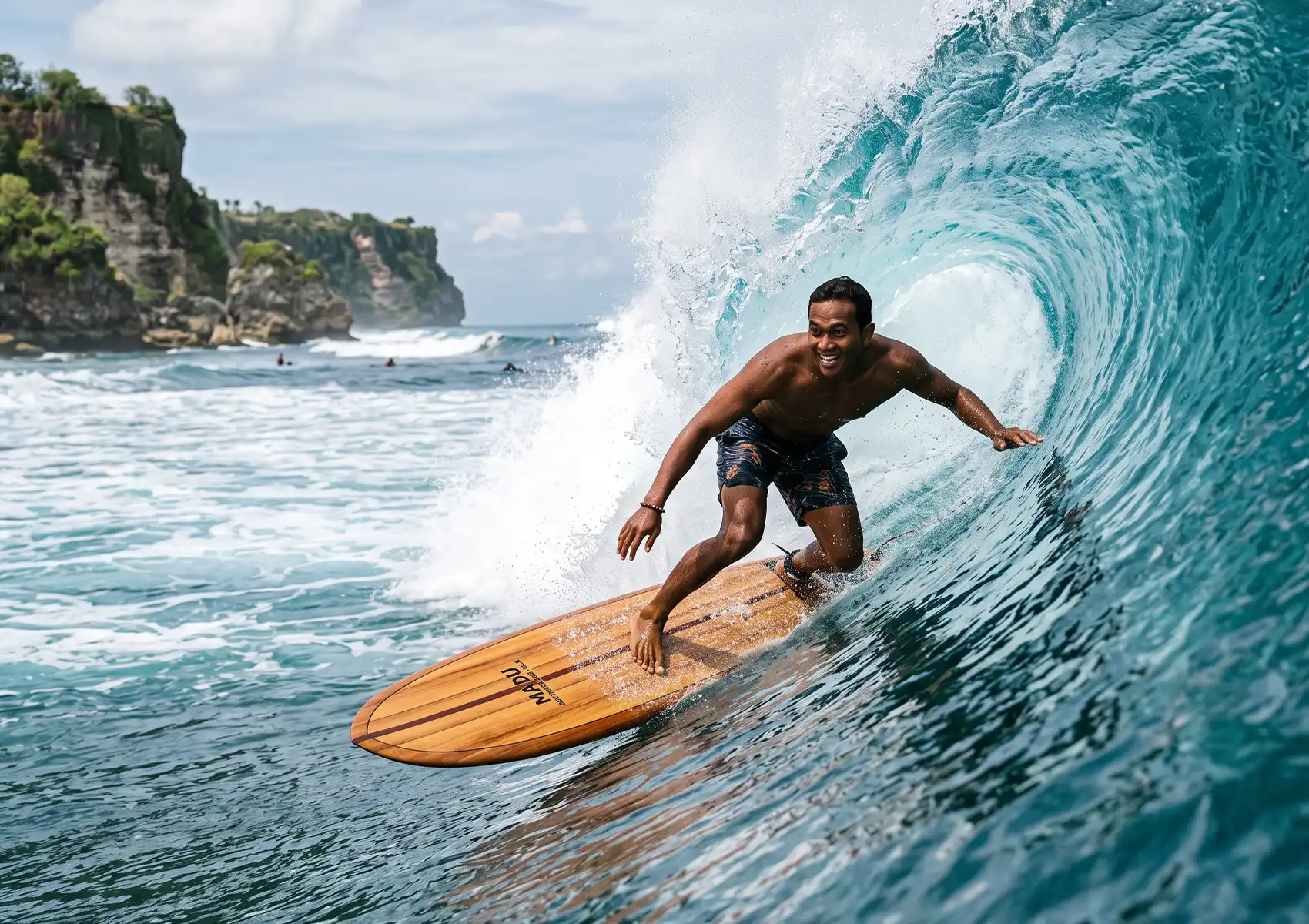
Bali has long been recognised for its craftsmanship, from traditional wood carving and textiles to modern creative industries. Surfboard shaping deserves a place among these traditions, combining technical knowledge, artistic skill, and a deep understanding of the ocean.
The surfboard fins attached at the final stage may seem like a small detail, but they represent the careful decisions made throughout the entire building process. The next time you paddle out at Batu Bolong, Uluwatu, or Padang Padang, remember that the board beneath your feet may have started as a simple block of foam, shaped by hand in a workshop nearby and finished with components designed for the waves ahead.