

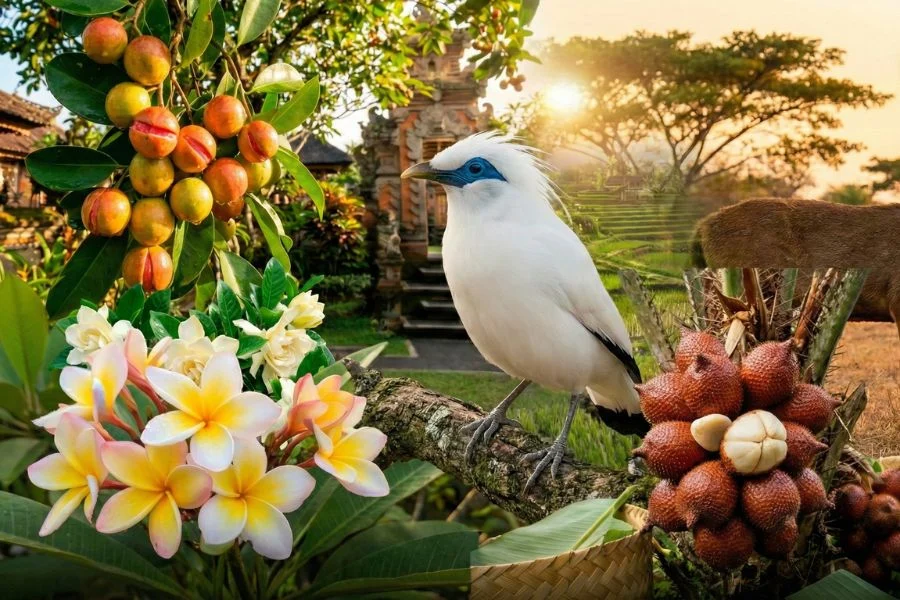
Bali is not only rich in culture and nature, but also has a variety of characteristic flora and fauna that are an important part of the island’s identity. From plants close to daily life to rare, protected animals, all have their own roles and stories.
Below is a complete list of 6 native Balinese flora and 4 most well-known fauna, reflecting the natural wealth as well as the biological heritage that should be preserved and protected.
Flora
Melati Bali (Balinese Jasmine)
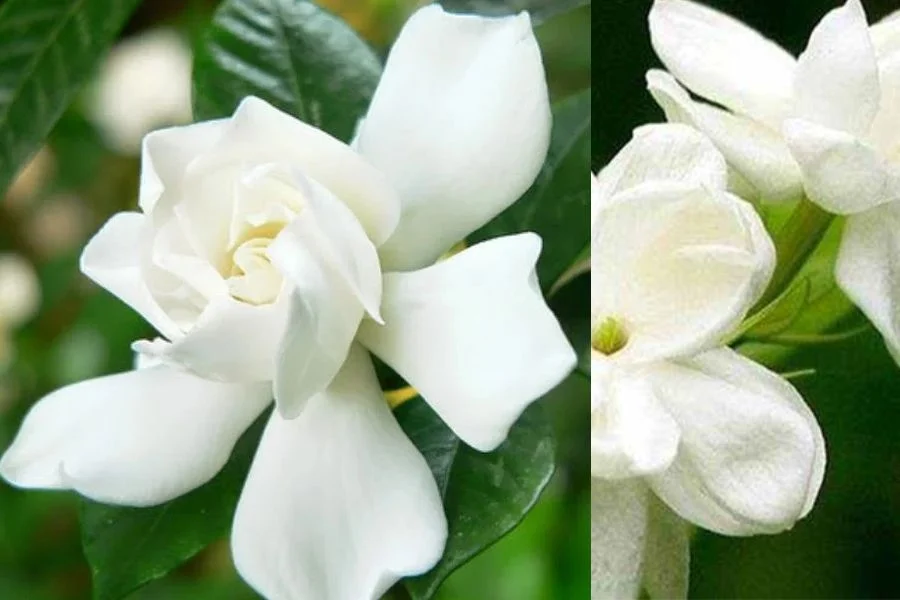
Melati Bali is one of the flowering plants that is quite well-known and often found in Bali. This plant has the scientific name Vallaris glabra and is widely used as an ornamental plant in house yards, temples (pura), hotel gardens, and villa areas. Its main characteristic lies in its small, white flowers with a soft, fragrant aroma, often likened to the scent of pandan leaves. This aroma is usually most noticeable from late afternoon to night, adding a calm and cool impression to the surroundings.
Melati Bali does not only function as a garden ornament but is also part of the typical tropical landscape of the island. This plant is often grown to creep on fences, walls, or pergolas, creating a natural and beautiful impression that blends with the surrounding environment. Its presence often complements the atmosphere of traditional Balinese house yards as well as modern buildings that embrace a tropical concept.
Melati Bali is classified as an easy-to-care-for plant. It grows well in areas with full sunlight and a warm climate like Bali. Watering is sufficient once a day to maintain soil moisture. Routine pruning is also needed so that its growth remains tidy and the plant flowers more diligently. Because of its simple care and attractive appearance, Melati Bali is one of the flora chosen to enrich the beauty and natural character of Bali.
Majegau
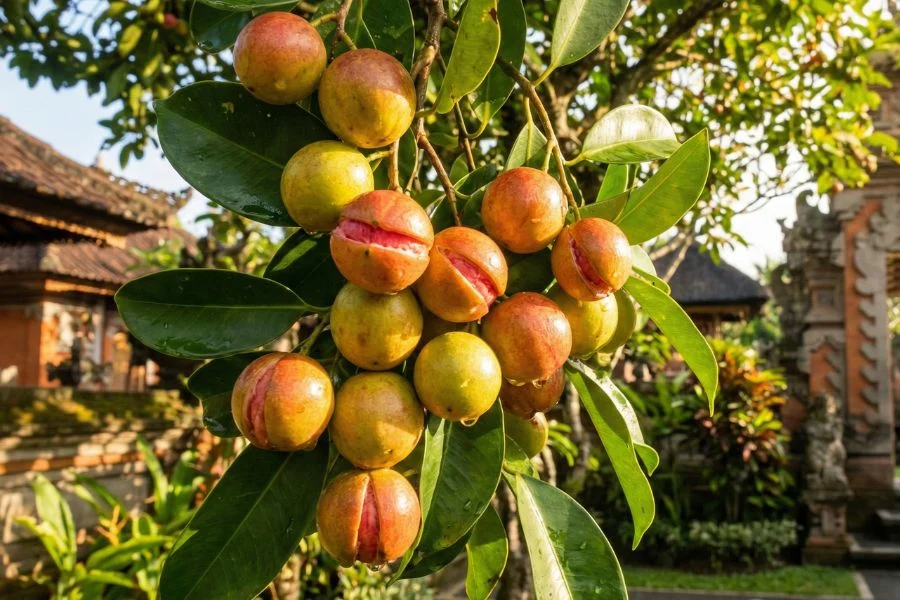
Majegau has the scientific name Dysoxylum densiflorum and is known as the floral mascot of Bali Province. This tree holds a very important position, not only from a natural perspective but also from the cultural and spiritual perspective of the Balinese people. Because of its high value, Majegau is often considered a sacred and respected tree.
Majegau wood is famous for being strong, durable, and having a distinctive aroma, so it is widely used as material for sacred buildings, especially for Temples (Pura) and traditional buildings. Besides that, the wood is also often used for carving crafts because of its smooth and durable texture. Its economic value is also quite high, making Majegau one of the important valuable woods in Bali.
In customary and religious life, Majegau also has a special role. Its trunk is often used in the Manusa Yadnya ceremony, as a symbol of purification and the balance of human life. Because of this philosophical meaning and strong function, Majegau is not just considered an ordinary tree, but rather a part of Bali’s identity and cultural heritage. The existence of Majegau as the floral mascot of Bali Province symbolizes the close connection between nature, culture, and the spiritual life of the people on this island.
Bunga Jempiring (Jempiring Flower)
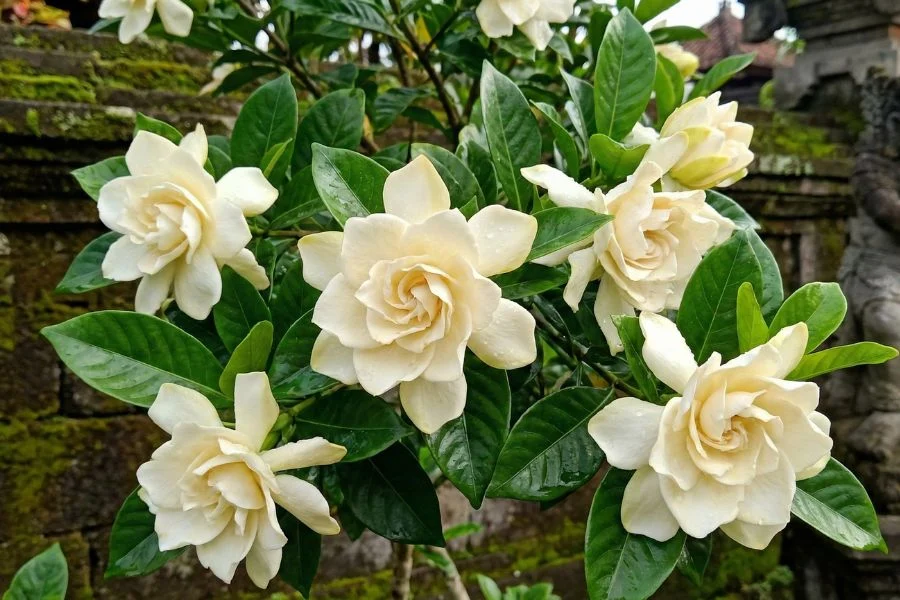
Bunga Jempiring has the scientific name Gardenia jasminoides and is known as the mascot of Denpasar City. This flower is very closely associated with the lives of the Balinese people because of its beauty and distinctive aroma. Its color is pure white with an elegant flower shape, while its leaves are dark green, thick, and shiny, making the plant look tidy and fresh all the time.
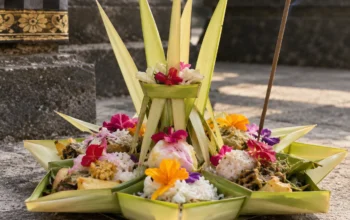
The main characteristic of Jempiring is its very fragrant and soft scent. Its aroma is often associated with sanctity and tranquility, so this flower is widely used in various means of prayer offerings (banten). The presence of Jempiring in customary and religious ceremonies is a symbol of beauty, sincerity, and devotion.
Besides its spiritual function, Bunga Jempiring is also popular as an ornamental plant in house yards, gardens, and Temple areas. This plant is easily recognized and is often planted because it can beautify the environment while providing a soothing natural aroma. As the mascot of Denpasar City, Jempiring reflects the character of the city which is clean, beautiful, and maintains Balinese cultural values in daily life.
Salak Bali (Balinese Salacca)
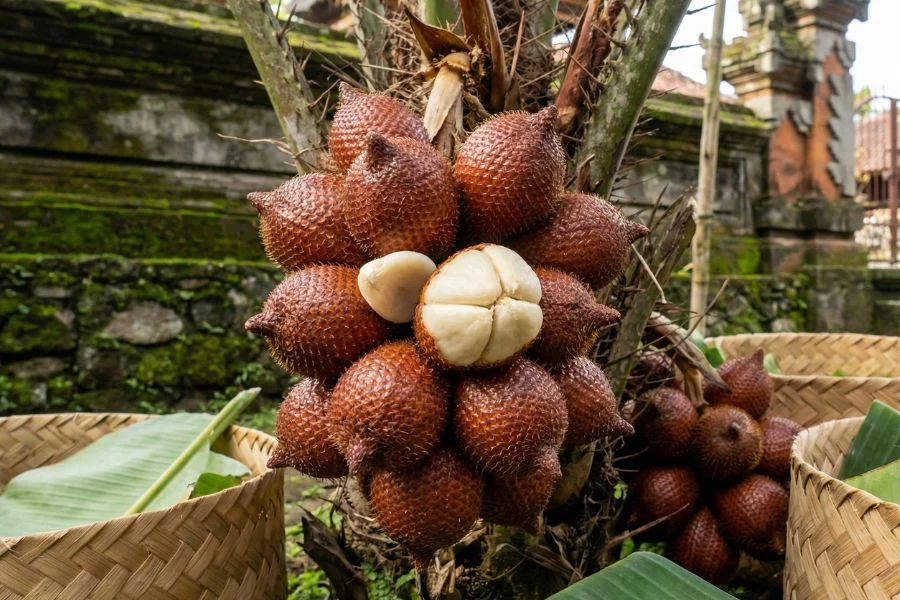
Salak Bali has the scientific name Salacca zalacca var. amboinensis and is one of the characteristic fruits that is very identical to the Island of Bali. This Salak is different from the more commonly known Salak Pondoh. Its main characteristic lies in its thicker flesh, with a distinctive texture that is slightly “masir” or gritty when eaten. Regarding the taste, Salak Bali has a unique combination of sweet and astringent, providing a different and easily recognizable sensation.
This fruit is one of Bali’s superior agricultural products and is widely cultivated by the local community. Salak Bali grows very well in the Sibetan area, Karangasem Regency, which is known as the main center for salak plantations. The soil and climate conditions in this region make the quality of Salak Bali famous for being good and consistent, both in terms of taste and fruit size.
Besides being consumed directly, Salak Bali is also often processed into various products, such as preserves (manisan), dodol (a type of sweet confection), and processed drinks. The existence of Salak Bali not only plays a role as an agricultural commodity but also becomes part of Bali’s culinary identity and floral wealth that continues to be preserved and developed until now.
Kecemcem
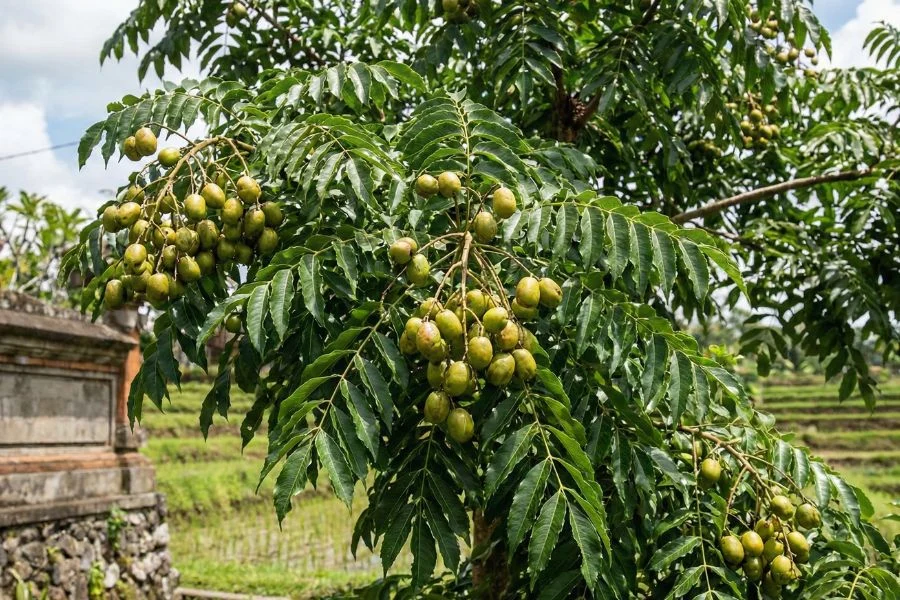
Kecemcem has the scientific name Spondias pinnata and is one of the characteristic plants that is quite well-known in Bali, especially because of its benefits in culinary tradition and herbal medicine. This plant is widely known through its leaves which are the main ingredient for making a traditional Balinese drink called Loloh Cemcem.
Loloh Cemcem has a very characteristic and unique taste. The taste is a mixture of sour, salty, sweet, and slightly spicy, so it feels fresh and different from herbal drinks in general. This drink is usually consumed to refresh the body and is believed to have health benefits, especially to aid digestion and maintain body immunity.
In the context of Balinese flora, Kecemcem is not just a wild or yard plant, but also part of Bali’s culinary cultural heritage that is still preserved today. This plant often grows around people’s homes or gardens, is easy to care for, and has a strong traditional value. The presence of Kecemcem shows how Bali’s nature is utilized naturally and sustainably in the daily lives of its people.
Jeruk Bali (Pomelo / Bali Orange)
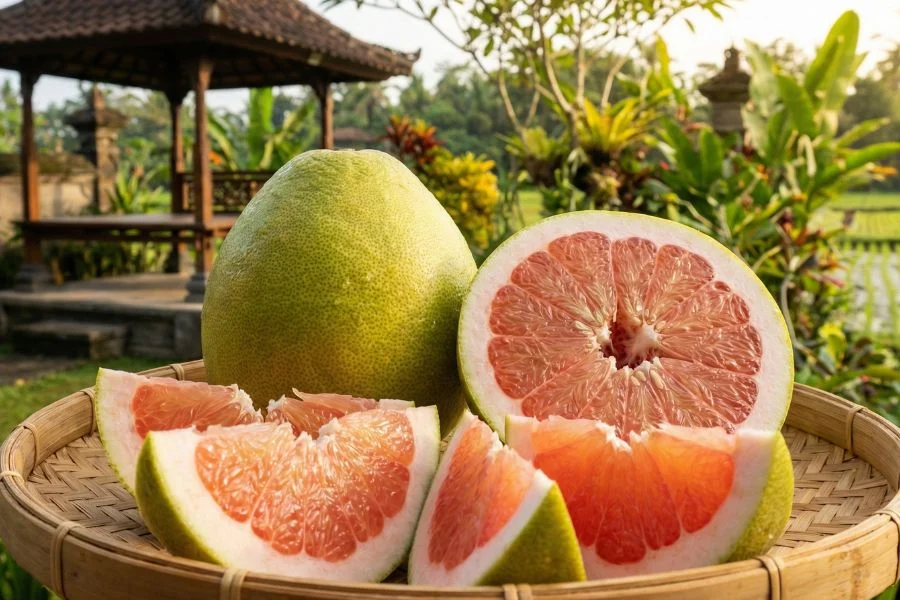
Jeruk Bali has the scientific name Citrus maxima. Although its name is “Jeruk Bali” (Bali Orange) and this fruit is indeed widely found on the Island of Bali, this plant is actually also widespread throughout various regions of Southeast Asia. Nevertheless, Jeruk Bali is very closely associated with Bali’s identity and is often considered one of the characteristic fruits of this region.
The most easily recognizable characteristic of Jeruk Bali is its large size compared to other types of citrus. Its skin is thick, rough-textured, and the inside contains bright-colored pulp with a fresh taste. The combination of sweet and slightly sour taste makes Jeruk Bali suitable for direct consumption or as a mixture in various processed foods and drinks.
In Bali, Jeruk Bali is often grown in gardens or yards and is part of the daily lives of the community. Its existence does not only function as a fruit plant but also complements the richness of Balinese flora which reflects the tropical climate and soil fertility of the island. Because of its striking size and characteristic appearance, Jeruk Bali is a symbol of nature’s abundance and the bountiful harvest in Bali.
Fauna
Jalak Bali (Bali Starling)
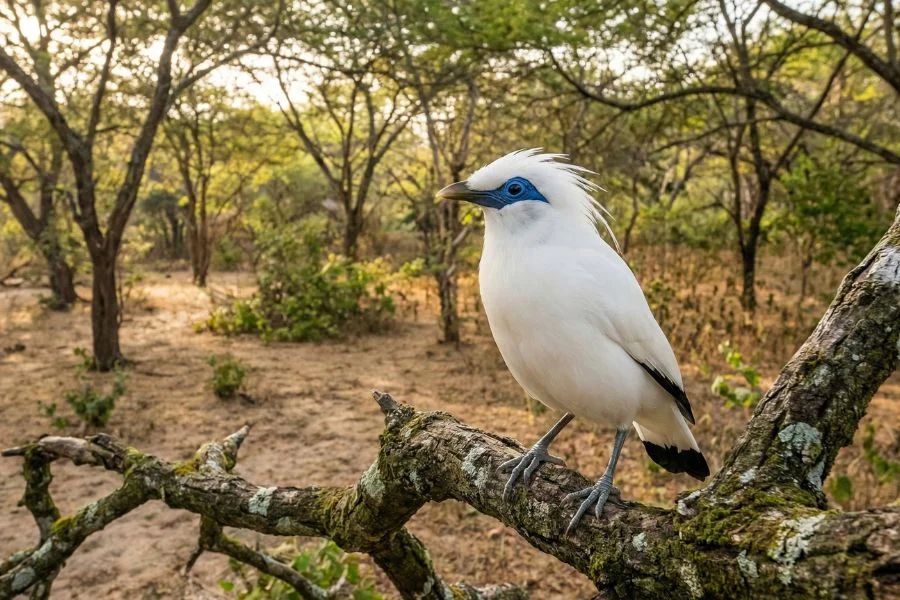
Jalak Bali has the scientific name Leucopsar rothschildi and is designated as the fauna mascot of Bali Province. This bird is classified as very rare and protected, making its existence an important symbol of animal conservation in Bali. The Bali Starling is also known as one of the most iconic birds owned only by this island.
The distinct characteristic of the Bali Starling is clearly seen from its pure white feathers that cover almost its entire body. Black color is only found on the tips of its wings and tail, while the skin around its eyes is a striking bright blue. Its elegant and contrasting appearance makes this bird easily recognizable and very unique compared to other types of birds.
The Bali Starling is an endemic animal that can only be found in the western part of Bali Island, especially in the West Bali National Park area. This area is the natural habitat as well as the conservation center for the Bali Starling, where protection and breeding efforts continue to be carried out so that this species remains sustainable.
Anjing Kintamani (Kintamani Dog)
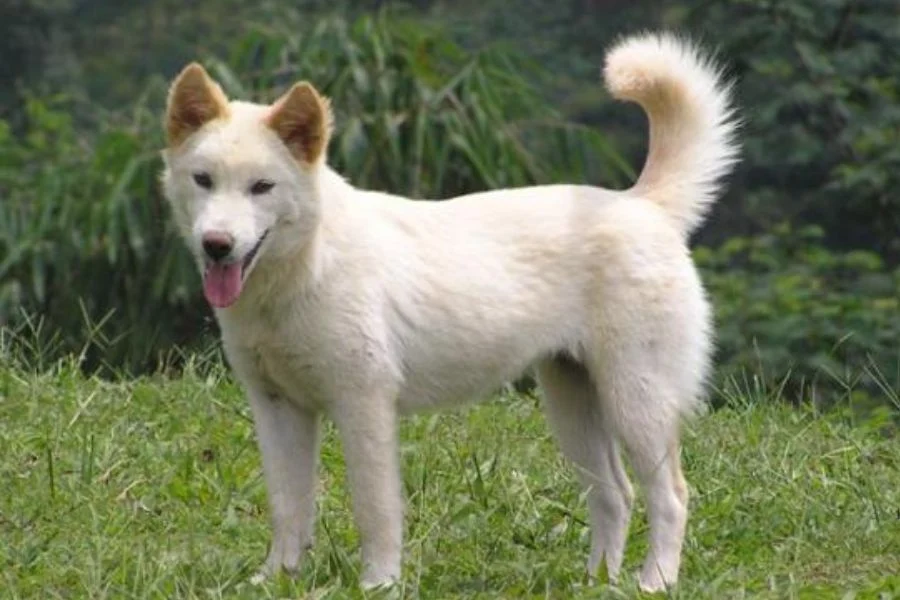
The Kintamani Dog has the scientific name Canis familiaris or Canis lupus familiaris and is known as a native Balinese dog breed that has been internationally recognized. This breed is Bali’s pride because of its uniqueness that formed naturally and has long lived side-by-side with the local community.
The characteristic features of the Kintamani Dog are seen in its upright and proportional posture. Its fur is thick, especially around the neck or nape which resembles a mane, with a tail that curls upwards. Besides its dashing appearance, this dog is also known to have a brave, alert, and very loyal nature to its owner, so it is often used as a guard dog as well as a family pet.
As the name suggests, the Kintamani Dog originates from the Kintamani mountainous area, Bangli Regency. The cool mountainous environment is believed to shape its strong physical and mental character. Until now, the Kintamani Dog is not only part of the life of the Balinese people but also a symbol of local fauna that has been successfully recognized and valued at the world level.
Rusa Timor (Timor Deer)
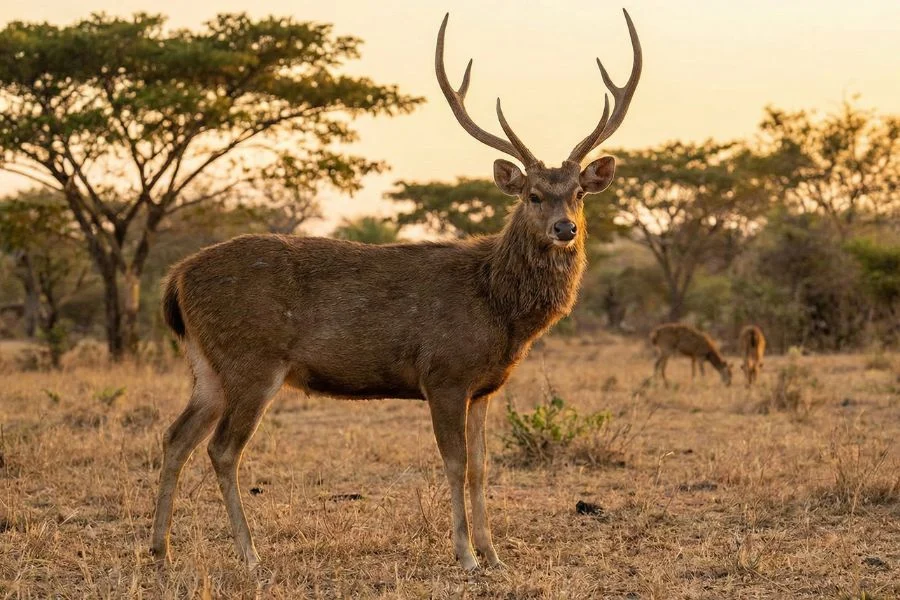
The Timor Deer has the scientific name Rusa timorensis and is included as a protected animal in Indonesia. In Bali, this deer is an important part of the natural ecosystem, especially in conservation areas. Its existence is protected because its population is small and it plays a large role in maintaining environmental balance.
The main habitat of the Timor Deer in Bali is on Menjangan Island, a small island that is still natural and quiet. In fact, the name “Menjangan” itself comes from the presence of these deer, because in Balinese, menjangan means deer. The Timor Deer is often seen roaming freely in the beach areas, grasslands, and forests on the island.
Menjangan Island is part of the West Bali National Park area, which is a protection center for various rare Balinese flora and fauna. The presence of the Timor Deer in this area not only enriches the biodiversity but also becomes a characteristic natural attraction and strengthens Bali’s identity as an island that cares about wildlife preservation.
Harimau Bali (Balinese Tiger)
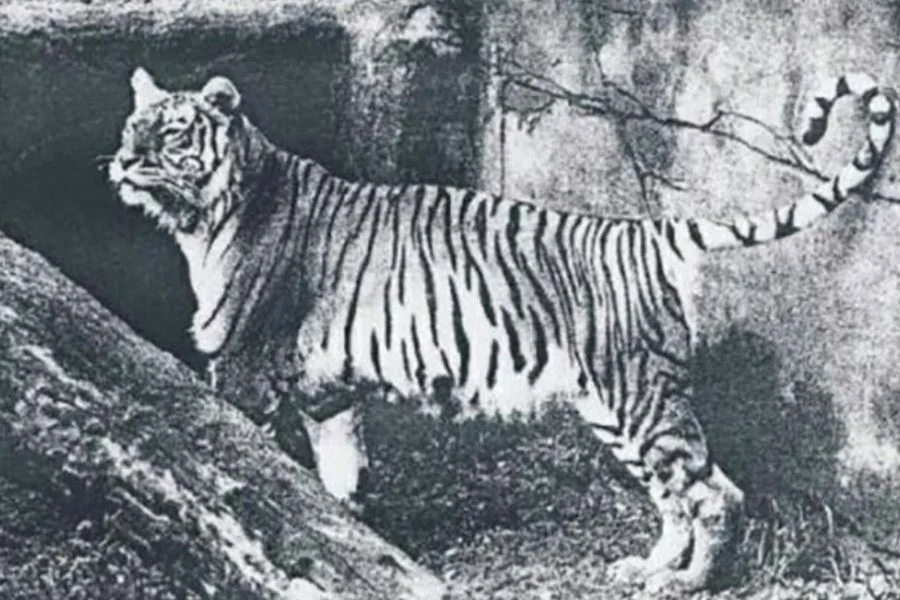
The Balinese Tiger has the scientific name Panthera tigris balica and is one of the animals that once lived on the Island of Bali. Unfortunately, this tiger is now classified as extinct and can no longer be found in the wild. The Balinese Tiger is an important part of Bali’s faunal history and is often referred to as a symbol of Bali’s wild nature in the past.
In terms of size, the Balinese Tiger was known as the smallest tiger subspecies in the world. Although its body was smaller than other tigers, this animal remained an apex predator in its ecosystem at that time. Its existence once played an important role in maintaining the natural balance of Bali.
The Balinese Tiger was declared extinct around the 1930s, mainly due to uncontrolled hunting and the loss of its natural habitat because of human development. Currently, the Balinese Tiger can only be found through historical records, old photographs, and museum collections. Its extinction is an important reminder of the major impact of human activities on wildlife sustainability.