

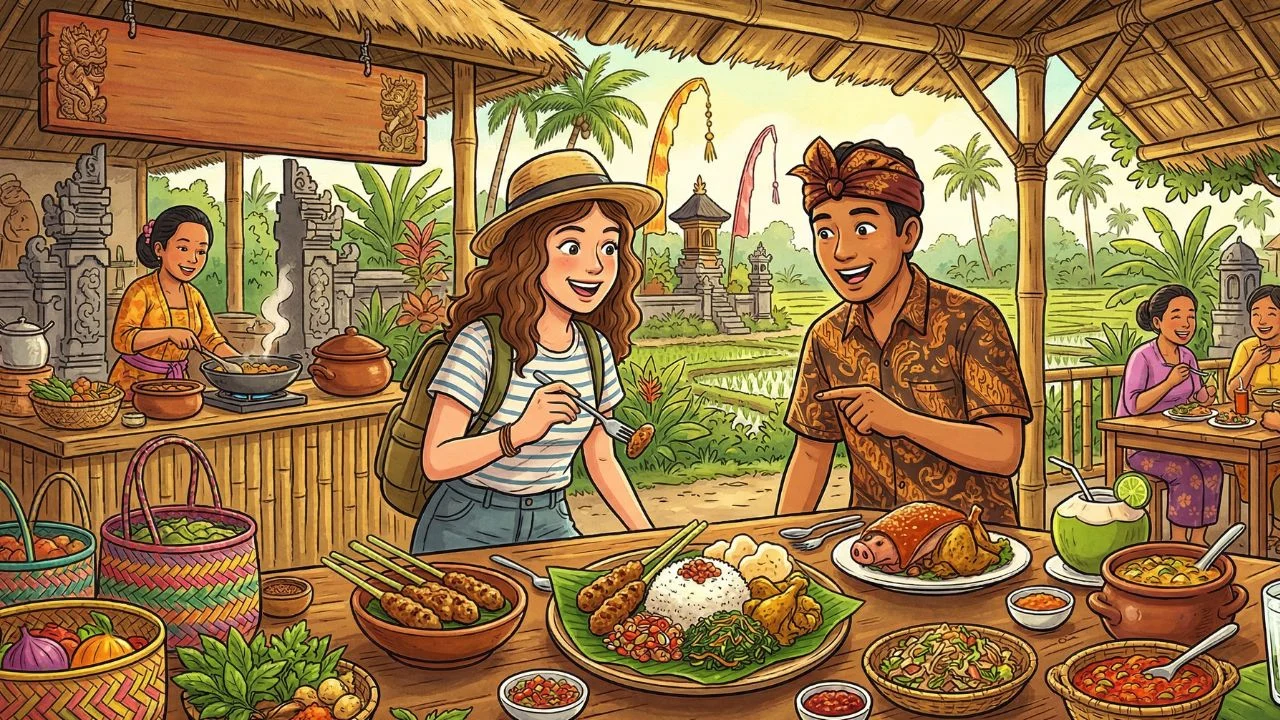
When we talk about Bali, what’s the first thing that comes to your mind? It’s definitely the beautiful beaches, the magical sunsets in Seminyak, or the calm, relaxing vibe of Ubud, right? But hold on—Bali isn’t just about its extraordinary natural scenery and culture. There’s one more thing that makes many people always miss Bali and want to come back: the food!
Yep, Balinese cuisine has a very strong character. The spices are bold, the flavors kick, and the taste is truly rich. The main secret of Balinese food lies in its base spice paste called Base Genep. This is a mixture of over a dozen spices, ranging from galangal, turmeric, ginger, kencur, shallots, garlic, to chilies, all pounded together. From this Base Genep, various culinary masterpieces are born, ready to pamper your taste buds.
So you’re not confused when you’re on holiday in Bali (or if you feel like ordering Balinese food via online ojeks), let’s break down one by one the must-try Balinese dishes. Get ready to drool!
1. Ayam and Bebek Betutu (Chicken or Duck Betutu)
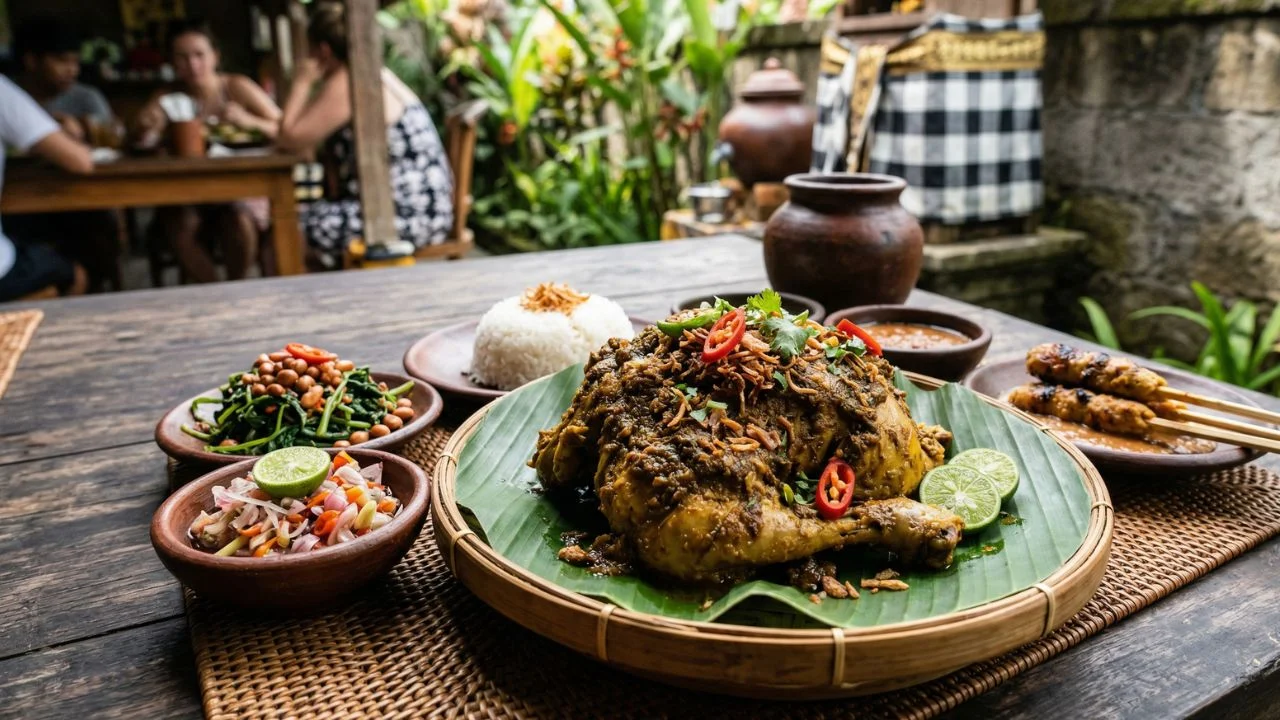
Let’s start with the highest-tier Balinese dish: Betutu. You can choose between chicken or duck—both are excellent. The cooking process for this dish is no joke. The whole chicken or duck is slathered and stuffed with an abundant Base Genep spice paste.
In the old days, it was wrapped in areca nut leaves and buried in glowing rice husks, left to cook slowly for hours (traditional slow cooking). The result? Super tender meat, spices absorbed right into the bone, and a spicy, savory sensation that truly explodes in your mouth. Eat it with warm rice and sambal matah, and you’re guaranteed to go for seconds!
2. Babi Guling (Suckling Pig)
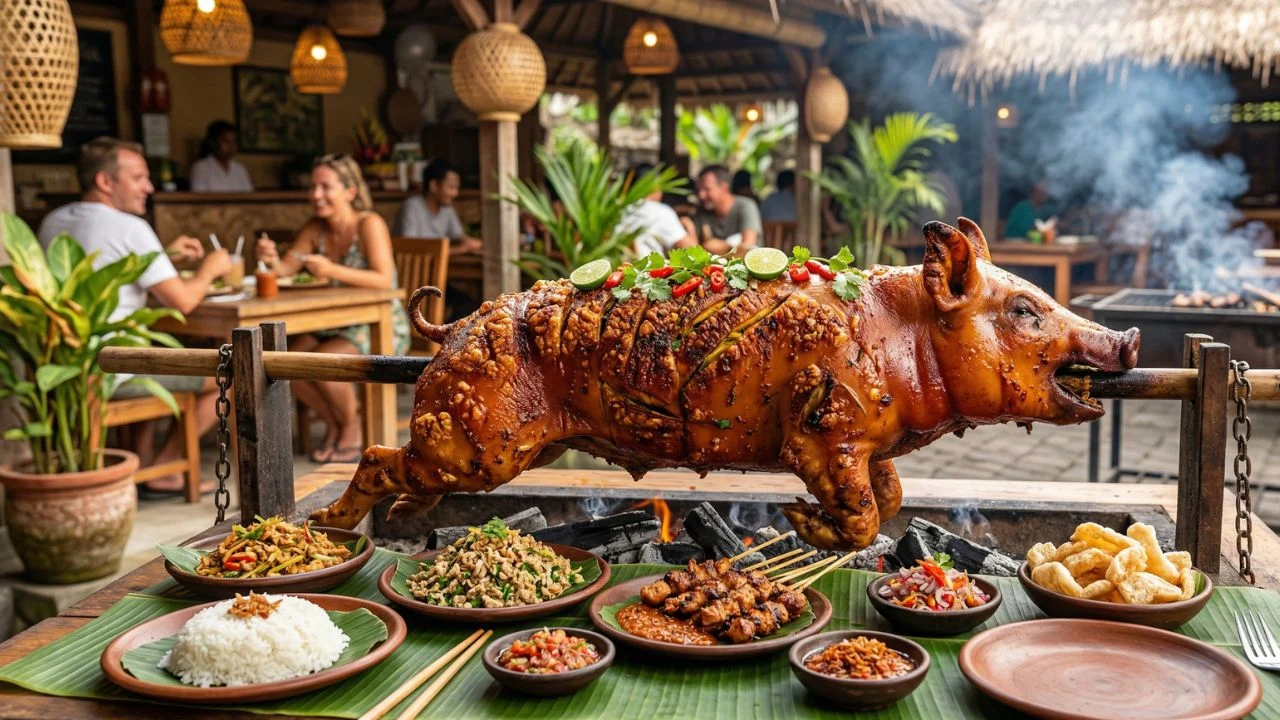
For those who eat non-halal dishes, Babi Guling is an absolute must-try. This is arguably Bali’s most iconic dish. A whole pig is stuffed with spices and vegetables (usually cassava leaves), then roasted whole while constantly being turned (rolled) over the fire.
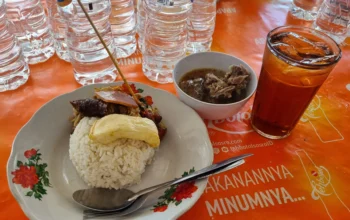
The most sought-after part of babi guling is, of course, its super crispy skin. The inside meat is super juicy and fragrant with spices. Typically, one portion of nasi babi guling includes white rice, pieces of pork, crispy skin, pork satay, lawar, urutan (Balinese pork sausage), and a savory broth soup. It’s complete and incredibly filling!
3. Sate Lilit (Minced Satay)
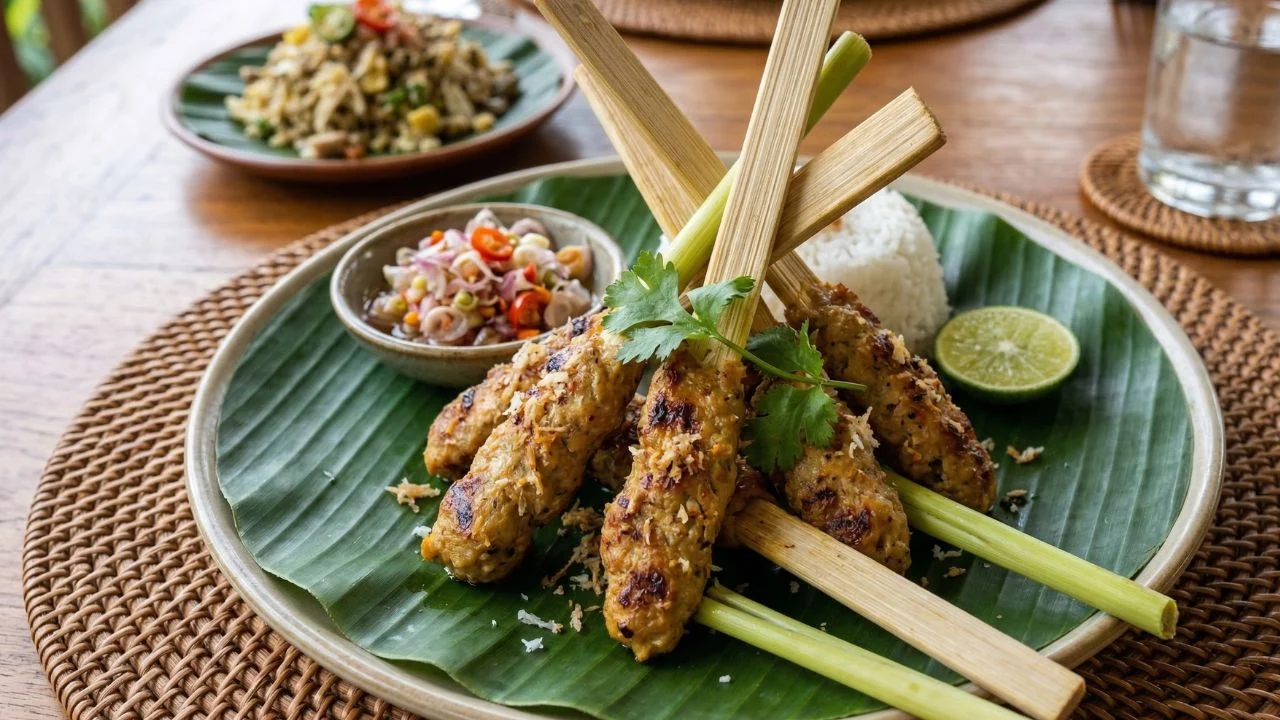
While most satays are made with cubed meat skewered on sticks, Balinese Sate Lilit is different. The meat (which can be chicken, pork, mackerel, or even turtle in ancient times) is finely ground, mixed with grated coconut, coconut milk, lime juice, shallots, and of course, spices.
Once the mixture is ready, the meat is “wrapped” (lilit) around lemongrass stalks or thick bamboo skewers, then grilled. Because it uses lemongrass, the aroma when grilling is incredibly fragrant. The taste is a combination of sweet, savory, slightly spicy, and a distinctive smoky flavor.
4. Lawar
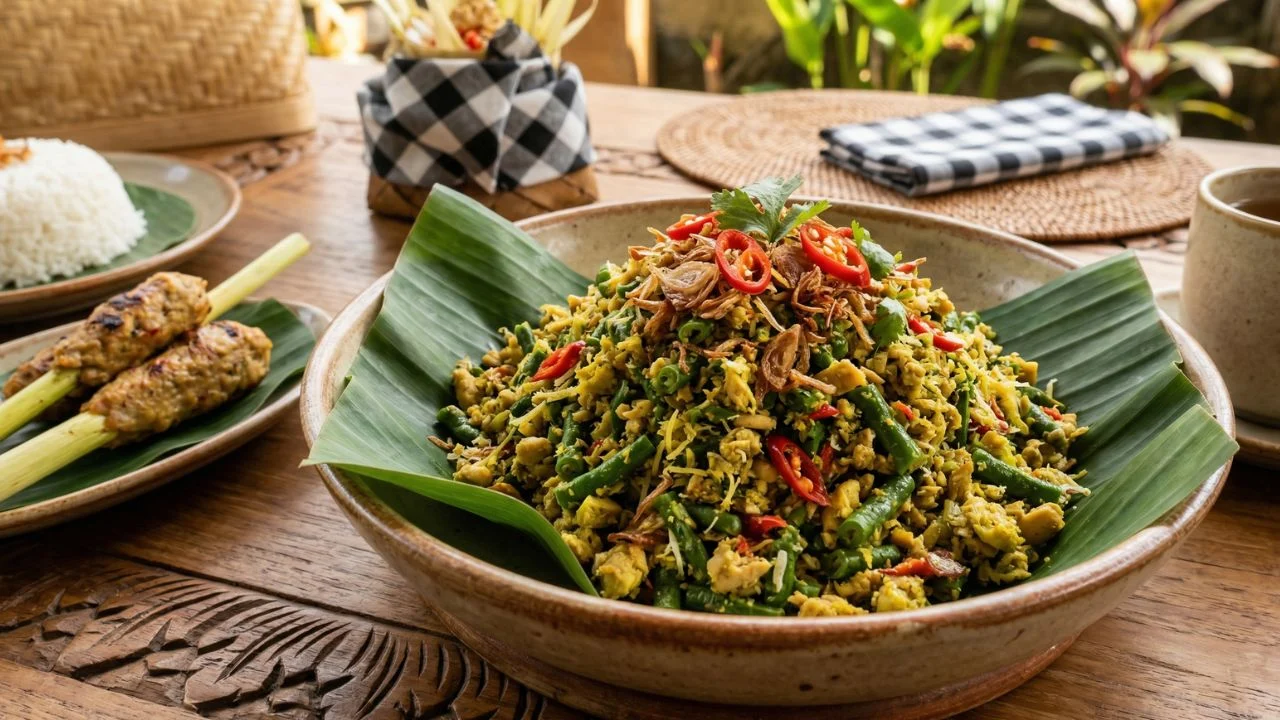
If you order Balinese mixed rice or babi guling, you’ll definitely find a side dish of vegetables mixed with grated coconut. That’s Lawar. Lawar is a kind of traditional Balinese salad. It contains finely chopped vegetables (usually long beans, young jackfruit, or young papaya), grated coconut, minced meat, and strong spices.
There are two well-known types of lawar: White Lawar and Red Lawar. White lawar has a pale color because it doesn’t use blood; it tastes savory and fresh. Red lawar, on the other hand, has a dark red color because it’s mixed with semi-cooked blood from livestock (usually pork or chicken). It might sound a bit extreme for those not used to it, but for locals, it’s a special dish with an authentic taste.
5. Balinese Mixed Rice (Nasi Campur Bali)
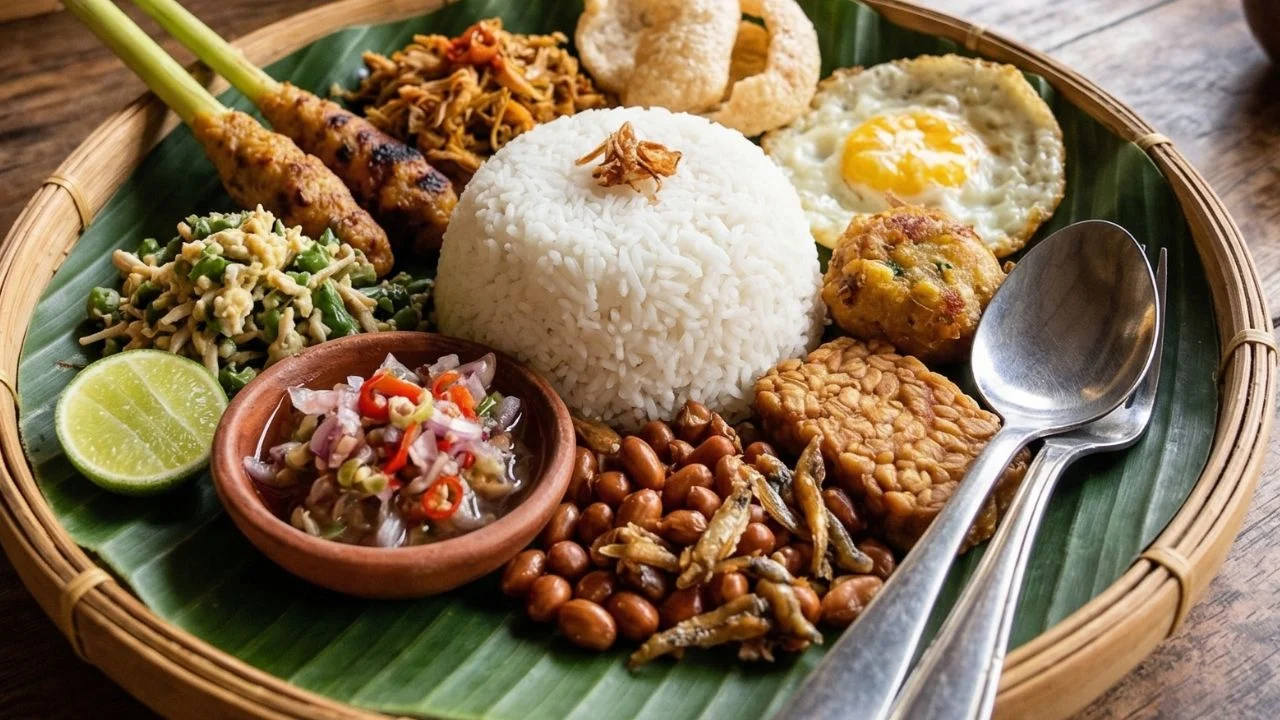
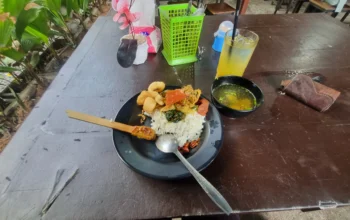
Can’t decide what to eat because everything looks delicious? Just order Balinese Mixed Rice! This is a shortcut to tasting various Balinese side dishes on one plate. Each stall or restaurant usually has different fillings for their mixed rice.
But generally, a plate of Balinese Mixed Rice consists of white rice, sate lilit, shredded chicken with pelalah seasoning (spicy shredded chicken), lawar, boiled egg, fried peanuts, and not to forget sambal matah. Eating mixed rice is like watching a music festival—all the stars gather in one place, creating a festive atmosphere on your palate.
6. Rujak Kuah Pindang (Fish Broth Fruit Salad)
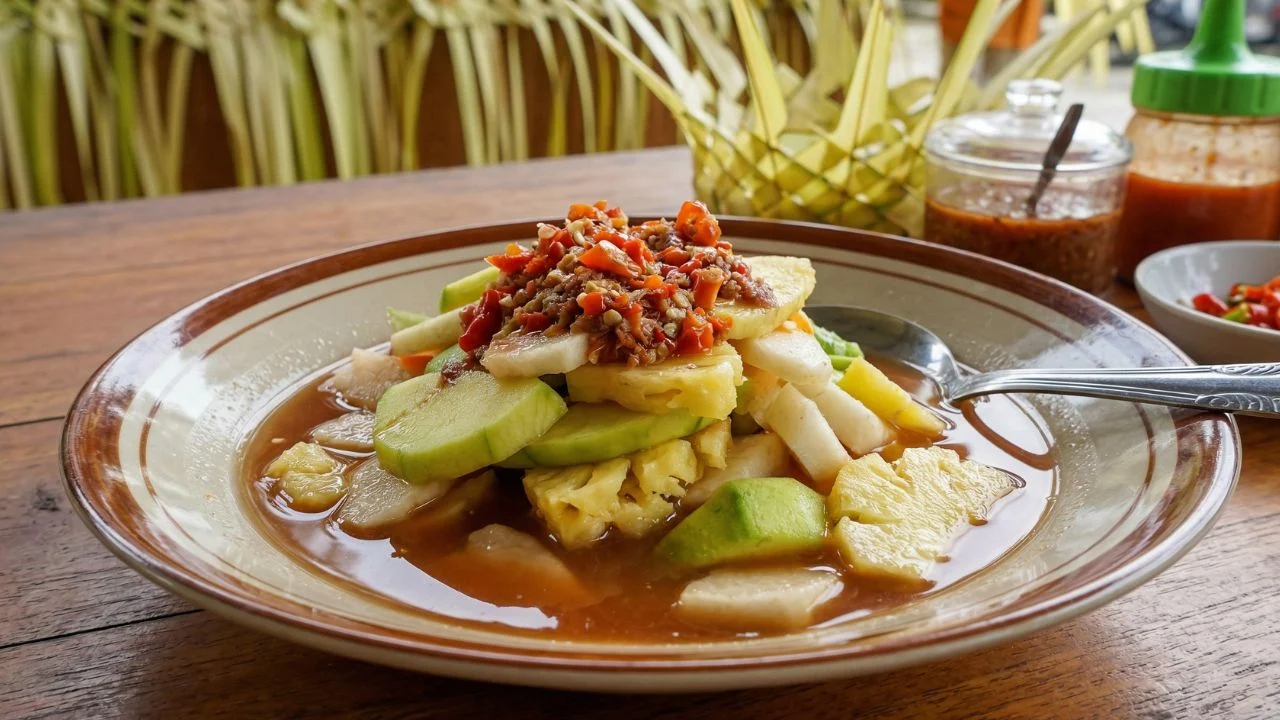
In the afternoon, after coming from the beach when the weather is scorching hot, the best thing is to eat something refreshing. Try looking for Rujak Kuah Pindang. While regular rujak uses peanut sauce or palm sugar dressing, this Balinese rujak uses fish broth (kuah pindang) mixed with shrimp paste, chili, and salt.
The fruits are the same as regular rujak: young mango, kedondong, jicama, pineapple. The combination of sour fruit, spicy chili, and the savory, slightly fishy taste of the broth might surprise some people at first. But trust me, the second and third bites will get you addicted because it’s so refreshing!
7. Tipat Cantok
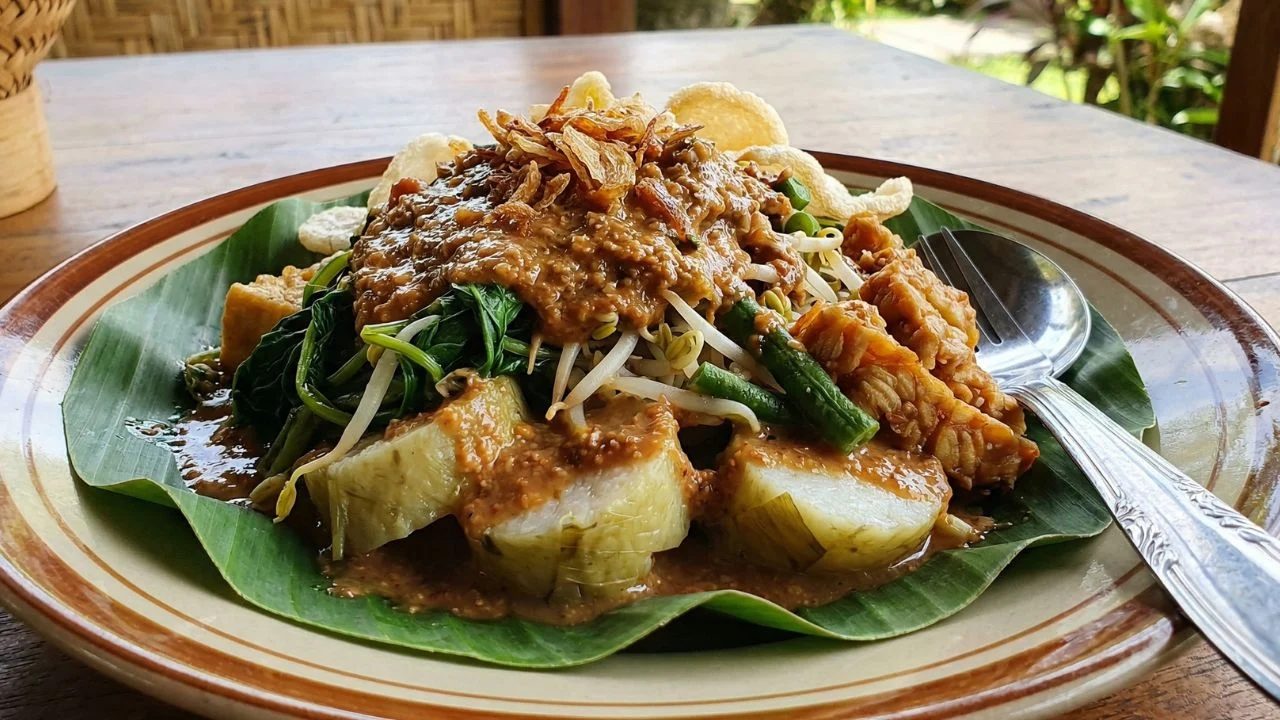
Craving vegetables and peanut sauce? Bali has Tipat Cantok. “Tipat” means rice cake (ketupat), and “Cantok” means pounded. So, it’s rice cake and boiled vegetables (such as long beans, bean sprouts, water spinach) served with freshly pounded peanut sauce.
It’s somewhat similar to gado-gado or pecel, but the peanut sauce is distinctive because it’s often mixed with kencur and a squeeze of limau lime, giving it a fresher aroma and a spicier, more biting taste. Simple, cheap, but unforgettable.
8. Sambal Matah & Sambal Mbe
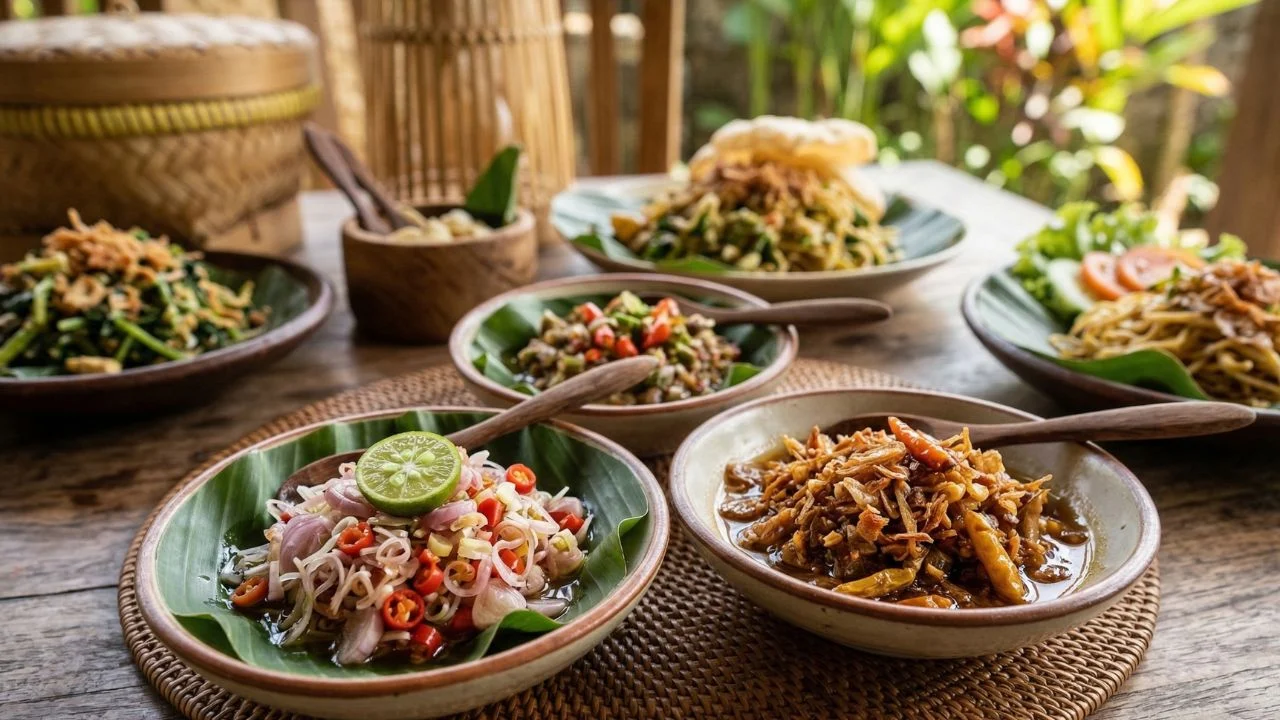
Discussing Balinese food would never be complete without talking about the sambals. Sambal Matah is the superstar. “Matah” means raw. This sambal is made from finely sliced shallots, bird’s eye chilies, lemongrass, kaffir lime leaves, mixed with grilled shrimp paste, a squeeze of lemo lime, and drizzled with hot coconut oil. The taste? Boom! Fresh, fragrant, spicy, and savory.
Besides sambal matah, there’s also Sambal Mbe. Unlike matah, which is entirely raw, the ingredients in sambal mbe—such as shallots, garlic, and chilies—are half-fried until dry, then mixed with shrimp paste and salt. The taste is crunchier and richly savory. These two sambals are truly the keys that elevate Balinese food to the next level!
In conclusion, Balinese cuisine is an endless flavor adventure. From the super spicy and richly spiced to the savory and refreshing, each dish has a strong identity. Every bite not only fills your stomach but also gives you a memorable cultural experience. So, when you’re on vacation in Bali, make sure to loosen your belt and get ready to indulge in a food frenzy!
Speaking of Bali’s richly spiced food, from all the dishes listed above, which one makes you most curious to try immediately?