

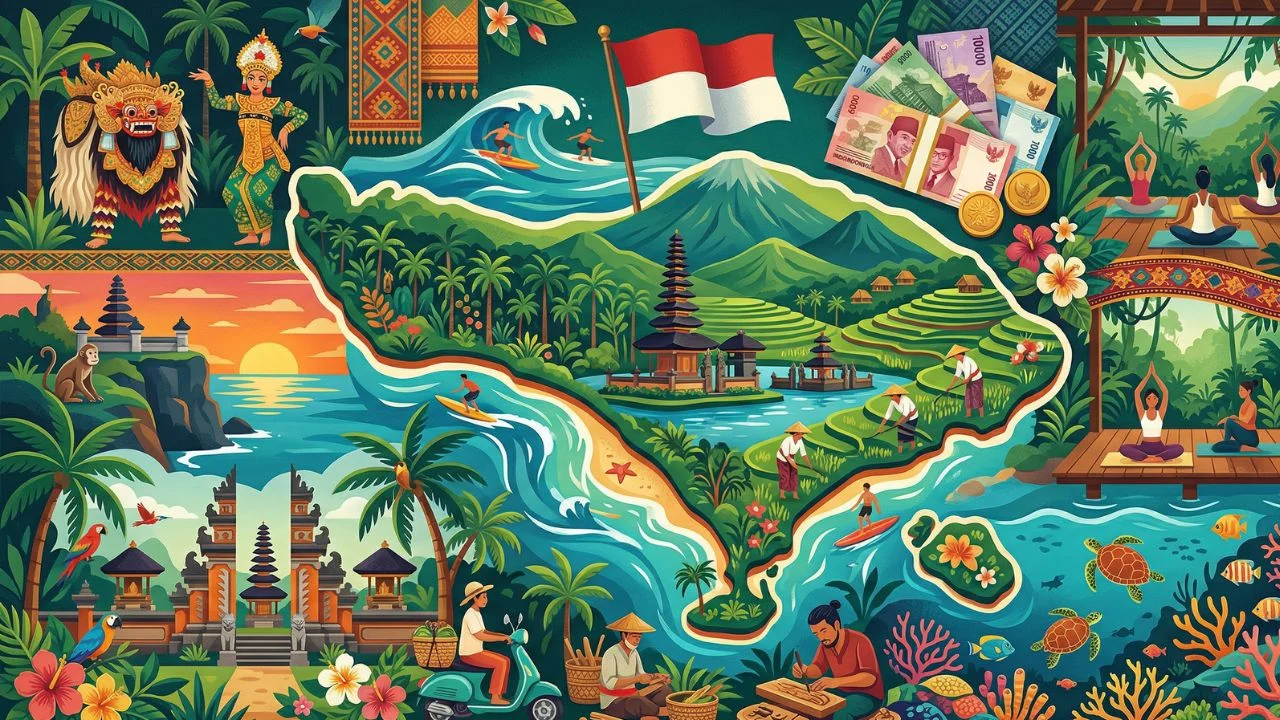
Who doesn’t know the charm of Bali? From the western tip to the eastern end, the Island of the Gods always has an appeal that makes people want to come back time and time again. From its white sandy beaches, lush green terraced rice fields, to the unique culture and friendliness of the locals, everything makes Bali one of the top tourist destinations in the world.
But for those of you who might be visiting for the first time, or are simply curious to learn more about this beautiful island, there are probably many questions on your mind. For instance, what currency does Bali use? Where is it located? Or even the classic question that foreign tourists often ask: “What country is Bali in?”
Well, to make your vacation smoother or to broaden your knowledge, this article will thoroughly cover the complete profile of Bali. We’ll explore everything from the country, currency, geographical location, to other important facts you need to know before setting foot here. Let’s dive in!
1. What Country is Bali In? (Country Facts and Flag)
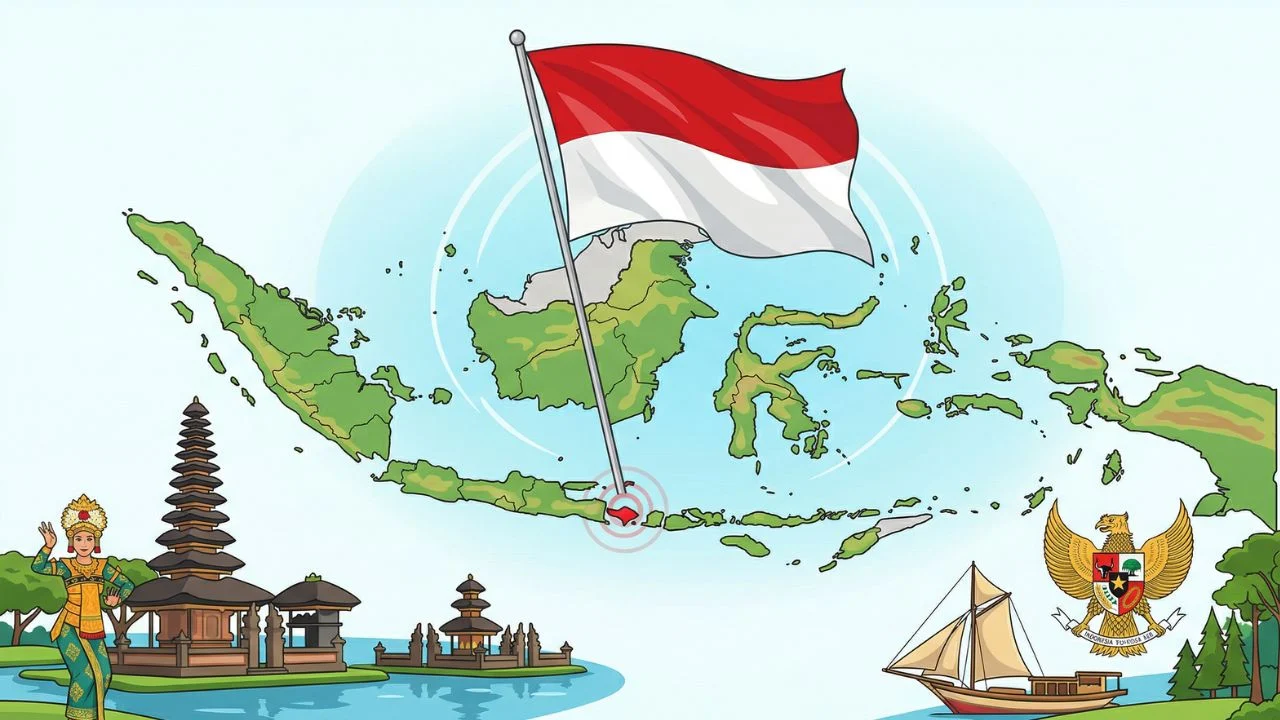
Believe it or not, many people out there (especially foreign tourists) think that Bali is its own separate country. Bali’s fame is so great that sometimes the name “Bali” is far more popular than the name of its own country.
So, let’s set the record straight: Bali is a province that is part of the Unitary State of the Republic of Indonesia (NKRI). Since Bali is part of Indonesia, the flag that flies across the island is the Red and White Flag (Bendera Merah Putih) . This flag holds deep meaning, where red symbolizes courage and white symbolizes purity. If you come to Bali around August, you’ll see these Red and White flags displayed on every street corner, house, and hotel to celebrate Indonesian Independence Day on August 17th.
As a province, Bali is led by a Governor and its capital is Denpasar, located in the southern part of the island.
2. Where is Bali Geographically Located?
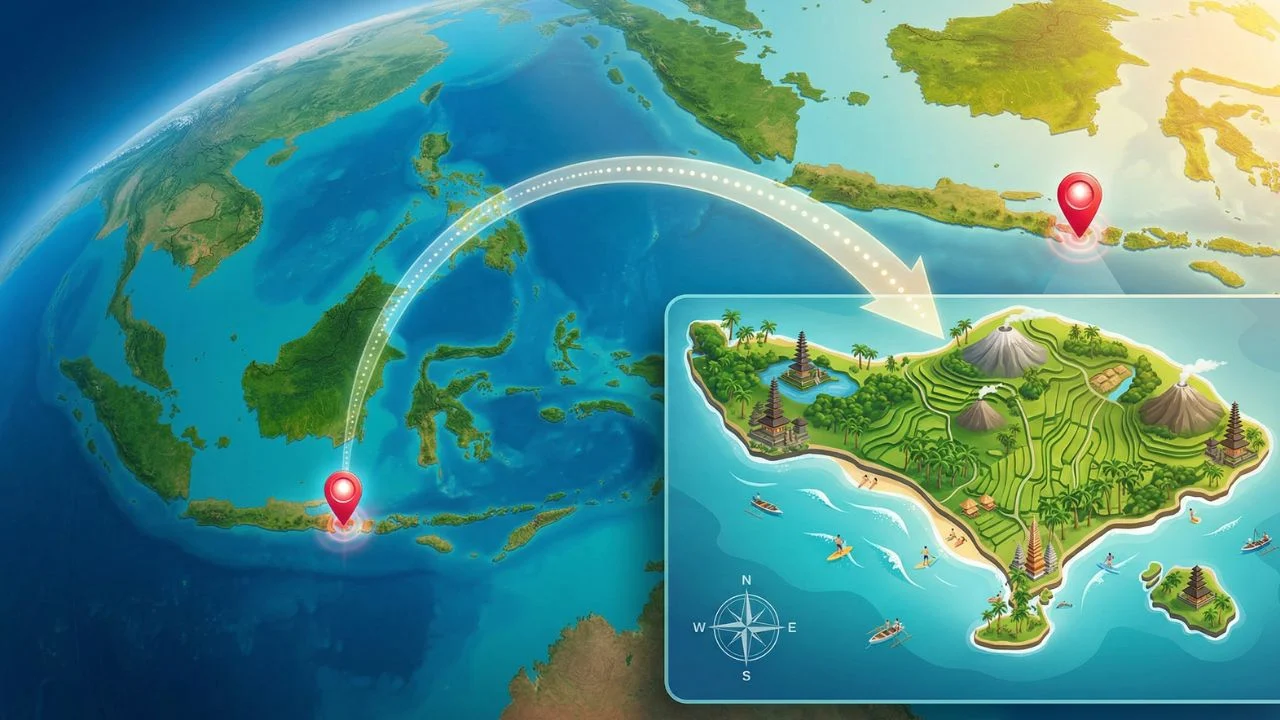
Geographically, Bali’s location is very strategic and surrounded by beautiful waters. Bali is situated in the Lesser Sunda Islands. If you look at a world map or Google Maps, Bali is nestled between two other large islands:
To the west, Bali is bordered by Java Island, separated by the Bali Strait. If you take a ferry from Banyuwangi (East Java), it only takes about 45 minutes to 1 hour to cross to Gilimanuk Harbor in Bali.
To the east, Bali is bordered by Lombok Island (West Nusa Tenggara province), separated by the Lombok Strait.
Meanwhile, to the north, Bali borders the Bali Sea, which has relatively calmer waves (great for seeing dolphins in Lovina), and to the south, it borders the Indian Ocean, which has large and powerful waves (that’s why southern areas like Uluwatu and Canggu are a paradise for surfers from around the world).
Bali’s topography is also unique. From the central part to the north, the island is dominated by mountains. The highest and most sacred mountain here is Mount Agung, which reaches 3,142 meters above sea level. Additionally, there is Mount Batur, which is very popular for sunrise trekking. If you enjoy cool air and green scenery, the central areas like Ubud, Kintamani, and Bedugul are a must-visit. Conversely, if you prefer sunbathing and beaches, the southern areas like Kuta, Seminyak, Canggu, and Nusa Dua are the answer.
3. Matters of Money: The Currency Used in Bali
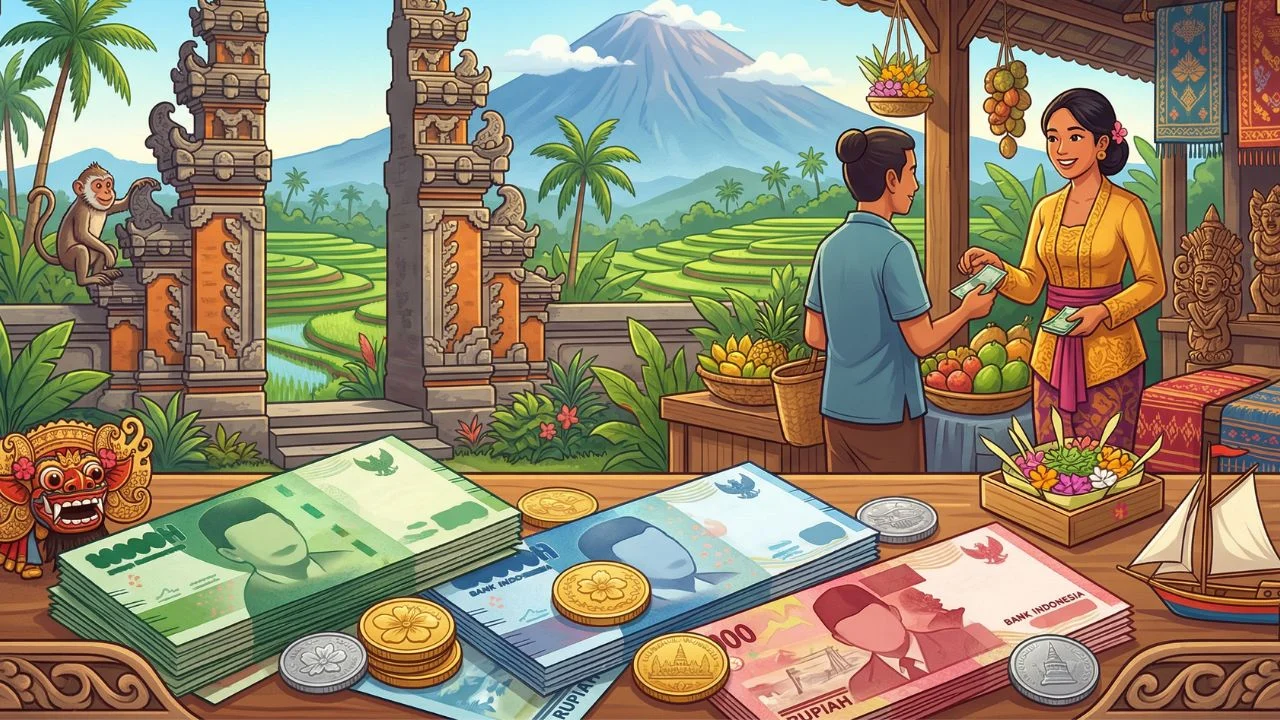
Because Bali is part of Indonesia, the official currency used for all transactions here is the Indonesian Rupiah (IDR or Rp) .
This information is crucial, especially for foreign tourists or for those bringing foreign friends on vacation. You cannot use US Dollars, Euros, or other foreign currencies to buy street food or pay for a taxi directly. Everything must be converted to Rupiah.
Rupiah Denominations: Current Rupiah banknotes come in denominations starting from Rp 1,000, Rp 2,000, Rp 5,000, Rp 10,000, Rp 20,000, Rp 50,000, up to the largest, Rp 100,000 (red). There are also coins in denominations of Rp 100, Rp 200, Rp 500, and Rp 1,000.
Financial Tips While in Bali:
Cash is King (in certain places): Although Bali is now quite modern, cash is still king, especially when shopping at traditional markets, eating at small local eateries (warungs), or buying small amounts of fuel. Always have small denomination cash (Rp 10,000 or Rp 20,000) ready to make it easier when change is needed.
Credit and Debit Cards: If you eat at restaurants, beach clubs, or stay at star-rated hotels and villas, credit cards (Visa and Mastercard) are almost 100% accepted. Digital payment systems using barcode scanning (QRIS) are also ubiquitous, from malls to street vendors.
Be Careful Choosing a Money Changer: For those carrying foreign currency, exchange your money at an Authorized Money Changer that has a clear office and air conditioning. Don’t be tempted by small roadside kiosks offering unrealistically high exchange rates, as these are often scams.
4. Other Important Information and Facts (Must Know!)
To make your trip or visit to Bali safer and more comfortable, here are some other essential facts and basic information you should definitely note:
A. Time Zone
Bali is in the Central Indonesia Time (WITA) zone. This means Bali’s time is GMT +8. For a quick comparison:
Bali is one hour ahead of Jakarta (WIB). So, if it’s 12:00 PM in Jakarta, it’s already 1:00 PM in Bali.
Bali’s time is the same as Singapore, Malaysia, and Perth (Australia).
B. Weather and Climate
Like other parts of Indonesia, Bali has a tropical climate and only two seasons:
Dry Season (April – October): This is the best time to visit Bali. The weather is clear, the sky is blue, and the humidity is comfortable. It’s perfect for sightseeing, diving, or relaxing on the beach.
Rainy Season (November – March): During these months, rainfall is quite high, especially in December and January. Although it rains, Bali remains warm. It’s suitable for a relaxing vacation, spa, or hanging out in aesthetic cafes in Ubud.
C. Majority Religion and Culture
A unique fact that distinguishes Bali from other islands in Indonesia is the majority religion of its population. Most native Balinese people practice Balinese Hinduism. This gives Bali a very rich culture, traditions, and rituals that you can witness daily.
You will often see Canang Sari (small offerings made from coconut leaves filled with flowers) in front of shops, on the road, or at temples. Remember, try not to step on these offerings as a sign of tolerance and respect. Additionally, Bali has a unique holiday called Nyepi, where for a full 24 hours, the entire island is in “total silence” (no lights, no leaving your house/hotel, and the airport closes).
D. Power Plug
What about charging your phone or laptop? Don’t worry, the power plug type in Bali is the same as the general standard in Indonesia, which is Type C and F (two round pins). The voltage is 220V with a frequency of 50Hz. If your electronic device’s plug is different (e.g., from America or the UK with three prongs), don’t forget to bring a universal travel adapter.
E. Drinking Water
Never drink tap water directly in Bali! The tap water here is not suitable for direct consumption. Always buy bottled or gallon mineral water readily available at convenience stores. You can also bring your own tumbler and ask for a refill at your hotel or villa to be more environmentally friendly.
F. Daily Transportation
Mass public transportation like buses or trains is not yet well-developed in Bali. Therefore, the most popular ways to get around Bali are:
Renting a Motorcycle: This is the cheapest and most practical way to navigate traffic (especially in Canggu or Seminyak). However, make sure you have a valid driver’s license and always wear a helmet!
Online Ride-Hailing: Apps like Gojek and Grab are very reliable here for ordering cars or motorcycles.
Renting a Car with a Driver: If you’re vacationing with family or a group, renting a car along with a local driver is highly recommended. Besides not having to worry about driving, local drivers usually know alternative routes and can act as an impromptu guide.
Conclusion
So, there you have it – the complete profile of Bali! From this information, you now know that Bali is part of Indonesia, uses the Rupiah currency, and has a very strong local culture. Understanding basic things like this not only makes your trip better prepared but also allows you to appreciate the natural beauty and local culture more when you visit.