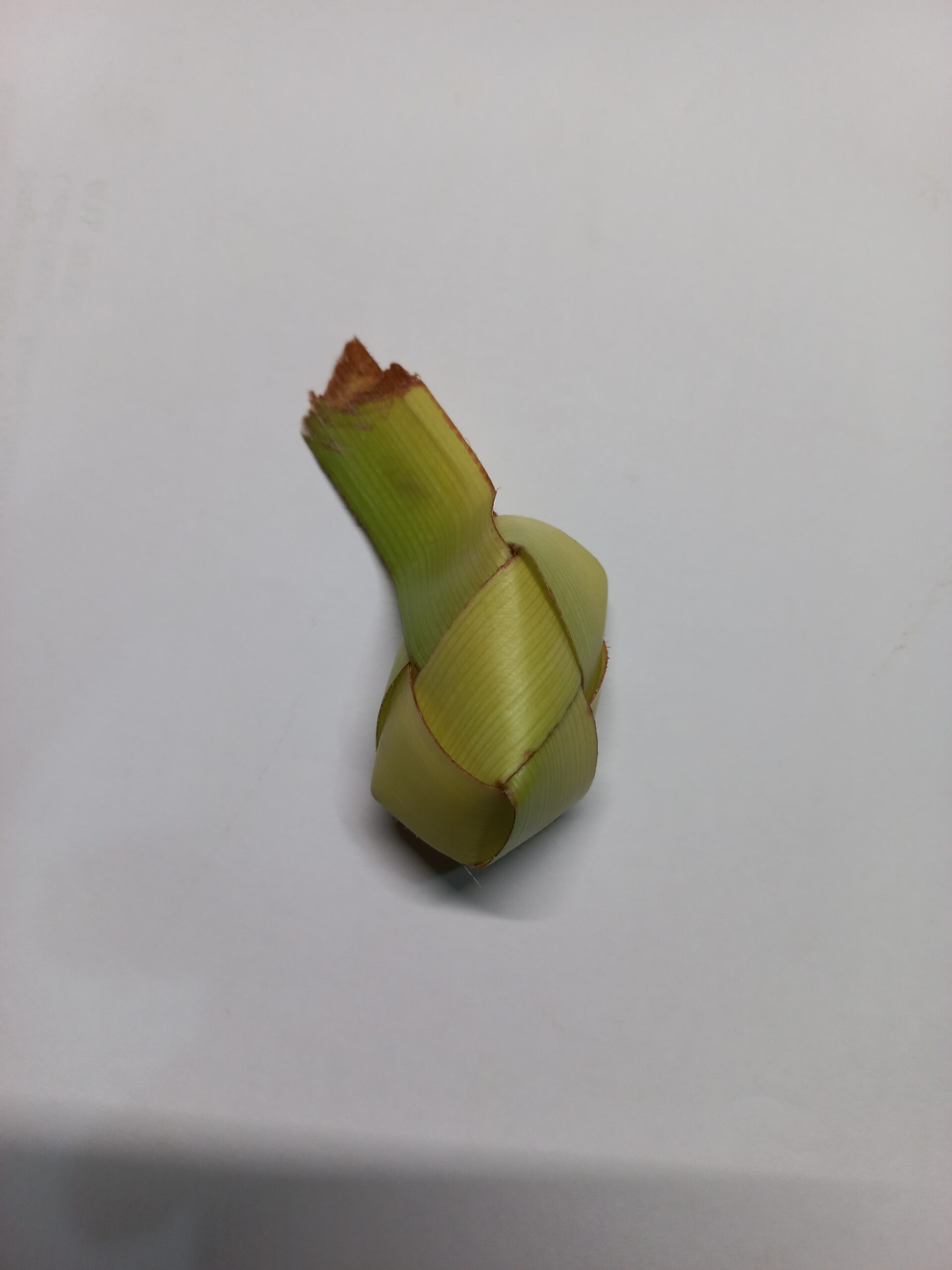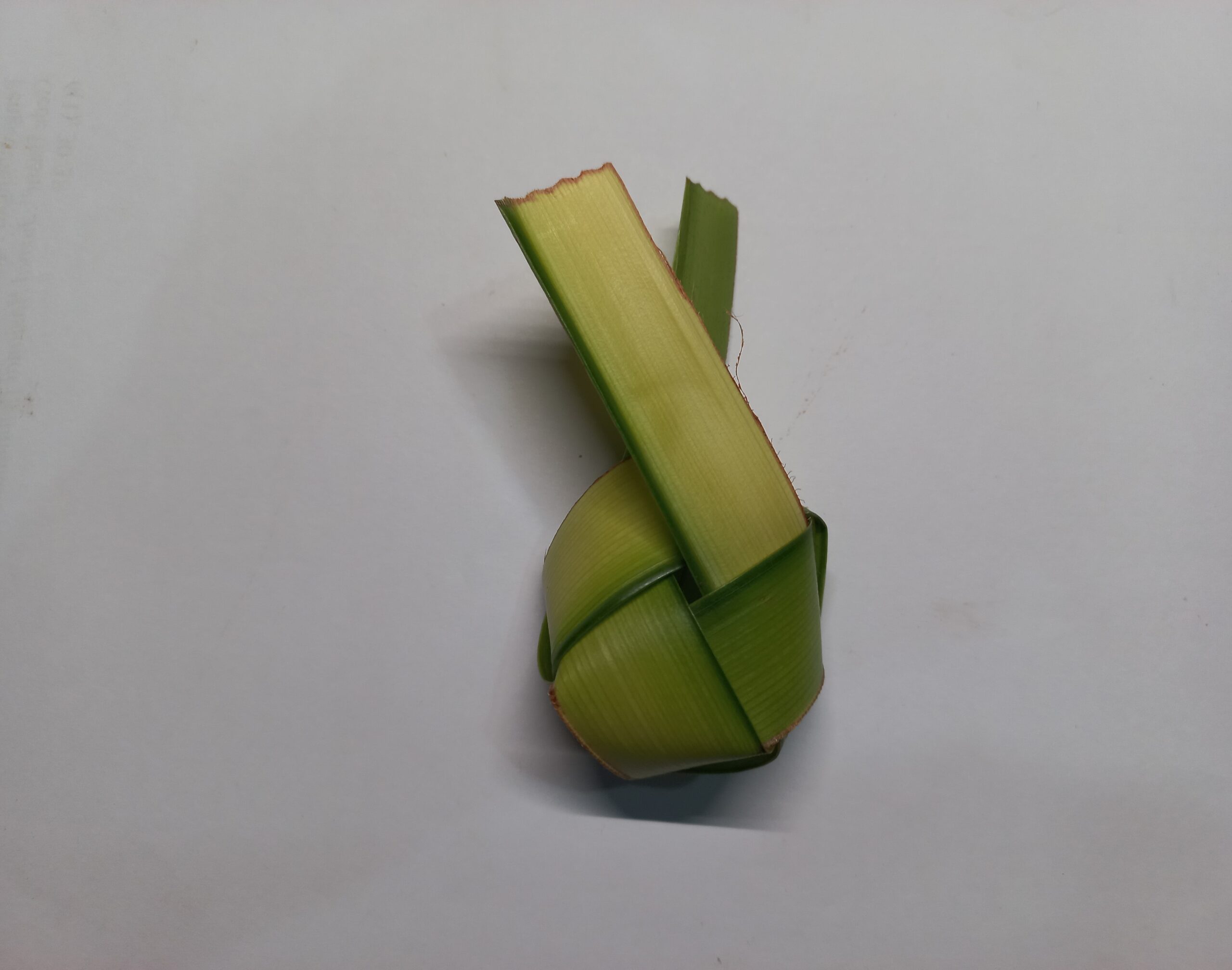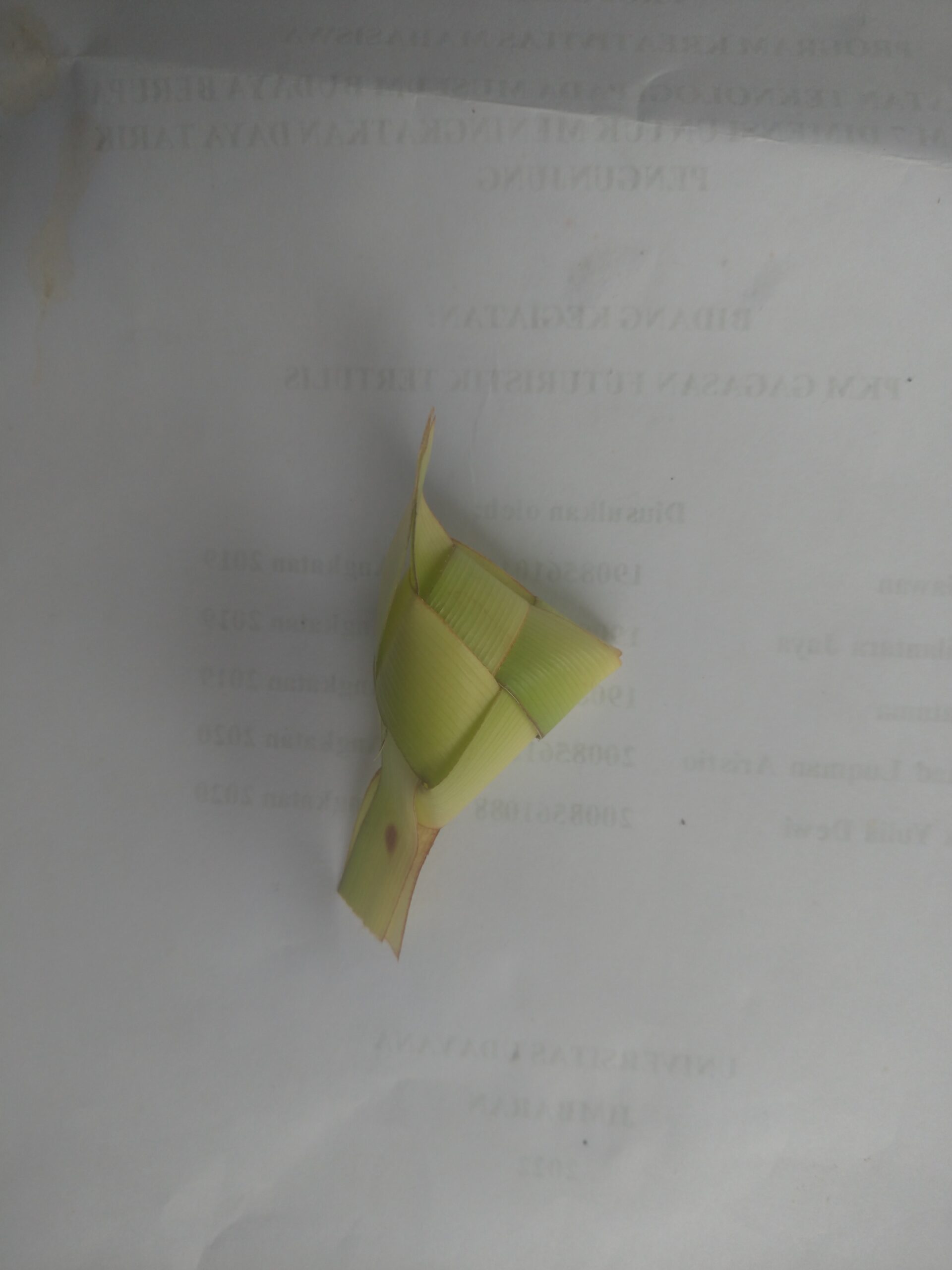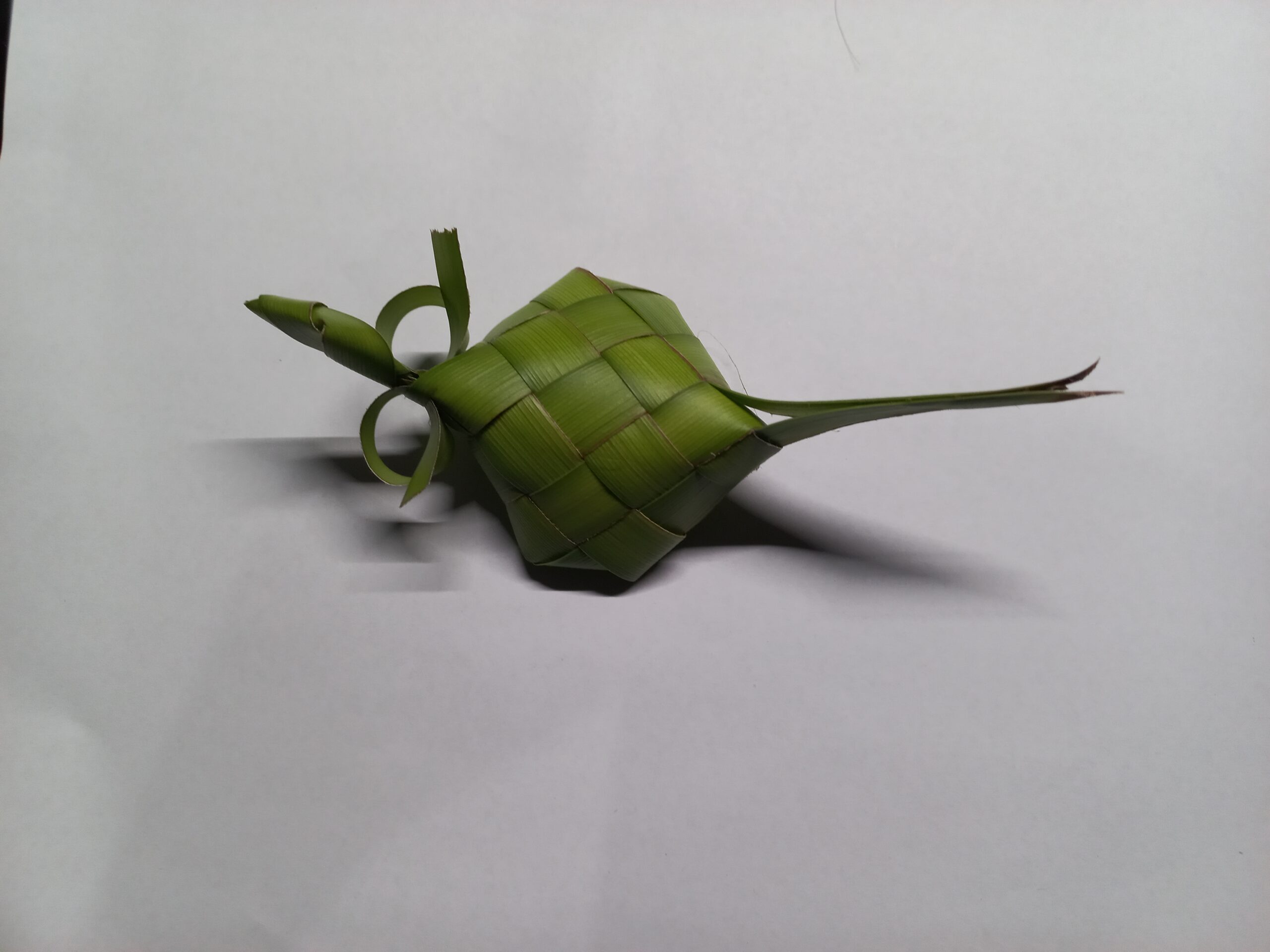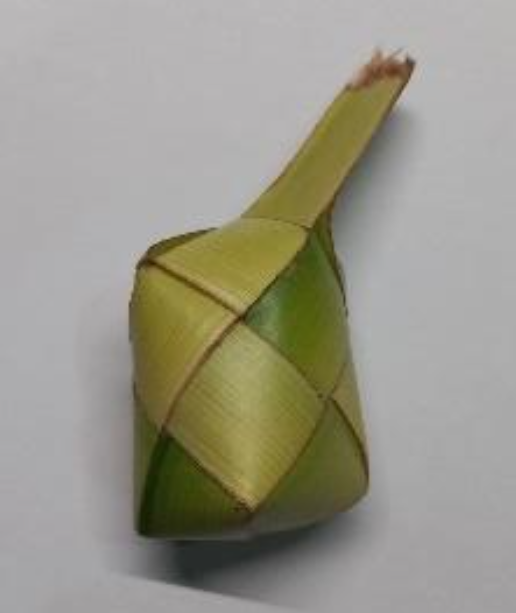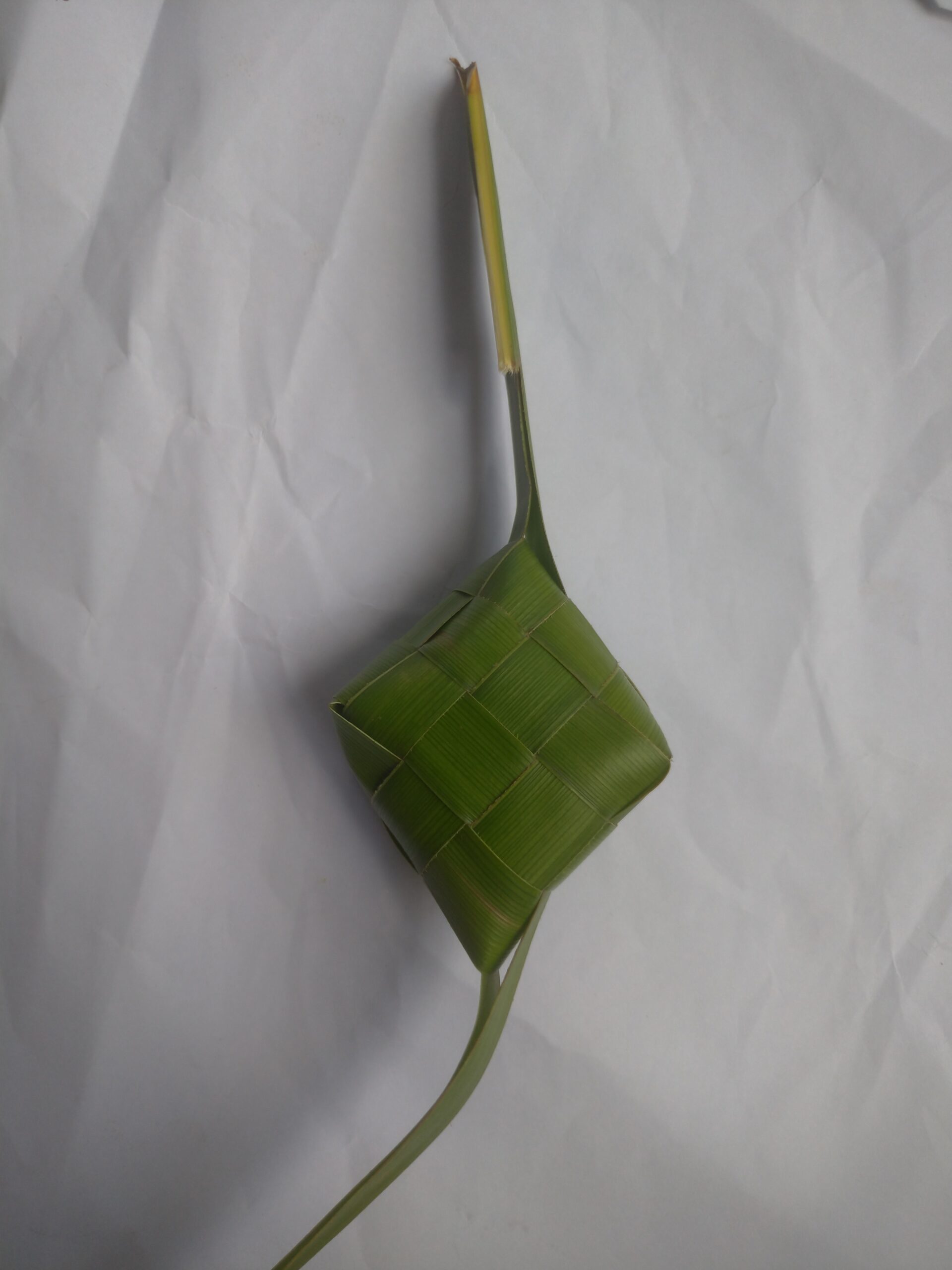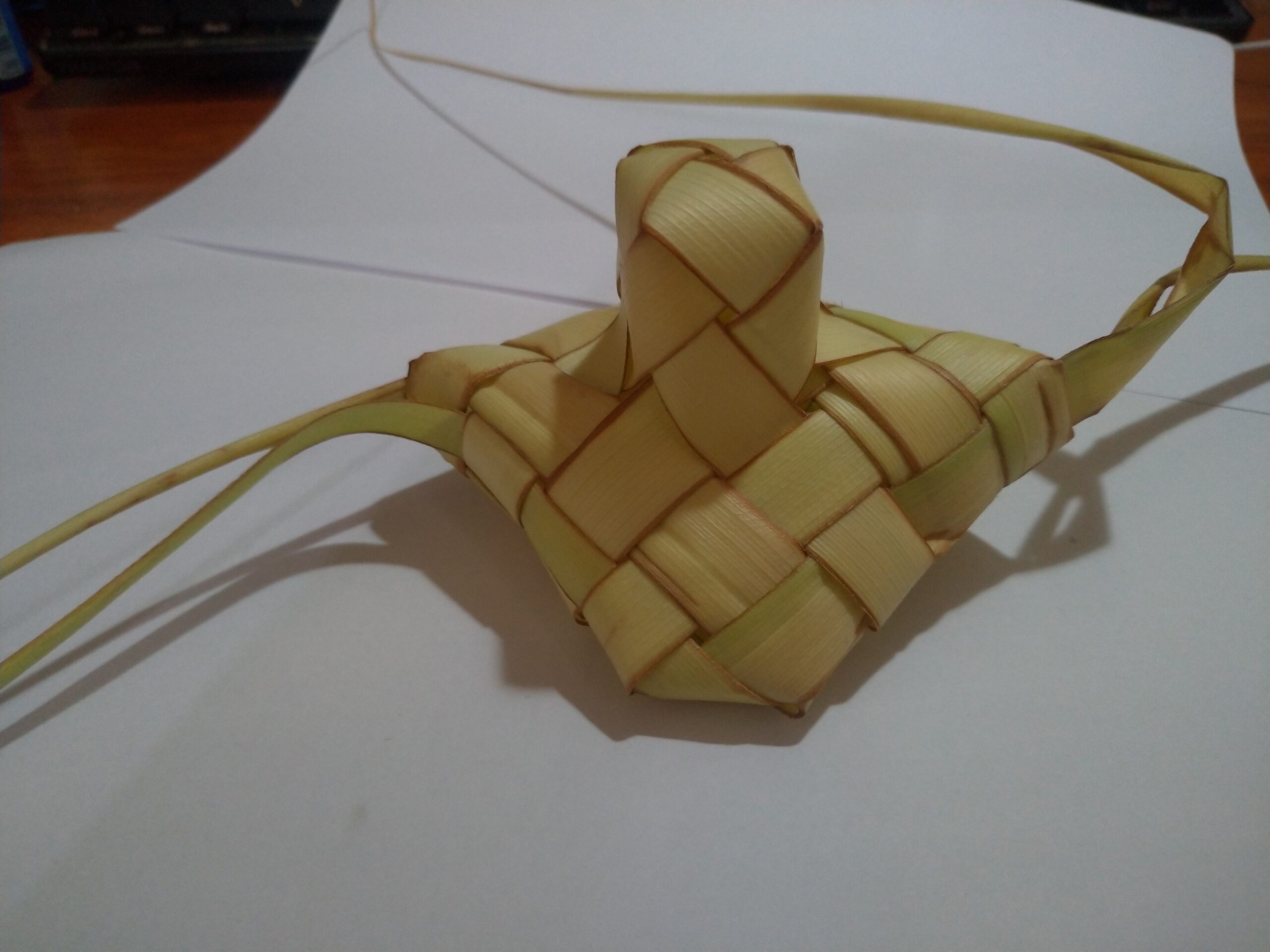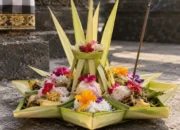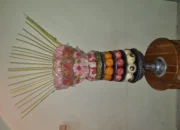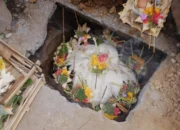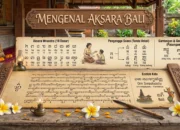


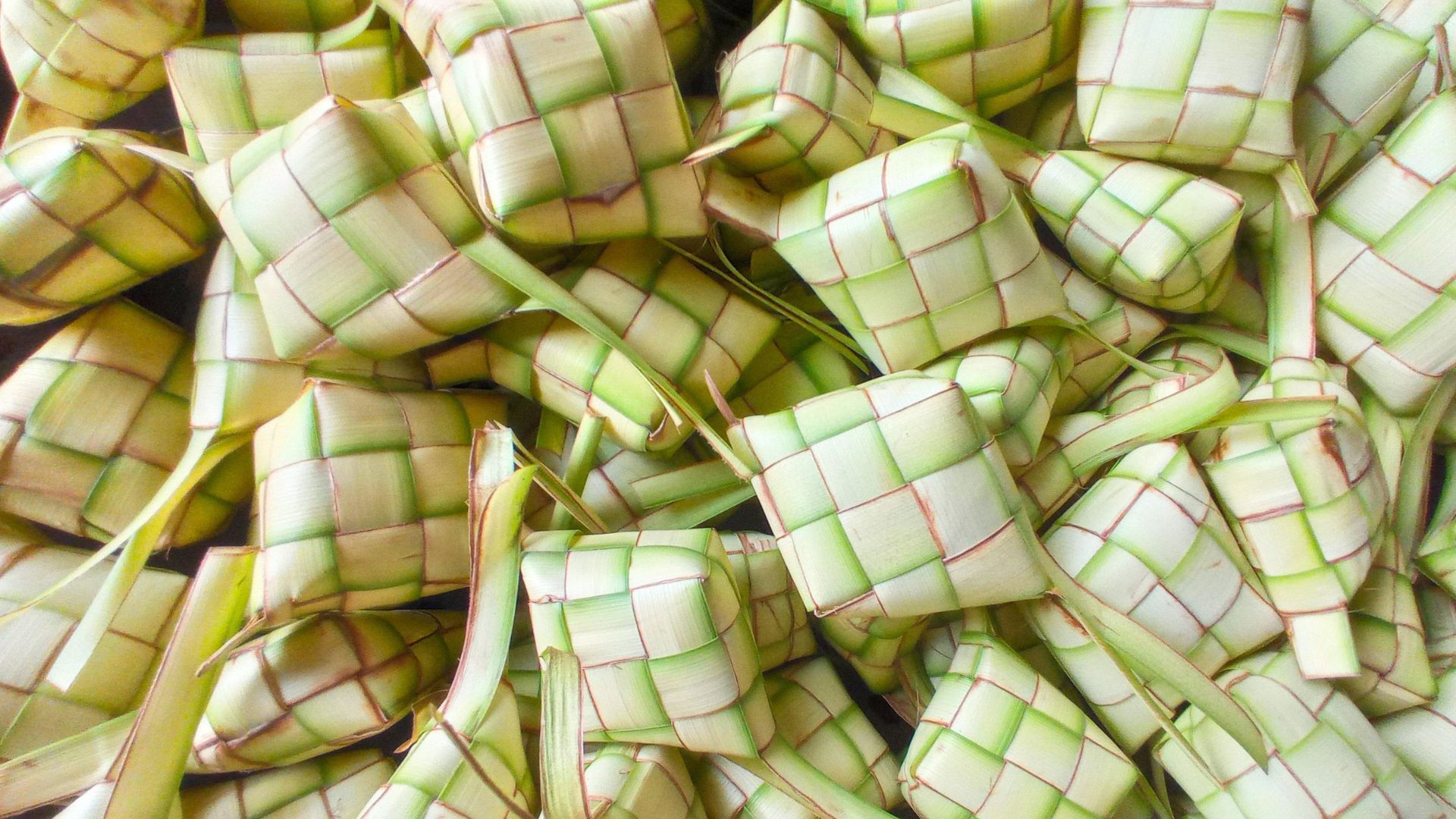
Ketupat (tipat) is a distinctive Indonesian dish made from rice wrapped in coconut leaves. In Bali, ketupat is usually called tipat. The Balinese people, especially those of the Hindu faith, use tipat as a material for ceremonial offerings (banten). Tipat can be made from young coconut leaves (janur or busung) and mature coconut leaves (slepan). There are various types of tipat found in Bali, which have different shapes and uses in the offerings. These types of tipat include:
- Tipat Taluh

Tipat Taluh Tipat Taluh is a tipat made from half a piece of the busung stem without leaving the midrib. This tipat is generally placed in the banten daksina and is used as a place for an egg.
- Tipat Gatep
Tipat Gatep Tipat Gatep is a tipat made using half a piece of the busung stem without leaving the midrib. As its name suggests, the shape of this tipat resembles the gatep fruit. Tipat Gatep is usually used in banten carik (rice fields).
- Tipat Sari
Tipat Sari Tipat Sari is a tipat made from one whole busung stem, which is then split in half without using the midrib. This tipat is generally used in Banten Soma Ribek, which is two days after the Holy Day of Saraswati.
- Tipat Kukur
Tipat Kukur Tipat Kukur is a tipat made from one part of the busung stem split in half without the midrib. This tipat is generally used in banten prasista.
- Tipat Dampulan
Tipat Dampulan Tipat Dampulan is a tipat made from one whole busung stem, which is then split, leaving a midrib at the base with a length of approximately 5 cm. This tipat is generally offered during Kajeng Kliwon, which occurs every 15 days.
- Tipat Galeng
Tipat Galeng Tipat Galeng is a tipat made from two busung stems, which are then split, leaving a midrib at the base with a length of approximately 10 cm. This tipat is generally offered to Penugun Karang (Guardian of the Houseyard) in the amount of one kelanan (six pieces).
- Tipat Lepet
Tipat Lepet Tipat Lepet is a tipat made from half a piece of the busung stem without the midrib. This tipat is generally used for the baby’s pelangkiran (small shrine) during the Upacara 3 Bulanan Bayi (Baby’s 3-Month Ceremony), with the number used usually being one kelan (six pieces of Tipat Lepet).
- Tipat Nasi
Tipat Nasi Tipat Nasi is a tipat made using one busung stem, leaving a midrib at the base with a length of approximately 5 cm. This tipat is generally used to complement Banten Pejati, with the number used being one kelanan (six pieces).
- Tipat Sirikan
Tipat Sirikan Tipat Sirikan is a tipat made from one piece of the busung stem, leaving a midrib at the base with a length of approximately 5 cm. This tipat is generally used during the Upacara Mejauman, which is a ceremony where the bride bids farewell to her relatives and ancestors at the Merajan or Sanggah Kemulan (family temple).
- Tipat Gong
Tipat Gong Tipat Gong is a tipat made from two busung stems, leaving a midrib at the base with a length of approximately 5 cm. This tipat is generally used to be offered to a set of gamelan (traditional musical instrument ensemble) when about to play, whether for voluntary service (ngayah) at the temple, a performance, or for the needs of the Panca Yadnya ceremony.