

Bali indeed never runs out of interesting places to visit. Beyond its beaches, beach clubs, rice fields, and beautiful villas, Bali also has many historical sites that hold long stories about the culture and spirituality of its people. One fairly well-known place, especially in the Gianyar area, is Goa Gajah, also often called the Elephant Cave.
Goa Gajah is located in Bedulu Village, Blahbatuh District, Gianyar Regency, Bali. Its location is not too far from Ubud, so it is frequently included in the itineraries of travelers who want to explore the cultural side of Bali. According to information from the Bali Tourism Office, Goa Gajah features a cave area with reliefs, hermitage niches, and relics believed to date from around the 11th century.
This place is suitable for those of you who want to see a calmer side of Bali, not just a spot for beautiful photos, but also a place that holds historical value, architectural significance, and a strong spiritual atmosphere.
A Brief History of Goa Gajah
Although its name is Goa Gajah, do not imagine this place as a large cave filled with elephants. The name “Gajah” is more often linked to the symbol of Ganesha, the elephant-headed deity in Hindu belief, which is found inside the cave area. This site is known as a sacred place that was once used for spiritual activities, meditation, and worship.
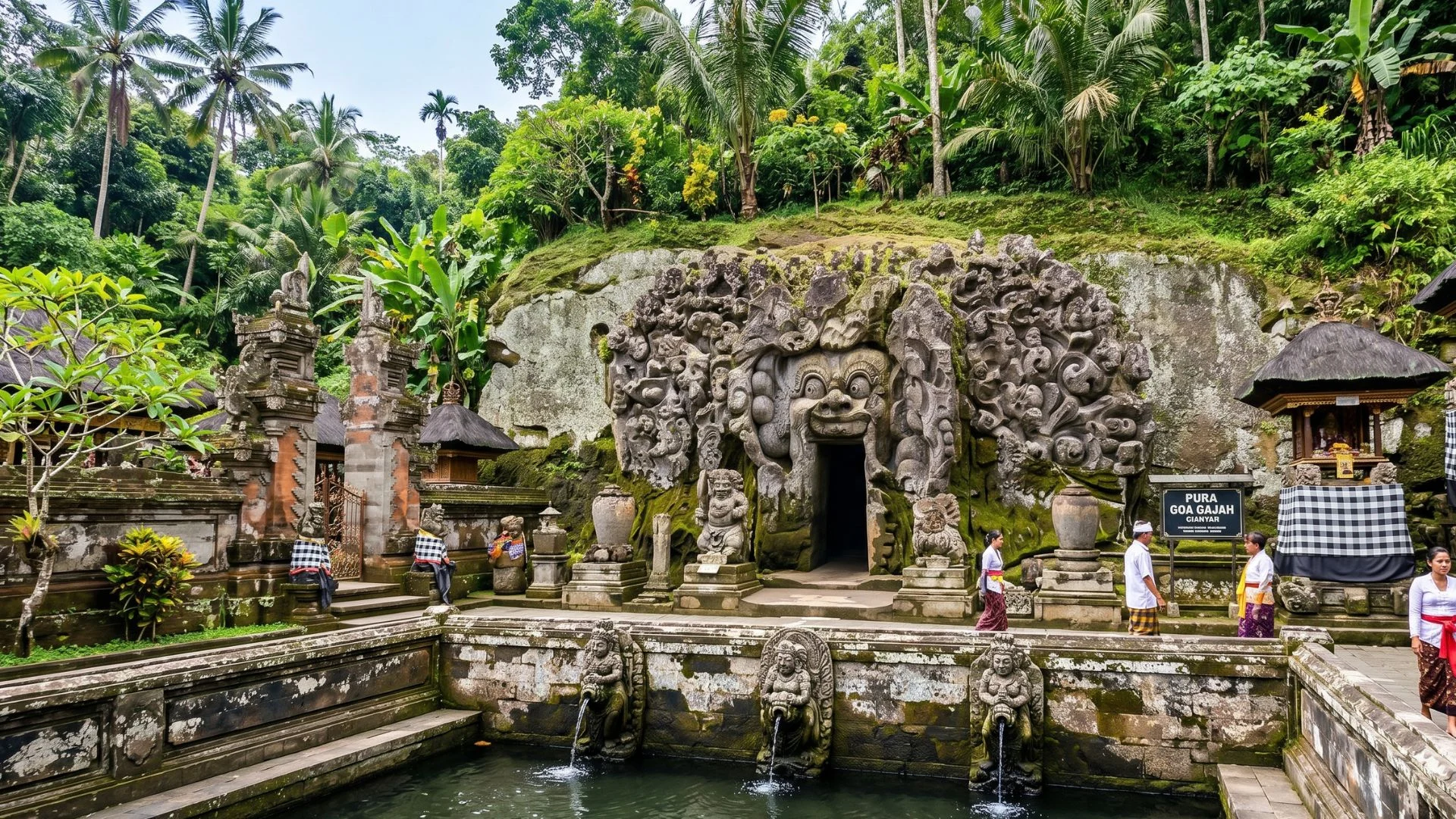
Goa Gajah is estimated to have existed since ancient Balinese times. In the cave area, visitors can see a large face carving at the cave entrance that looks quite unique and slightly mysterious. The mouth of this carving serves as the entrance into the cave. Its shape is very distinctive and has become one of the main icons of Goa Gajah.
Inside the cave, the atmosphere is rather small, dark, and simple. There are several niches in the cave walls that are believed to have been used in the past as places for asceticism or meditation. This area shows how Balinese society in the past made natural spaces into sacred spiritual rooms.
In addition to Hindu elements, the Goa Gajah area is also said to have traces of Buddhist influence. Love Bali, the official Bali tourism website, describes Goa Gajah as a cave and temple complex featuring sacred carvings and bathing pools believed to be related to self-purification.
Main Attractions of Goa Gajah
The first thing that usually catches visitors’ attention is the cave entrance shaped like a large carved face. This carving looks like a giant face with an open mouth. It is through this mouth that visitors enter the cave. The details of the carving give an ancient, magical impression, very different from other temples in Bali.
Besides the cave, there is also an ancient bathing pool with water spouts. This pool has become one of the most photographed spots because it looks beautiful and holds historical value. The spouts are shaped like female statues carrying water pitchers, creating a very classic atmosphere.
The Goa Gajah area is also surrounded by trees, gardens, and several stone relics. So, after seeing the cave and the pool, you can take a leisurely walk around the complex. The atmosphere is quite shady, especially if you come in the morning or late afternoon.
For history enthusiasts, this place is interesting because it is not just a tourist attraction but also an archaeological site. There are many elements that show how the religion, culture, and spiritual life of Balinese society developed from time to time.
The Atmosphere at Goa Gajah
Unlike beaches or popular tourist spots that are full of lively activity, Goa Gajah offers a slower, more contemplative atmosphere. When entering this area, you will walk down stairs leading to the main complex. From there, the atmosphere begins to feel calmer.
This place is not very large, so you do not need to spend an entire day here. Usually, a visit of about 45 minutes to 1.5 hours is enough to see the main areas, take photos, and enjoy the ambiance. However, if you like reading carving details, observing architecture, or slowly enjoying historical places, you could spend more time.
Since Goa Gajah is a sacred site, visitors are expected to dress modestly. Usually, a sarong is provided or can be used when entering the temple area. This is common at many temples in Bali, so it is best to prepare yourself with comfortable clothing that still respects local customs.
Location and Access to Goa Gajah
Goa Gajah is situated in the Gianyar area, precisely in Bedulu, Blahbatuh. From central Ubud, the journey is usually not too far and can be reached by car or motorbike. Because its location is quite strategic, you can combine a visit to Goa Gajah with several other tourist destinations around Ubud and Gianyar.
For example, after Goa Gajah, you can continue your trip to Tegenungan Waterfall, Tirta Empul Temple, the Ubud Monkey Forest, or enjoy lunch in the Ubud area. This is why Goa Gajah is often one of the short stops in a Balinese cultural tourism itinerary.
According to several recent travel guides, the entrance ticket for foreign tourists is generally around IDR 50,000 per person, while domestic tourists around IDR 30,000 per person, but ticket prices can change at any time, so it is best to check the latest information before visiting.
Tips for Visiting Goa Gajah
For a more comfortable visit, it is best to come in the morning. Besides the air being cooler, the atmosphere is usually not too crowded yet. If you come at midday, the weather can be quite hot, especially when walking in open areas.
Wear comfortable footwear because you will be passing through several steps and stony areas. Do not forget to bring drinking water, especially if you plan to continue to other destinations around Gianyar.
When taking photos, always pay attention to etiquette. Avoid posing excessively in areas considered sacred. Remember, Goa Gajah is not just a tourist attraction, but also a place that holds spiritual value for the Balinese people.
If there are local guides offering their services, you might consider it if you want to understand the historical stories more deeply. However, if you just want to walk leisurely and enjoy the atmosphere, you can also explore this area on your own.
Why Goa Gajah Is Worth Visiting
Goa Gajah is worth visiting because it offers an experience different from the Bali tourism we often see on social media. This place is not only beautiful but also has layers of interesting stories. There is history, culture, spirituality, ancient architecture, and a natural atmosphere that blend together in one area.
For those of you who enjoy cultural tourism, Goa Gajah can be a very memorable destination. This place provides a picture that Bali is not only about natural beauty, but also about a past heritage that is still preserved today.
Goa Gajah is also suitable for travelers seeking a calm atmosphere in the middle of their journey. After several days enjoying beaches, cafes, or the hustle and bustle of Canggu and Seminyak, visiting a place like Goa Gajah can provide a more balanced experience.
Closing
Goa Gajah is one of the historical tourist attractions in Bali that possesses a unique charm. From the iconic cave entrance carving and the ancient bathing pool to the strongly felt spiritual atmosphere, everything makes this place interesting to visit.
If you are planning a holiday to Ubud or Gianyar, take the time to stop by Goa Gajah. It does not require a long time, but the experience you gain can give you a new perspective on Bali. Here, you can see an older, calmer Bali that is closer to its cultural roots.