

Holidaying on the Island of the Gods in the second half of November 2026 demands more careful on-the-ground preparation. In the past week, three important dynamics have been occurring simultaneously in Bali: large-scale traffic enforcement by the police, a shift to extreme weather accompanied by high waves, and the full implementation of the digital arrival flow at I Gusti Ngurah Rai International Airport ahead of the year-end holidays.
Understanding the latest regulations, official cost estimates in Rupiah (IDR), and on-the-ground route strategies will prevent you from getting fined, facing long queues at immigration, or having nature tourism plans cancelled.
1. Zebra Agung Operation 2026 (16–29 November): Strict Rules for Riders & Motorbike Rentals
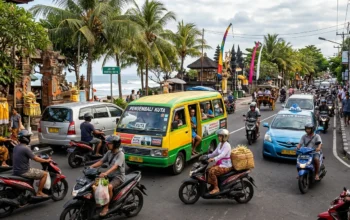
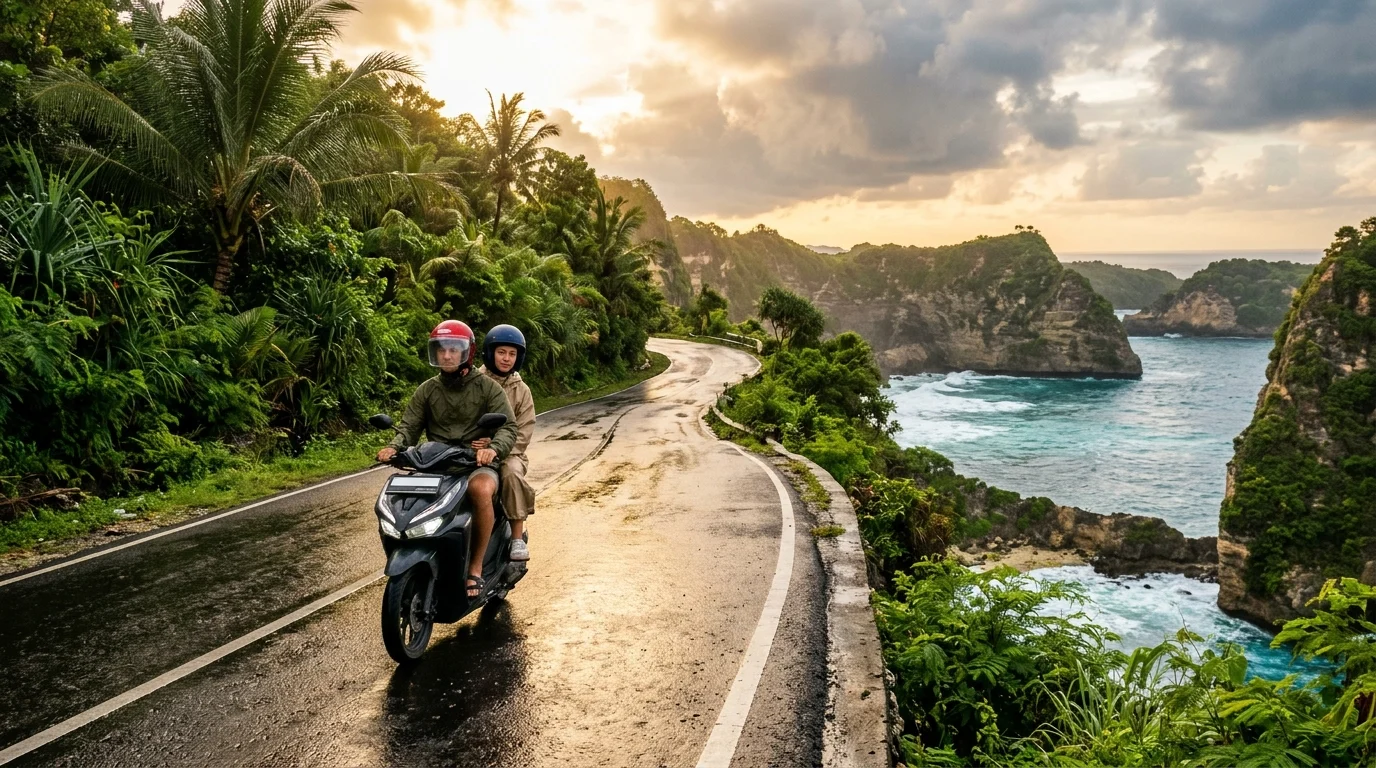
If your agenda includes renting a scooter or private car in Bali from mid to late November, riding discipline must be maintained. According to an official statement from the Indonesian National Police Public Relations Division, Bali Regional Police, the police are holding the Zebra Agung Operation 2026 for 14 days from 16–29 November 2026.
This operation responds to a roughly 20 percent increase in traffic accidents while also preparing vehicle flows ahead of Christmas and New Year. As reported by detikBali regarding the Zebra Agung Operation 2026, enforcement is firm and without exception—including for foreign tourists (foreign nationals)—using electronic traffic cameras (ETLE) and direct roadblocks.
Mandatory Requirements When Renting a Vehicle
- Complete Documents: Domestic tourists must carry an active SIM C/A and the original STNK from the rental company. Foreign tourists must hold a valid International Driving Permit for the motorcycle category, not merely a driving licence from their home country.
- Physical Safety: Riders and passengers must wear fastened SNI-certified helmets, turn on the headlight during the day, and wear modest clothing and closed footwear.
- Estimated Rental Costs: 110–125 cc scooters (Scoopy/Vario) range from Rp75,000–Rp120,000/day, while the 150–160 cc class (NMAX/PCX) is around Rp140,000–Rp200,000/day, generally already including two SNI helmets and a raincoat. If you are not used to narrow and slippery roads in Canggu–Seminyak, renting a car with a local driver for Rp600,000–Rp800,000/10 hours (including fuel) is far safer.
2. BMKG Extreme Weather Mitigation & High Waves in Bali Waters
November marks the active transition toward the peak of the rainy season. Referring to the BMKG Weekly Weather Forecast for the period 17–23 November 2026, regional atmospheric dynamics are triggering the growth of heavy rain clouds accompanied by lightning and short-duration strong winds in nine regencies/cities in Bali.
In marine areas, a report by IDN Times Bali regarding the BMKG wave warning notes the potential for waves of 1.25 to 2.5 meters in the southern Bali Strait, Badung Strait, Lombok Strait, and the Indian Ocean south of Bali. Local reporting in GoBaliGo also highlights calls to temporarily suspend high-risk outdoor activities on mountain routes and landslide-prone waterfalls such as parts of the Kintamani and Karangasem areas during heavy rain.
Strategies for Planning Your Itinerary During the Rainy Season
- Make the Most of the Morning (06:30–11:30 WITA): Mornings in Bali in November tend to be sunny to lightly cloudy, while heavy rain often falls starting at 13:30 WITA. Schedule beach trips, Ubud, or cycling in Sanur in the morning, then shift to spa or indoor dining in the afternoon.
- Nusa Penida & Gili Crossings: Choose morning fast boat departures (07:30–09:00 WITA) from Sanur Harbor when the wind is relatively calm. Round-trip ticket fares range from Rp150,000–Rp250,000 (Indonesian citizens) or Rp300,000–Rp450,000 (foreign nationals). Always obey the red flags of the lifeguard and prepare a flexible schedule.
- Avoid Trekking After Heavy Rain: Water flow at waterfalls in Buleleng, Bangli, and Gianyar can surge quickly after nighttime rain. Postpone river activities or cliff hikes until conditions are stable.
3. Fast Flow at Ngurah Rai Airport: All Indonesia & Biometric Autogate
I Gusti Ngurah Rai International Airport (DPS) is currently handling high passenger volumes, reaching around 2.1 million passenger movements per month ahead of the end of the year according to a report by The Bali Times. Referring to the guide by Legal Indonesia regarding the Bali airport Autogate system, complete the following three digital steps before international departure:
- All Indonesia Arrival Card (Mandatory & Free): Combines immigration data, customs declaration (e-CD), and health quarantine in one official portal allindonesia.imigrasi.go.id. Fill it out at most 72 hours before flying and save the resulting QR code offline.
- e-VOA for Autogate Access: So that foreign tourists can pass through the autogate in 15–25 seconds, purchase the e-VOA in advance through evisa.imigrasi.go.id for Rp500,000 (valid for 30 days). Buying a manual VOA at the airport counter cannot open the autogate door.
- Love Bali Levy: Foreign national guests are also required to pay a regional levy of Rp150,000 per person through lovebali.baliprov.go.id before or upon arrival.
4. Summary Table of Documents, Estimated Costs (IDR), & On-the-Ground Mitigation
| Preparation Aspect | Current Rules / Conditions | Estimated Cost (IDR) | Practical Recommendation |
|---|---|---|---|
| Traffic (16–29 Nov 2026) | Zebra Agung Operation; ETLE & direct fines | Motorbike Rp75,000–Rp200,000/day; Car + driver Rp600,000–Rp800,000/10 hours | Carry an original SIM C/A or International Driving Permit, STNK, and a fastened SNI helmet |
| Weather & Sea Crossings | Heavy afternoon rain; waves 1.25–2.5 m in Badung Strait & South Bali | Fast boat Sanur–Nusa Penida round trip Rp150,000–Rp450,000 | Depart in the morning (07:30–09:00 WITA), monitor BMKG Info, follow officer instructions |
| Ngurah Rai Airport Arrival | Mandatory All Indonesia QR + e-VOA for Autogate (foreign nationals) | All Indonesia Rp0; e-VOA Rp500,000; Love Bali Rp150,000 | Fill out at most 3 days before flying; save a screenshot of the QR code |
| Airport Transport | Congestion increases during afternoon rain in Kuta–Canggu | Taxi to Seminyak–Canggu Rp150,000–Rp300,000; to Ubud Rp350,000–Rp500,000 | Head to the airport 3.5–4 hours before an international flight when it rains |
5. Local Etiquette During the Rainy Season & Enforcement
While riding and travelling through customary villages (banjar), travellers need to maintain courtesy toward local residents:
- Respect Pecalang & Traditional Processions: When the road narrows due to an odalan or ngaben procession, do not honk repeatedly or overtake the group of pedestrians.
- Slow Down on Flooded Roads: Avoid splashing rainwater puddles toward residents or offerings (canang sari) placed in front of houses and shops.
- Dress Modestly: Wear modest clothing in residential areas and a sarong (kamen) and sash when entering temple courtyards.
Frequently Asked Questions (FAQ)
1. Are domestic tourists (Indonesian citizens) also checked in the Zebra Agung Operation 2026?
Yes. Enforcement applies comprehensively to local residents, domestic tourists, and foreign nationals. Always carry your original driving licence, STNK, and wear an SNI helmet to avoid manual fines or ETLE.
2. Do domestic flights to Bali need to fill out the All Indonesia Arrival Card?
No. The All Indonesia form is specifically required for international flight passengers arriving from abroad into Indonesia.
3. How should I anticipate if the fast boat to Nusa Penida is delayed by bad weather?
Choose an operator that offers flexible rescheduling (free reschedule) and avoid booking non-refundable hotels on the small island right on the day of your flight departure from Denpasar.
4. How much buffer time is safe to get to Ngurah Rai Airport during afternoon rain?
From Canggu, Uluwatu, or Ubud, congestion during heavy rain can reach 1.5–2.5 hours. Depart at least 3 hours before a domestic flight and 4 hours before an international flight.