

Indonesia has always been a favorite holiday destination for tourists from various countries. Bali is certainly one of the most visited destinations because of its beaches, culture, cuisine, and diverse accommodation options.
Before booking flights and arranging your itinerary, there is one important thing to check first: the visa. The type of visa required can differ depending on citizenship, length of stay, and purpose of travel.
For some tourists, the process is quite simple and can be done upon arrival in Indonesia. However, tourists who wish to stay longer may need to apply for a visa before departure.
Here is a practical guide to help you choose and manage a holiday visa to Indonesia.
Do All Tourists Need a Visa?
Not all tourists need the same type of visa. Indonesia’s entry policy is determined based on the passport or citizenship used.
In general, international tourists can enter Indonesia using one of the following facilities:
- Visa Exemption
- Visa on Arrival (VoA)
- Electronic Visa on Arrival (e-VoA)
- Tourist Visit Visa for longer stays
Before departure, check whether your country is included in the list of countries eligible for Visa Exemption or Visa on Arrival. This list can change, so it is best to always check it through the official website of the Indonesian Directorate General of Immigration.
Visa Exemption for Short Holidays
Visa Exemption (BVK) is suitable for tourists from certain countries who only want to vacation for a short time.
With this facility, tourists can stay in Indonesia for a maximum of 30 days. The stay is counted from the date of arrival and cannot be extended.
This facility is usually suitable for short holidays, for example one or two weeks in Bali. You do not need to pay a visa fee, but you must still meet entry requirements such as passport validity and a ticket to leave Indonesia.
An important thing to remember is that Visa Exemption cannot be extended. If you want to stay more than 30 days, it is better to choose Visa on Arrival or another visit visa from the start.
Visa on Arrival and e-VoA
Visa on Arrival is the most common choice for tourists coming to Bali. This visa is also known as visa B1.
Visa on Arrival can be used for tourism activities, visiting family or friends, attending certain meetings, and transiting before continuing to another country.
The initial stay is 30 days and can be extended once for another 30 days. This means the maximum total stay using Visa on Arrival is 60 days. The official fee is Rp500,000.
There are two ways to get it.
Processing VoA Upon Arrival in Indonesia
Tourists from eligible countries can purchase Visa on Arrival at the airport or seaport of arrival.
If you fly directly to Bali, the process can be done in the international arrival area of I Gusti Ngurah Rai Airport before passing through immigration checks.
This method is quite practical, but you may need to queue, especially when the airport is busy.
Applying for e-VoA Before Departure
Electronic Visa on Arrival is the online version of Visa on Arrival. The application and payment can be done before you fly to Indonesia through the official Indonesian Immigration eVisa portal.
You need to create an account, fill in personal data, upload the passport bio page, enter travel information, upload a recent photo, and make an online payment.
e-VoA provides the same stay duration and extension rights as regular VoA. The advantage is that you can prepare the visa before arrival, making the arrival process usually more practical.
e-VoA is valid for entry into Indonesia within 90 days from issuance. This validity for entry is different from the stay duration in Indonesia.
General Requirements for Visa on Arrival
Before applying for or purchasing Visa on Arrival, prepare the following documents:
- Passport with a validity of at least six months from the date of arrival
- Return ticket or onward ticket to another country
- Recent color passport photo for electronic applications
- Debit or credit card for e-VoA payment
- Address of accommodation in Indonesia
Make sure the name, passport number, date of birth, and other information entered exactly match your passport. Small errors can make the inspection process longer or require you to apply for a new visa. Official VoA requirements include a passport valid for at least six months and a ticket to leave Indonesia.
How to Extend Visa on Arrival
Visa on Arrival can be extended once for an additional 30 days.
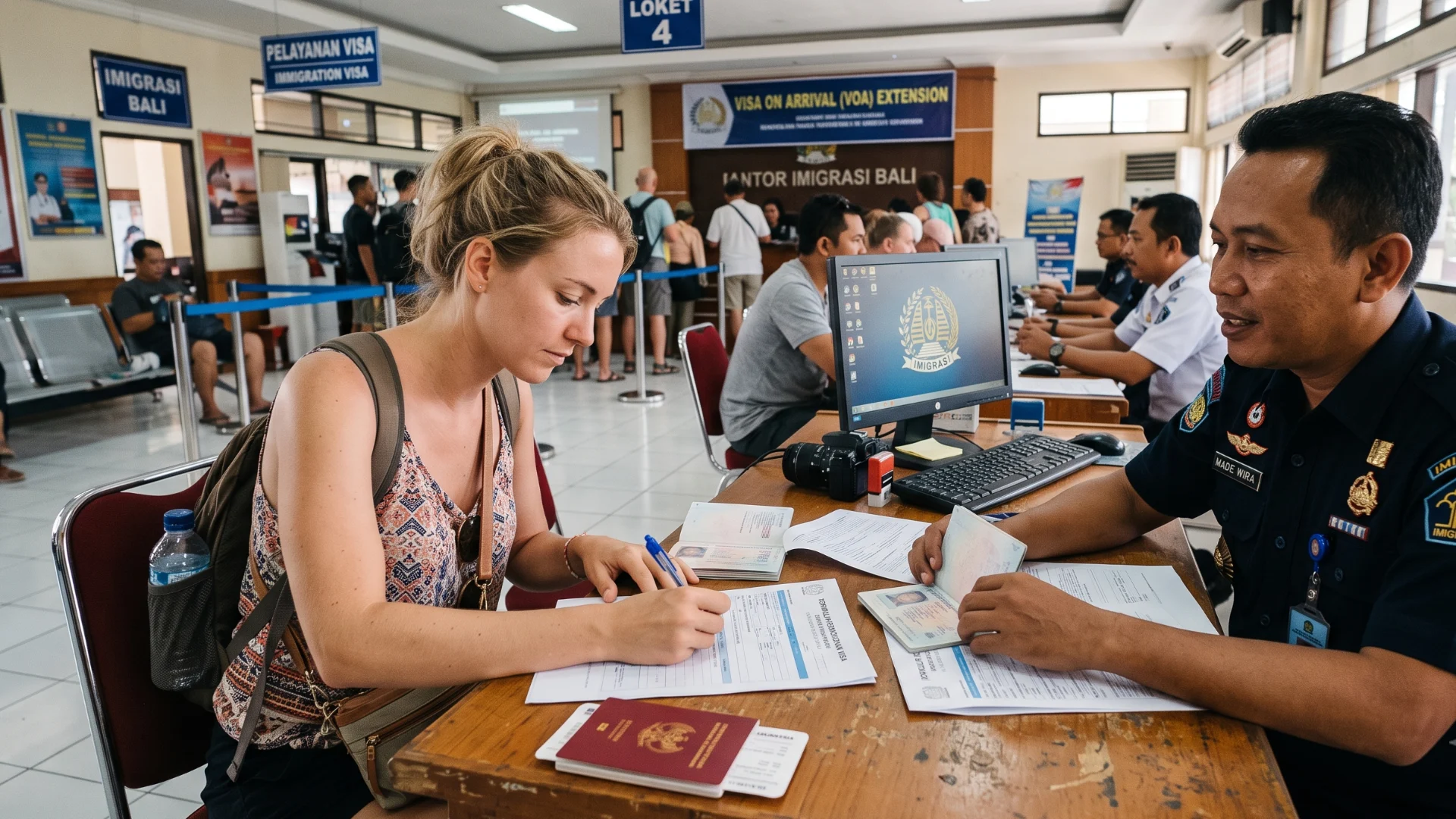
Holders of e-VoA can apply for an extension online through their account on the Immigration eVisa portal. Meanwhile, holders of non-electronic VoA can process the extension through the immigration office corresponding to their area of residence.
Do not wait until the last day. Start checking the extension process a few days before the stay permit expires.
Also note that the stay is usually counted from the day of arrival, not based on the number of nights staying at a hotel or villa. Check the end date of the stay permit recorded on your immigration documents.
Tourist Visa C1 for Longer Holidays
Tourists who plan from the start to stay more than 30 or 60 days can consider the C1 tourist visa.
The C1 visa provides an initial stay of up to 60 days. The stay permit can be extended several times up to a maximum total of 180 days.
Unlike Visa on Arrival, applying for a C1 visa requires a guarantor or sponsor. The required documents usually include a passport valid for at least six months, a recent photo, documents from the guarantor, and proof of funds to finance the trip.
The official fee for the C1 visa is Rp1,000,000. In its official provisions, the applicant or guarantor also needs to show proof of living expenses of at least USD 2,000.
This visa is more suitable for tourists who want to stay longer, explore several islands, take long trips, or spend a few months in Bali.
Fill Out the All Indonesia Arrival Card
In addition to a visa, all passengers entering Indonesia are required to complete the arrival card online through the All Indonesia service.
This card is different from a visa. Having a visa does not mean you have automatically filled out the arrival card.
Fill out the form using data that matches your passport and flight information. Also prepare the address of your first hotel, villa, or accommodation in Indonesia.
The form should be completed before departure so you are not rushed to fill it out upon arrival at the airport.
Foreign Tourist Levy in Bali
Foreign tourists visiting Bali also need to pay a foreign tourist levy of Rp150,000 per person.
This levy is different from visa fees and is only paid once during your trip in Bali. Payment is made non-cash through the official Love Bali system.
Keep the payment receipt or QR code because officers may ask tourists to show it while in Bali.
Common Mistakes Made by Tourists
Passport Nearly Expired
Passports generally must be valid for at least six months from the date of arrival. Do not just check the validity when booking tickets. Check again before departure.
Choosing Visa Exemption for Stays Over 30 Days
Visa Exemption cannot be extended. If your holiday plans are longer, choose VoA, e-VoA, or an appropriate tourist visa from the start.
Entering Passport Number Incorrectly
Check every number and letter before submitting your e-VoA application. Also make sure you use the same passport when applying for the visa and when traveling.
Not Preparing a Ticket to Leave Indonesia
Airline or immigration officers may ask for proof that you will leave Indonesia before your stay permit expires. Prepare a return ticket or onward ticket.
Ignoring the End Date of Stay Permit
Do not assume the stay permit ends based on your villa check-out date. Use the official date recorded in the immigration system or documents.
Using a Tourist Visa for Work
Tourist visas do not grant permission to work or receive payment from individuals or companies in Indonesia. Holders of B1 and C1 visas are prohibited from selling goods or services and receiving wages from parties in Indonesia.
Preparation Before Flying to Bali
To ensure a smooth trip, prepare the following documents in both digital and printed form:
- Valid passport
- Visa or e-VoA
- Return ticket or onward ticket
- Accommodation booking confirmation
- Proof of payment for the Bali tourist levy
- All Indonesia arrival card
- Travel insurance
- Copies of important documents
Keep copies of documents on your phone and online storage. Do not only store them on one device because your phone could run out of battery, get damaged, or be lost during the trip.
Conclusion
Managing a holiday visa to Indonesia is actually not too complicated as long as you choose the right type of visa.
For holidays up to 30 days, Visa Exemption or Visa on Arrival may be sufficient. For trips up to 60 days, e-VoA is a practical choice because it can be extended online. Meanwhile, the C1 visa is more suitable for tourists who want to stay longer.
Visa regulations can change at any time. Before buying tickets and departing for Bali, always recheck information through the Indonesian Directorate General of Immigration and the official eVisa portal. With proper preparation, you can go through the arrival process more calmly and start enjoying your holiday in Bali.