

Bali is not only known for its beaches and natural scenery. The life of the Balinese people is also closely tied to various traditions and religious ceremonies. One ceremony that is still frequently performed today is the Melaspas Ceremony.
This ceremony is usually carried out after the construction of a house, villa, office, shop, place of business, sacred place, or other building is completed. Melaspas can also be performed on old buildings that have just been renovated.
For Hindus in Bali, a building not only needs to be physically complete. The building also needs to be cleansed and purified spiritually before it is used by its owner or occupants.
What is the Melaspas Ceremony?
Melaspas is a ceremony to cleanse and purify a new building or a building that has been renovated. This ceremony is performed before the building is used as a residence, place of business, government activity, or other activities.
Generally, the word Melaspas comes from two words in Balinese, namely “mlas” which means separated and “pas” which means suitable or united.
This meaning describes a building made from various different elements, such as stone, brick, earth, wood, iron, and other materials. All these elements are then united into a complete building that is suitable for use.
Purpose of the Melaspas Ceremony
The main purpose of the Melaspas Ceremony is to purify the building spiritually before it is occupied or used. Balinese Hindus believe that the construction process involves many people, materials, tools, and activities that may bring certain influences into the building.
Through the Melaspas Ceremony, the building owner prays that the building will have a good, comfortable, and harmonious atmosphere.
This ceremony is also a form of request to Ida Sang Hyang Widhi Wasa that the people who live or carry out activities in the building be given safety, peace, health, and smoothness in their lives.
In addition, Melaspas is a form of gratitude because the construction or renovation process has been completed well.
What Buildings Need Melaspas?
The Melaspas Ceremony is not only performed for residential houses. This ceremony can be carried out for various types of buildings, such as:
- New houses
- Villas or guesthouses
- Hotels
- Offices
- Shops
- Restaurants
- Warehouses
- Bale banjar
- School buildings
- Sacred places or shrines
- Buildings that have just been renovated
The size of the building is not the main measure. The implementation of the ceremony is usually adjusted to the type of building, its purpose, family customs, regional traditions, and the ability of the building owner.
When is the Melaspas Ceremony Held?
Melaspas is generally carried out after the construction or renovation process is completed and before the building is used.
However, the day of implementation is usually not chosen arbitrarily. Balinese people recognize the calculation of good days or dewasa ayu which is used to determine the timing of various important activities.
The building owner usually consults with a pemangku, sulinggih, or someone who understands the Balinese calendar calculation. The selection of a good day is done so that the ceremony runs smoothly and the building brings goodness to its occupants.
Preparation Before Melaspas
Before the Melaspas Ceremony is carried out, several things need to be prepared.
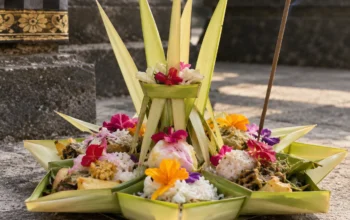
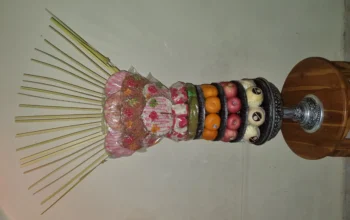
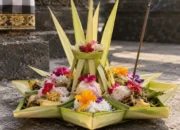
First, the building owner needs to determine the day of implementation. After that, the family will prepare the ceremony facilities or banten according to the level of the ceremony to be performed.
The type and amount of banten can differ in each region. The preparation is usually assisted by serati banten, family members, or the surrounding community who understand the procedures for making ceremony facilities.
The building also needs to be cleaned first. Remaining construction materials, trash, dust, and work tools should be tidied up so that the area is ready for the ceremony.
The building owner also needs to coordinate with the pemangku or sulinggih who will lead the ceremony.
Sequence of the Melaspas Ceremony
The sequence of the Melaspas Ceremony can differ depending on regional traditions, type of building, and level of ceremony. Therefore, not all Melaspas Ceremonies have the same structure.
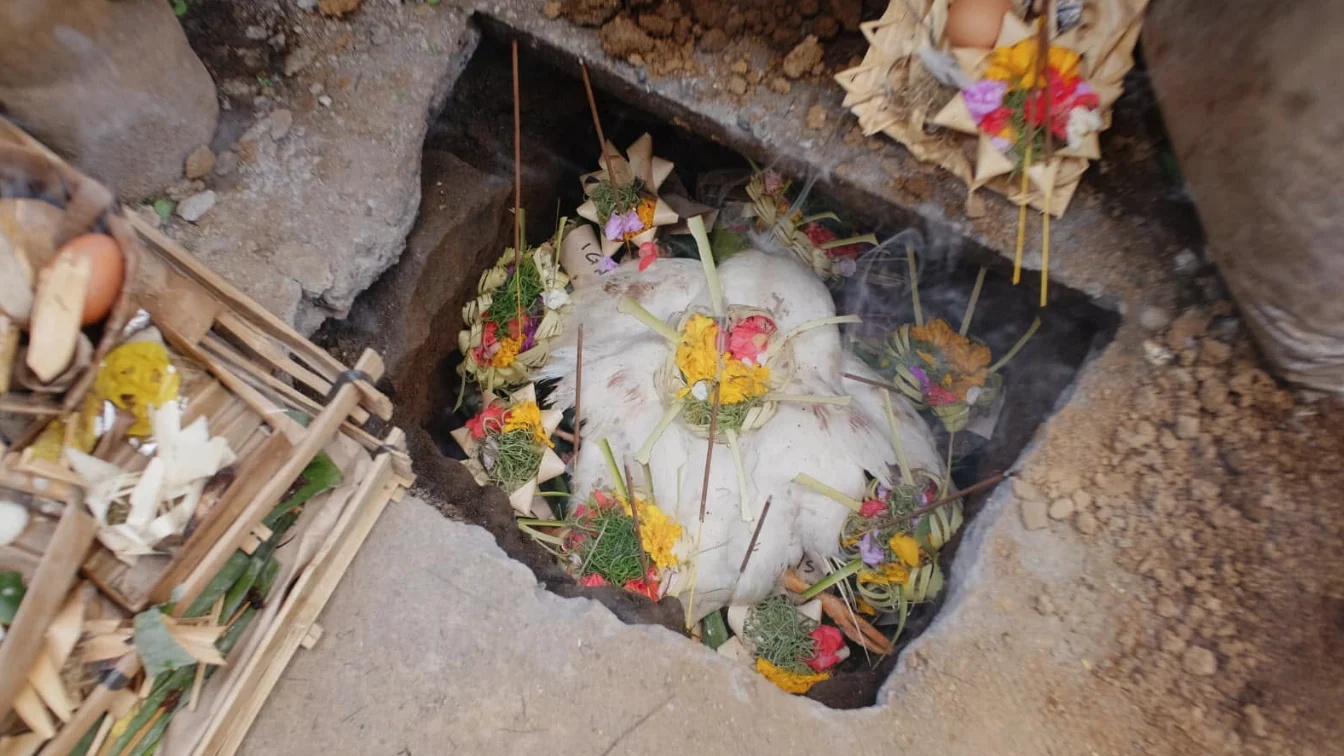
In its implementation, the ceremony can begin with a mecaru or pacaruan procession. This procession is related to efforts to maintain balance and harmony in the environment around the building.
After that, it continues with prayers and the delivery of requests to Ida Sang Hyang Widhi Wasa. The pemangku or sulinggih will lead the prayers and sprinkle tirta or holy water on several parts of the building.
Tirta can be sprinkled on the yard, entrance, rooms, corners of the building, and other parts considered important. The goal is to purify the entire area so it is ready for use.
In some implementations, there is a procession of installing certain symbols on the building and delivering orti as part of the request and purification.
After the entire sequence is complete, the owner and family usually perform prayers together. The building is then considered to have been purified and can be used according to its function.
Who Leads the Melaspas Ceremony?
The Melaspas Ceremony is usually led by a pemangku or sulinggih. The ceremony leader will be adjusted to the type, location, and level of the ceremony being performed.
For Melaspas of a residential house or simple building, the ceremony can be led by a pemangku. Meanwhile, for sacred places, large buildings, or ceremonies of a certain level, the implementation can be led by a sulinggih.
The building owner should consult first with religious figures or those who understand local customs. This is important because each village or region in Bali can have different customs.
Do Renovated Buildings Need Melaspas Again?
Renovated buildings can also carry out the Melaspas Ceremony again, especially if the renovation is quite large.
Examples are structural changes, adding rooms, demolishing main parts, changing the roof, or rebuilding most of the building.
However, the form and level of the ceremony can be adjusted to the type of renovation. Small renovations such as repainting or repairing minor damage may not require the same ceremony sequence as a complete rebuild.
To determine the need for the ceremony, the building owner can ask a pemangku or religious figure who understands the condition of the building and the customs in that area.
The Meaning of Melaspas in Balinese Life
The Melaspas Ceremony shows that Balinese people view a building as more than just a place to shelter.
Buildings become part of human life, places where families gather, places to earn a living, and places where various activities are carried out. Therefore, buildings need to be treated well from the beginning of their use.
Through Melaspas, people are invited to always maintain a harmonious relationship between humans, the environment, and God. This ceremony also serves as a reminder that every place should be used for good and beneficial activities.
How to Respect the Melaspas Ceremony
Tourists or newcomers may have seen the Melaspas Ceremony when living in Bali. If the ceremony takes place around a villa, hotel, house, or place of business, it is best to respect the course of the activity.
Wear polite clothing if invited to participate in the ceremony. Do not move banten or ceremony equipment without permission. Avoid walking in front of people who are praying and do not take photos too closely without asking permission.
The atmosphere of the ceremony should also be kept calm. Simple attitudes such as not making noise are already a form of respect for local traditions.
Conclusion
The Melaspas Ceremony is a building purification tradition that has an important role in the lives of Hindus in Bali. This ceremony is usually performed on new buildings or buildings that have been renovated before they are occupied and used.
Melaspas is a form of gratitude as well as a request that the building provides peace, safety, and harmony for all people within it.
Although the procedures and levels may differ in each region, the main purpose remains the same, namely to purify the building and create a harmonious relationship between humans, the environment, and Ida Sang Hyang Widhi Wasa.