

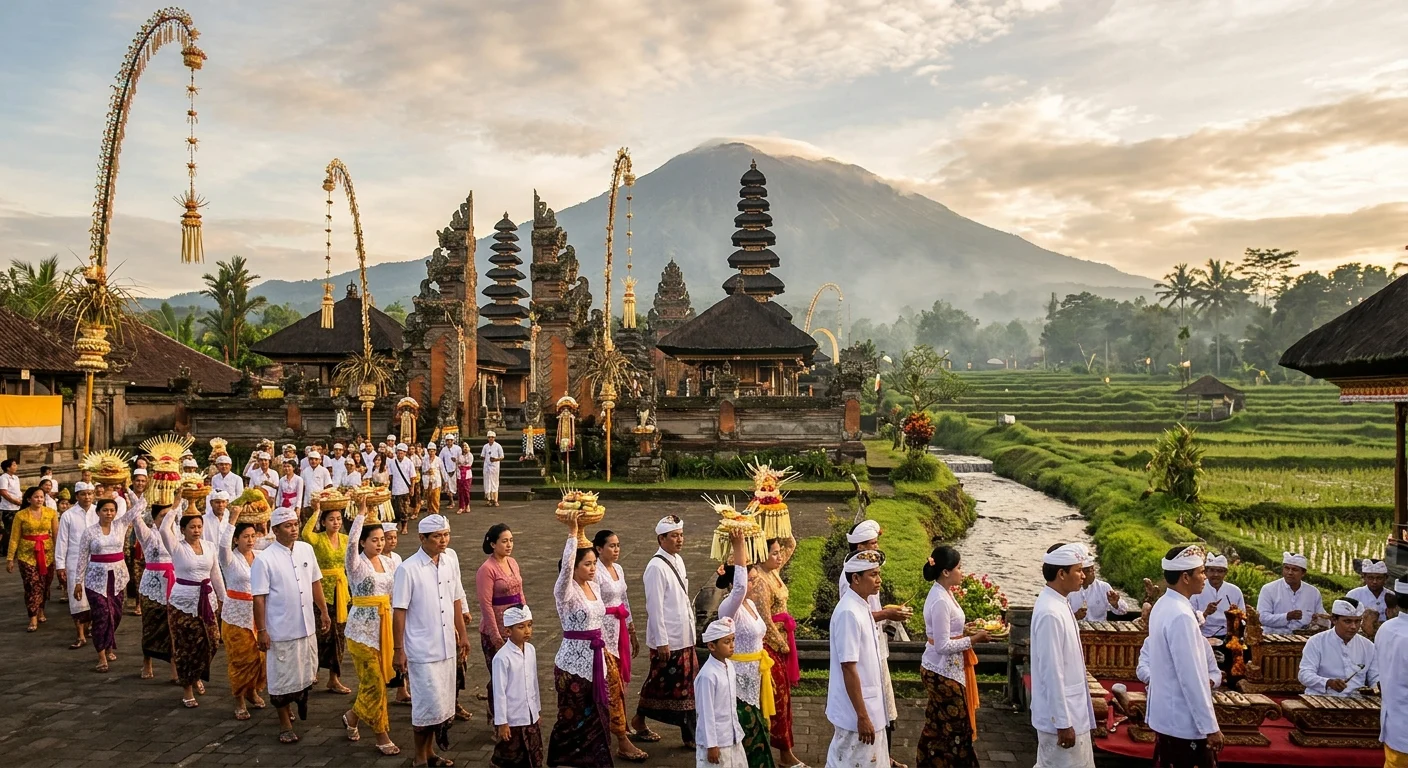
Bali is known as one of the regions in Indonesia where the majority of the population adheres to Hinduism. Various traditions, traditional ceremonies, and temples scattered across the island are an important part of Balinese people’s lives.
However, have you ever wondered, what was actually the first religion or belief in Bali before Hinduism arrived?
It turns out that long before Hinduism developed in Bali, the local people already had their own belief system that was closely tied to nature and ancestral spirits.
The First Belief in Bali Before Hinduism
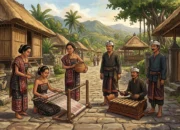
Before the arrival of Hindu and Buddhist influences, the Balinese people in prehistoric times practiced beliefs that are now often referred to as animism and dynamism.
Animism is the belief in the existence of spirits or spiritual forces, including the spirits of ancestors who have passed away.
Meanwhile, dynamism is the belief that certain objects or places possess supernatural powers. For example, large stones, old trees, mountains, or places considered sacred.
At that time, the Balinese people believed that ancestral spirits still had a connection with human life. That is why they performed various forms of respect and worship toward their ancestors.
These beliefs were not an organized religion like the religions known today, but rather part of the spiritual traditions of ancient Balinese society.
Evidence of Ancient Beliefs in Bali
The existence of Balinese beliefs before Hinduism can be traced through various archaeological remains.
One of them is the remains from the megalithic era, such as menhirs, stone statues, sarcophagi, and worship sites used to honor ancestral spirits.
Some of these remains have been found in various regions of Bali.
One example is a simple statue from Depaa Village, Buleleng Regency, which is considered a symbol of respect for ancestors.
These findings show that the Balinese people already had a spiritual life long before the development of Hinduism on the island.
When Did Hinduism Begin to Enter Bali?
Hinduism entered and developed in Bali through a process of cultural contact with other regions of the archipelago that had already been influenced by India.
This process took place gradually, rather than happening all at once.
In the 9th century AD, a number of written remains already showed the existence of religious life developing in Bali. One important source from that period is the Sukawana A1 Inscription, which dates back to 882 AD.
Over time, Hindu and Buddhist teachings increasingly developed and blended with the spiritual traditions of the local people.
Interestingly, the old beliefs of the Balinese people did not simply disappear. Some of their traditions were actually preserved and adjusted to the teachings of the religions that were developing.
Do Bali’s Ancient Beliefs Still Exist Today?
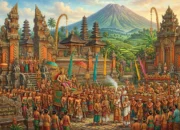
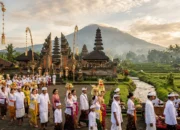
Although Hinduism has become an important part of Balinese people’s lives, some elements of ancient beliefs can still be found in local traditions and culture.
One example is the veneration of ancestral spirits.
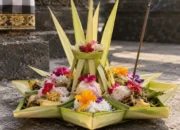
In Balinese Hindu tradition, honoring ancestors is still carried out through various religious ceremonies, including Pitra Yadnya.
In addition, the existence of family shrines such as sanggah or merajan also shows the importance of the spiritual relationship between Balinese people and their ancestors.
These traditions are one example of how the beliefs of ancient Balinese society continued to develop and blend with Hindu teachings up to the present day.
Conclusion
So, the oldest known belief that ever developed in Bali was the belief in ancestral spirits and natural forces, often referred to as animism and dynamism.
This belief had existed since prehistoric times, long before Hinduism and Buddhism developed in Bali.
Even so, there is no historical evidence that can confirm any particular religion as the first religion in Bali.
What is interesting is that some elements of these ancient beliefs can still be found in Balinese traditions today.
This is what makes the culture and religious life in Bali have a long history and characteristics that differ from other regions in Indonesia.