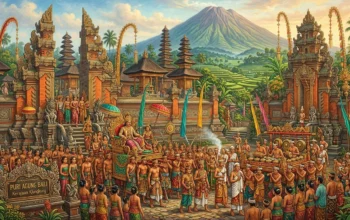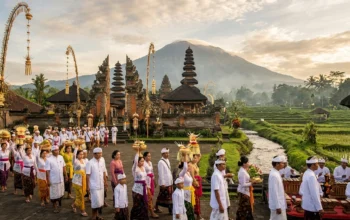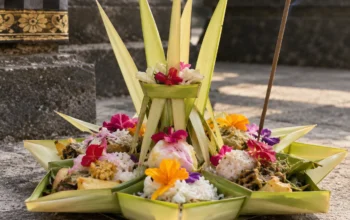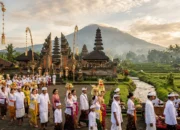


If you have ever visited Bali during major holidays such as Galungan, Kuningan, or piodalan at temples, you must have seen groups of women in traditional attire walking gracefully while carrying tall arrangements of fruits and flowers on their heads. This magnificent and aesthetic offering is called Bali Gebogan, one of the most distinctive and meaningful forms of offering belonging to the Hindu community in Bali.
Gebogan is not just a beautiful decoration for photos or a mere cultural attraction. Behind its colorful appearance, there is deep spiritual symbolism, a form of sincere gratitude, and customary rules passed down from generation to generation. Let’s delve deeper into this beautiful tradition.
What is Bali Gebogan?
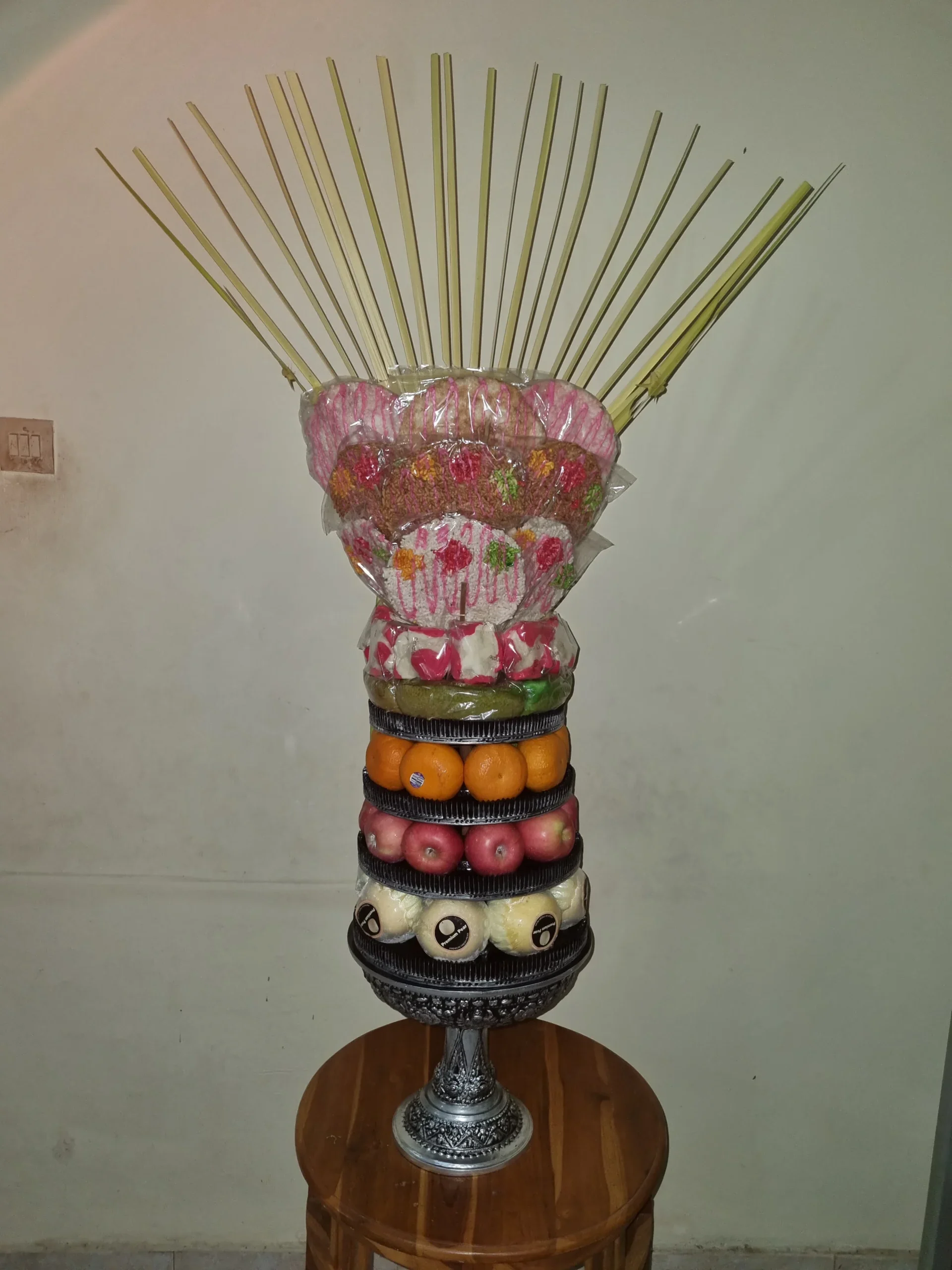
Literally, the word gebogan comes from the word gebog which means combination, pile, or amount. Bali Gebogan is a means of offering or banten arranged vertically, starting from the bottom container to its tapering peak.
In the tradition of Balinese Hindus, gebogan is also often referred to as gebogan gebog or canang gebogan. Its height can vary, ranging from medium-sized around 50 cm to towering heights exceeding 1 meter.
This offering is composed of various local fruits, traditional snacks, young coconut leaves, and fresh flowers. All are arranged in such a way using small bamboo sticks or palm leaf ribs as supports so that they stand firm and balanced when carried.
The Shape of Gebogan and the Philosophy of the Sacred Mountain
If you notice its shape, Bali Gebogan is always made to resemble a cone that gets smaller towards the top. This shape is not without reason. The cone on the gebogan symbolizes the mountain or Mahameru, which in Hindu belief is considered the abode or dwelling place of the gods and God Almighty (Ida Sang Hyang Widhi Wasa).
Balinese people believe that nature provides everything for human life. Therefore, arranging the fruits of the earth in the shape of a mountain is a symbol of returning and expressing gratitude for all the blessings, fertility, and sustenance that have been received.
The arrangement principle also reflects the concept of divinity and the universe:
- Bottom Part: Contains fruits and snacks that symbolize the wealth of nature and the earth.
- Middle Part: Decorations of young coconut leaves or palm fronds (sampian) beautifully arranged as a symbol of devotion and aesthetic value.
- Top Part: Fresh flowers and sampian gebogan decorations facing the sky, symbolizing purity and the ultimate spiritual goal towards the Almighty.
Contents and Main Elements in a Gebogan Arrangement
Arranging a Bali Gebogan cannot be done haphazardly. Each material used has its own meaning and function. Some of the main ingredients that must be present in a gebogan arrangement include:
1. Dulang
Dulang is a container made of wood or keben that has legs at the bottom. Dulang serves as the main foundation where all fruits and snacks are arranged.
2. Support Pole (Katem/Bamboo)
In the center of the dulang, a small bamboo pole or banana trunk is installed to serve as the central axis. Without this pole, the arrangement of fruits cannot stand stable.
3. Fresh Fruits
The types of fruits used are usually local Balinese fruits such as bananas, apples, oranges, mangosteen, snake fruit, mango, and jackfruit. Bananas are almost always the base ingredient in the bottom layer because of their large size and sturdiness to support other fruits above.
4. Traditional Snacks
In addition to fruits, gebogan is also interspersed with typical Balinese snacks such as jajan uli, begina, dodol, and colorful wet snacks. These snacks provide texture and color contrast that further beautify the appearance.
5. Sampian and Fresh Flowers
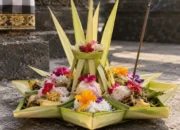
At the top, the gebogan is decorated with a finely carved young coconut leaf crown (sampian gebogan) and piles of fresh flowers such as gemitir (marigold), balsam, frangipani, and roses.
The Meaning of Gratitude and Aesthetic Balance (EEAT Perspective)
From the perspective of Balinese art and cultural philosophy, the making of gebogan applies the principle of Tri Hita Karana, especially the harmonious relationship between humans and God (Parahyangan) and humans and nature (Palemahan).
Women in Bali pour dedication, patience, and high meticulousness when arranging gebogan. The neatness of the fruit arrangement, the freshness of the flowers, and the balance of the load when carrying it are forms of Bhakti Marga or the path of devotion through sincerity of heart.
There are ethical values and aesthetic values (satyam, sivam, sundaram) at stake. Gebogan must look beautiful (sundaram), made with a holy and honest intention (satyam), and offered for the common good (sivayam).
The Mepeed Tradition: When Gebogan is Carried Together
One of the most spectacular moments you can witness in Bali is the Mepeed tradition. Mepeed is a tradition of walking in a long procession where Balinese women carry gebogan on their heads towards the temple.
Carrying a gebogan weighing 5 to 15 kilograms while walking requires extraordinary body balance and mental calm. Women in Bali have trained this skill since childhood. Seeing rows of women in complete traditional attire carrying colorful gebogan along village roads is a very graceful and magical cultural sight for anyone who sees it.
Gebogan Today: Between Tradition and Creativity
Over time, the tradition of making Bali Gebogan continues to evolve without losing its core meaning. Nowadays, gebogan forms are increasingly varied and creative.
At cultural parties or banten arranging competitions, gebogan is often designed with very detailed fruit color combinations, such as color gradients from red snake fruit, green oranges, to yellow bananas.
Nevertheless, traditional elders in Bali always remind that making gebogan should not be excessive to the point of triggering consumptive behavior or showing off. The main essence of gebogan remains sincerity of heart (lascarya). A simple gebogan made with full sincerity has the same high spiritual value as a grand and luxurious gebogan.
Conclusion
Bali Gebogan is not only an aesthetic heritage that delights the eyes, but also a deep reflection of human gratitude to nature and the Creator. Through the combination of fruits, flowers, young coconut leaves, and dedication in arranging them, Bali Gebogan proves how beautiful the harmony between culture, art, and spirituality that continues to live on the Island of the Gods.