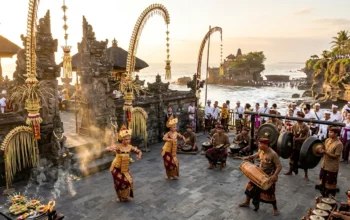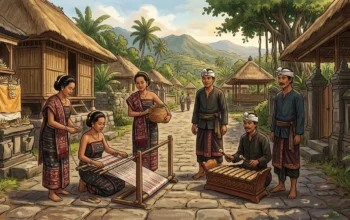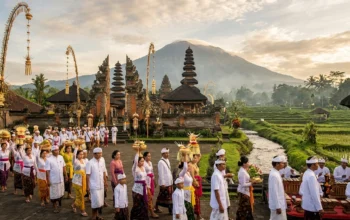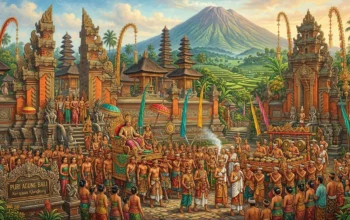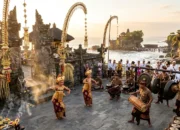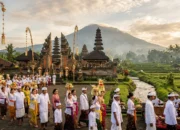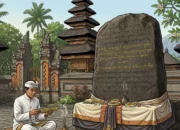


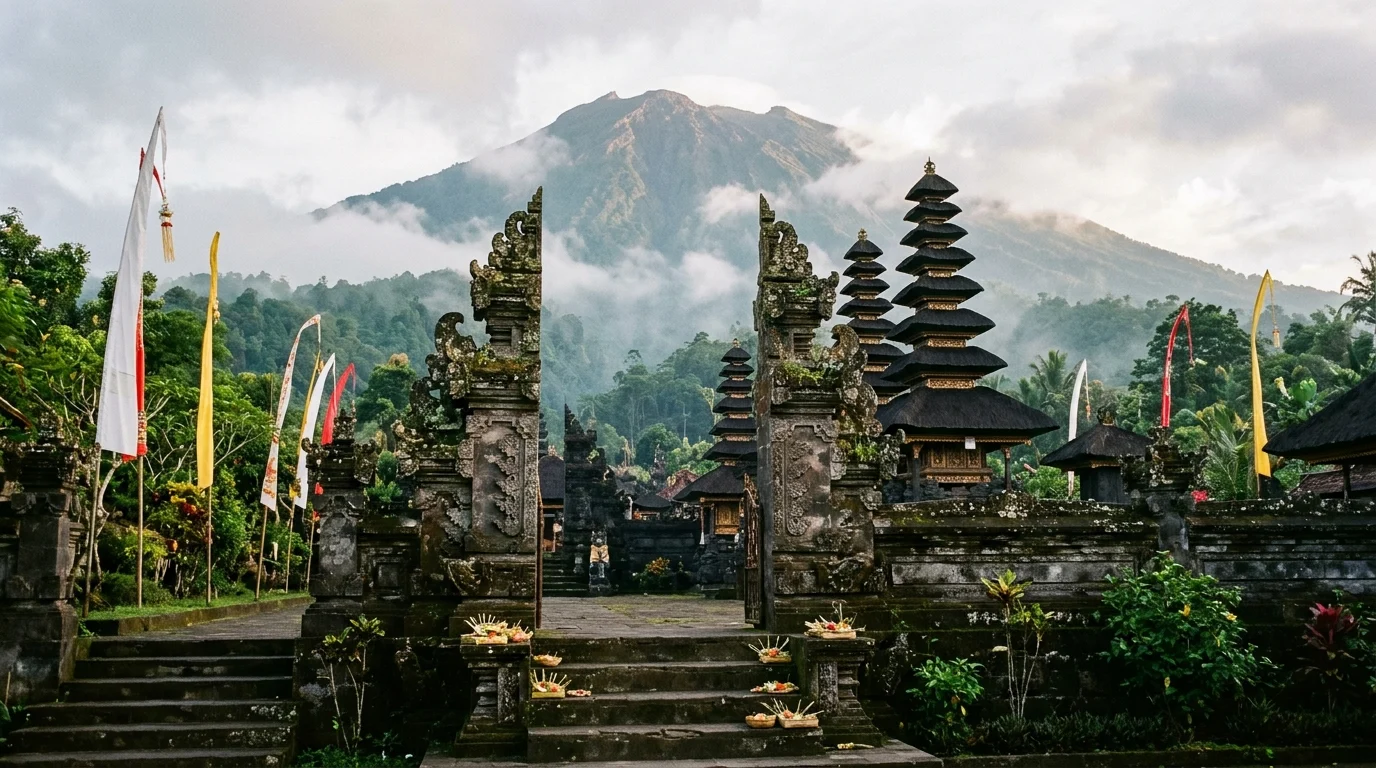
The second half of November 2026 reveals a strong spiritual pulse in Bali in the area at the foot of Mount Agung and the island’s agricultural centers. Balinese Hindus have just completed the sacred Nuwek Bagia Pula Kerti procession as the closing of the series of pujawali at Pura Pasar Agung Besakih Giri Tohlangkir, Karangasem, and then welcome Rahinan Bhatara Sri precisely on Friday, 20 November 2026, ahead of Purnama Sasih Kenam on 24 November 2026.
Understanding the meaning of these rituals not only enriches cultural insight, but also provides preparation so that visits to sacred temples and traditional villages take place respectfully and safely.
1. The Nuwek Bagia Pula Kerti Procession at Pura Pasar Agung Giri Tohlangkir
The series of pujawali at Pura Pasar Agung Besakih Giri Tohlangkir, Sebudi Village, Selat District, Karangasem—whose peak fell on Purnama Kalima 25 October 2026—was officially closed (penyineban) on Wednesday, 18 November 2026 (Buda Wage Ukir). Referring to the official report of the Bali Provincial Government regarding the Nuwek Bagia Pula Kerti procession, Governor Wayan Koster was present together with the pemedek to attend the closing ceremony.
As reviewed by Bali Ilu regarding the meaning of Penyineban Pujawali Pura Pasar Agung, Nuwek Bagia Pula Kerti is a procession of thrusting a sacred keris into the Bagia Pula Kerti offering, blessed by Ida Pedanda Istri Rai Suabawa from Geriya Gede Timbul, Selat:
- Bagia Pula Kerti symbolizes inner happiness from sacred deeds as well as the elements forming the universe (Panca Maha Bhuta).
- The Nuwek ritual marks the completion of the series of sacred karya with the hope that prosperity and natural balance are maintained.
Located at an altitude of about 1,600 meters above sea level, RRI Denpasar notes that Pura Pasar Agung is one of the Pura Kahyangan Jagat that serves as an important spiritual axis for the people of East Bali.
2. Rahinan Bhatara Sri (20 November 2026) and Subak Harmony
Referring to the Balinese Pawukon calendar summarized by IDN Times Bali in the November 2026 rahinan schedule, Friday, 20 November 2026 (Sukra Umanis Ukir) is Rahinan Bhatara Sri, followed by Anggar Kasih Kulantir and Purnama Sasih Kenam on Tuesday, 24 November 2026.
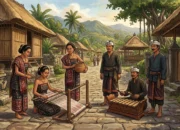
On Rahinan Bhatara Sri, the faithful worship the manifestation of Ida Sang Hyang Widhi Wasa as Dewi Sri, the symbol of fertility and the main source of food, namely rice. In rural areas, the typical scenes that can be seen include:
- Offerings of banten at the jineng (traditional rice barn) and sanggah catu in residents’ homes.
- Farmers praying at Pura Ulun Carik or Pura Bedugul in the middle of the rice terraces.
- Strengthening the philosophy of the Subak irrigation system based on Tri Hita Karana: harmony between humans and God (Parahyangan), with one another (Pawongan), and with nature (Palemahan).
For tourists, the village atmosphere during rahinan presents the scent of incense, gamelan practice at the bale banjar, and residents dressed in traditional attire heading to the temple with full solemnity.
3. Route and Weather to Pura Pasar Agung & Pura Agung Besakih
From Denpasar, Sanur, or Ubud, the journey to Sebudi Village is 40–45 kilometers with a travel time of 1.5–2 hours by driving via the Bypass Ida Bagus Mantra toward Klungkung, then turning to Sidemen and Pasar Selat before the road climbs toward the temple area.
Given that Antara Bali released an early warning from BMKG Region III Denpasar regarding the potential for moderate to heavy rain in parts of Bali, the best visiting time is 06.30–10.00 WITA. Fog and rain on the mountain slopes often descend quickly from midday to afternoon.
4. Comparison of Costs, Access, and Facilities in the Temple Area
| Location / Cultural Agenda | Administrative Location | Estimated Ticket & Cost (IDR) | Best Time | Important Notes |
|---|---|---|---|---|
| Pura Pasar Agung Giri Tohlangkir | Banjar Sogra, Sebudi Village, Selat, Karangasem | Tourism levy around Rp50,000/person; trekking packages Rp200,000–Rp650,000+ | 06.00–10.00 WITA (open 24 hours) | Cool temperatures (16–20°C); inner areas restricted during ceremonies |
| Pura Agung Besakih Complex | Besakih Village, Rendang District, Karangasem | Rp80,000 (Indonesian citizens) / Rp150,000 (foreign nationals) | 08.00–11.00 WITA | According to Detik Bali regarding Besakih rates, includes electric shuttle, guide, & kamen |
| Subak Area & Rice Field Temples | Sidemen (Karangasem) or Jatiluwih (Tabanan) | Parking Rp2,000–Rp5,000; Jatiluwih ticket Rp15,000–Rp50,000 | 07.00–09.30 WITA | Suitable to visit during Rahinan Bhatara Sri or Purnama |
5. Mandatory Etiquette for Tourists at Temples and in Balinese Customary Areas
- Wear a Kamen and Sash: Visitors must wear modest sleeved clothing, a Balinese sarong (kamen), and a waist sash (senteng). If you have not brought one, rentals at counters around the temple range from Rp10,000–Rp20,000.
- Obey the Cuntaka Prohibitions: Women who are menstruating and visitors who have recently experienced a family bereavement (sebel) are prohibited from entering the sacred area of the temple.
- Mind Your Position and Camera: Do not stand higher than the pemangku leading the prayers, do not step over canang sari on the floor, and avoid camera flash (flash) or flying drones without written permission from the temple’s pengempon.
- Give Priority to the Pemedek Route: On Purnama or pujawali days, give priority on the path to residents carrying offerings on the temple stairs.
Frequently Asked Questions (FAQ)
1. Are non-Hindu tourists allowed to visit Pura Pasar Agung Besakih?
Yes, as long as they remain only in the outer courtyard area open to the public, wear a kamen and sash, and do not enter the main prayer area while rituals are taking place.
2. What is the difference between Pura Pasar Agung Sebudi and Pura Agung Besakih?
Pura Agung Besakih in Rendang is the largest mother temple complex with electric shuttle services and integrated guides. Pura Pasar Agung in Sebudi Village is located higher on the southern slope of Mount Agung with a quiet atmosphere and is also a popular starting point for climbing via the southern route.
3. What can be seen during Rahinan Bhatara Sri and Purnama Sasih Kenam?
Residents present offerings of gratitude at rice barns and subak rice field temples, while traditional villages are busy with residents in traditional dress heading to the temple.
4. What equipment should be brought to Pura Pasar Agung in November?
Bring a warm jacket, a light raincoat, non-slip footwear for wet stone stairs, and small-denomination cash for parking and local stalls.