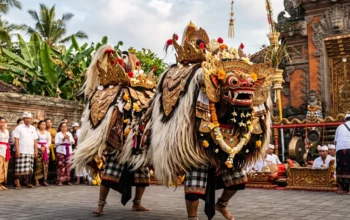


If you have ever traveled to Bali or have a Balinese friend, you must have heard the words Purnama and Tilem very often. These two days are indeed very special for the Hindu community on the Island of the Gods. Just imagine, every month there are days when the temples are full of people praying. The streets will be filled with locals wearing beautiful traditional attire. The women carry banten or offerings on their heads, and the scent of incense can be smelled everywhere.
But what exactly are Purnama and Tilem days? Why are these days celebrated so festively and sacredly by Balinese Hindus? Let’s discuss them together so you can better understand this unique Balinese culture.
What is Purnama Day?
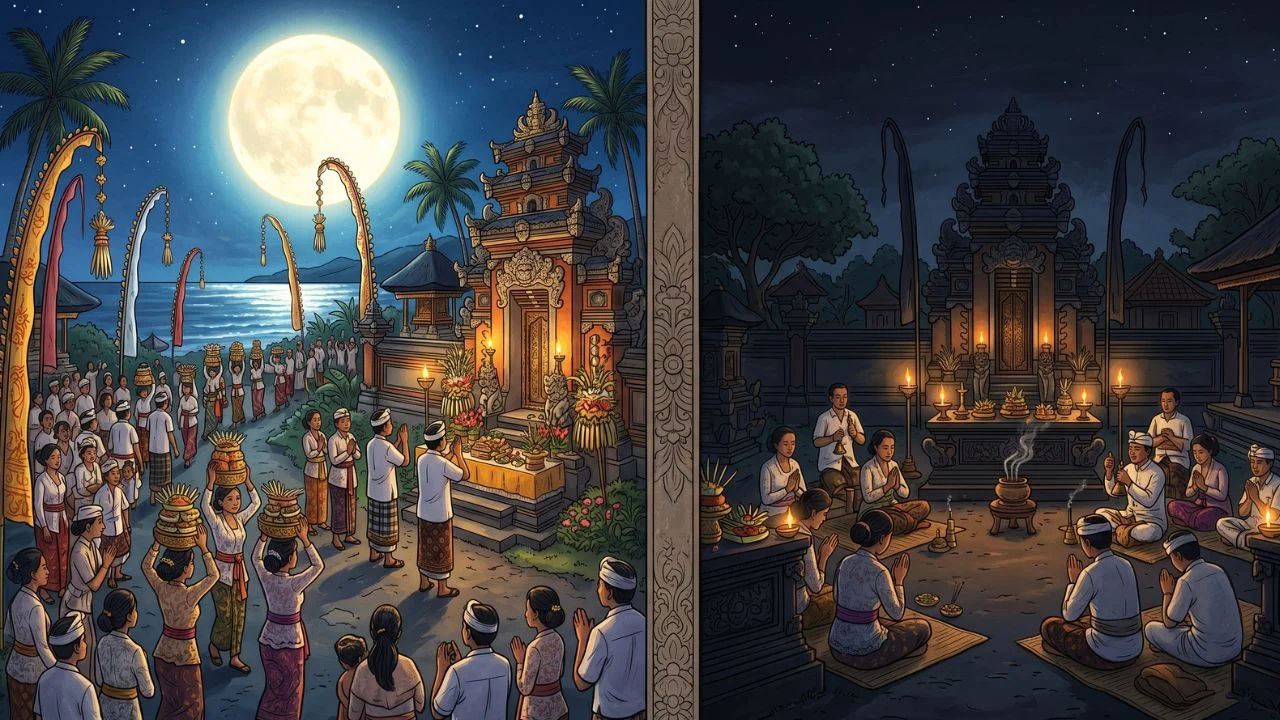
As the name suggests, Purnama Day is when the moon is shining brightly, that is, during the full moon. In the Balinese calendar system, this day falls every 15 days during the bright half of the month, often called Sukla Paksa. When Purnama arrives, the Balinese people believe that Sang Hyang Chandra, or the moon god, is performing yoga. The bright light of the full moon is believed to be a form of radiance, blessing, and purification for all living creatures on earth.
On Purnama night, the atmosphere in Bali usually becomes much more magical and calming. Large temples as well as merajan or family shrines in people’s homes will be lit by lamps and lanterns. People will flock to the temples to offer prayers, ask for safety, and seek enlightenment for their minds with good things. They strongly believe that when the moon is shining fully, the positive energy of the universe is at its peak. That is why many people feel calmer and more peaceful when performing their prayers on Purnama Day. Additionally, many temples celebrate piodalan or temple anniversaries on Purnama Day, making the atmosphere much more crowded and festive than on ordinary days.
What is Tilem Day?
If Purnama is the day when the moon is shining brightly, then Tilem is the opposite. Tilem Day falls during the new moon or dark moon, when the night sky looks very dark with no moonlight at all. In the Balinese calendar, Tilem falls during the dark half called Kresna Paksa. Even though the atmosphere is very dark, that does not mean Tilem Day has a bad or scary meaning for the Balinese people. On the contrary, Tilem has a very deep spiritual meaning and is just as important as Purnama Day.
During the Tilem celebration, Balinese Hindus worship Sang Hyang Surya, the sun god. Why worship the sun god when the night is pitch black? Balinese Hindus believe that when the moon is dark, the sun god is cleansing and dissolving all kinds of impurities in the universe, including the impurities within humans. Tilem Day is a perfect moment for self-reflection, purifying the soul from negative things, and dissolving the sins we may have committed. The darkness on Tilem Day teaches humans to reflect and seek the light of truth within themselves. Therefore, praying during Tilem essentially aims to ask for protection so that we are kept away from darkness of mind, ignorance, and other bad traits.
Why Are Both Very Important for Balinese People?
The Balinese people live by an ancient and beautiful philosophy called Rwa Bhineda. Rwa Bhineda means two opposing things that cannot be separated from one another, such as good and bad, day and night, male and female, and light and dark. The celebrations of Purnama and Tilem are a real manifestation of this Rwa Bhineda philosophy within the dimension of time. Both symbolize the balance of the universe that is absolutely necessary for life to run smoothly.
Purnama represents the energy of creation, light, peace, and prosperity. Meanwhile, Tilem represents the process of dissolution, cleansing, and the cycle back to point zero. For Balinese people, life must always be balanced. We cannot always be on top, and we will not always be at the bottom. Therefore, celebrating Purnama and Tilem is the same as maintaining the balance between the microcosm, or ourselves, and the macrocosm, or the universe outside us. If this balance is maintained properly through prayer and offerings, then peace and harmony in life will always accompany every step of humanity.
Series of Ceremonies and Preparations
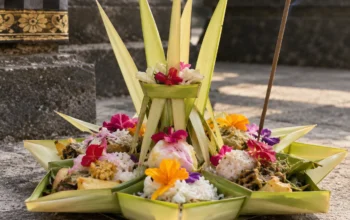
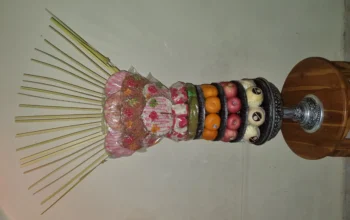
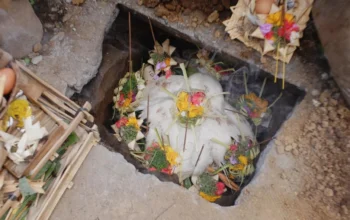
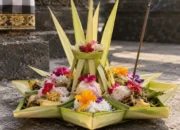
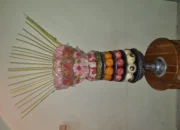
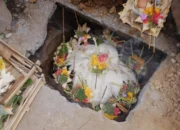
Preparations to welcome Purnama and Tilem holidays usually begin a day or two in advance. Mothers and women in Bali will be busy making canang sari and various kinds of banten at home. Canang sari is made from pieces of young coconut leaves, beautiful fresh flowers of various colors, slices of fragrant pandan leaves, and also porosan. All these natural materials are arranged very carefully and neatly because canang is a form of offering and sincere gratitude to Ida Sang Hyang Widhi Wasa, or God Almighty.
On the day itself, prayer activities begin from the smallest environment first, namely at home. The family will gather and pray together at the pelinggih or family shrine in their home compound. After finishing prayers at home, they will then go to the village temple or puseh temple in their traditional village area. When going to the temple, people wear very neat Balinese traditional attire. Men wear udeng on their heads, white shirts, and kain kamen. Meanwhile, women usually wear beautiful kebaya, a sash tied around the waist, and also kamen. The atmosphere inside the temple is very quiet even though it is filled with many people. The sound of the genta bell from the pemangku or priest, the chanting of sacred hymns sung together, and the puffs of fragrant incense smoke make the prayer moment feel very sacred and successfully calm the hearts of everyone present.
Spiritual Meaning: Learning from Nature
Purnama and Tilem days actually teach us many very valuable things in living our daily lives. We are always invited to be aware that life is an endless cycle. Sometimes we are in bright periods like Purnama, when everything feels smooth, joyful, and full of abundant happiness. However, there are times when we also have to go through pitch-dark periods like Tilem, where we may feel sad, confused, fail, or have to face many heavy trials and challenges.
Through the regular celebrations of Purnama and Tilem, the Balinese people remind us to always be grateful and not arrogant when we are feeling happy, and to remain strong, patient, and not give up when we are in trouble. When circumstances are dark, we are invited to look deeper within ourselves, evaluate, and cleanse the heart of grudges or anger. When circumstances are bright, we are invited to share the light of happiness with others in need.
That is the beauty of Balinese traditions and culture. Purnama and Tilem days are not just regular religious rituals performed every month, but they also carry very deep life messages. So, if you ever have the chance to travel to Bali and it happens to coincide with the celebration of Purnama or Tilem, try to experience the magical atmosphere for yourself. You can see the procession of ceremonies up close, and you will surely have an extraordinary cultural and spiritual experience that you will never forget.