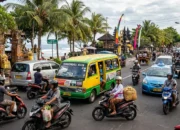


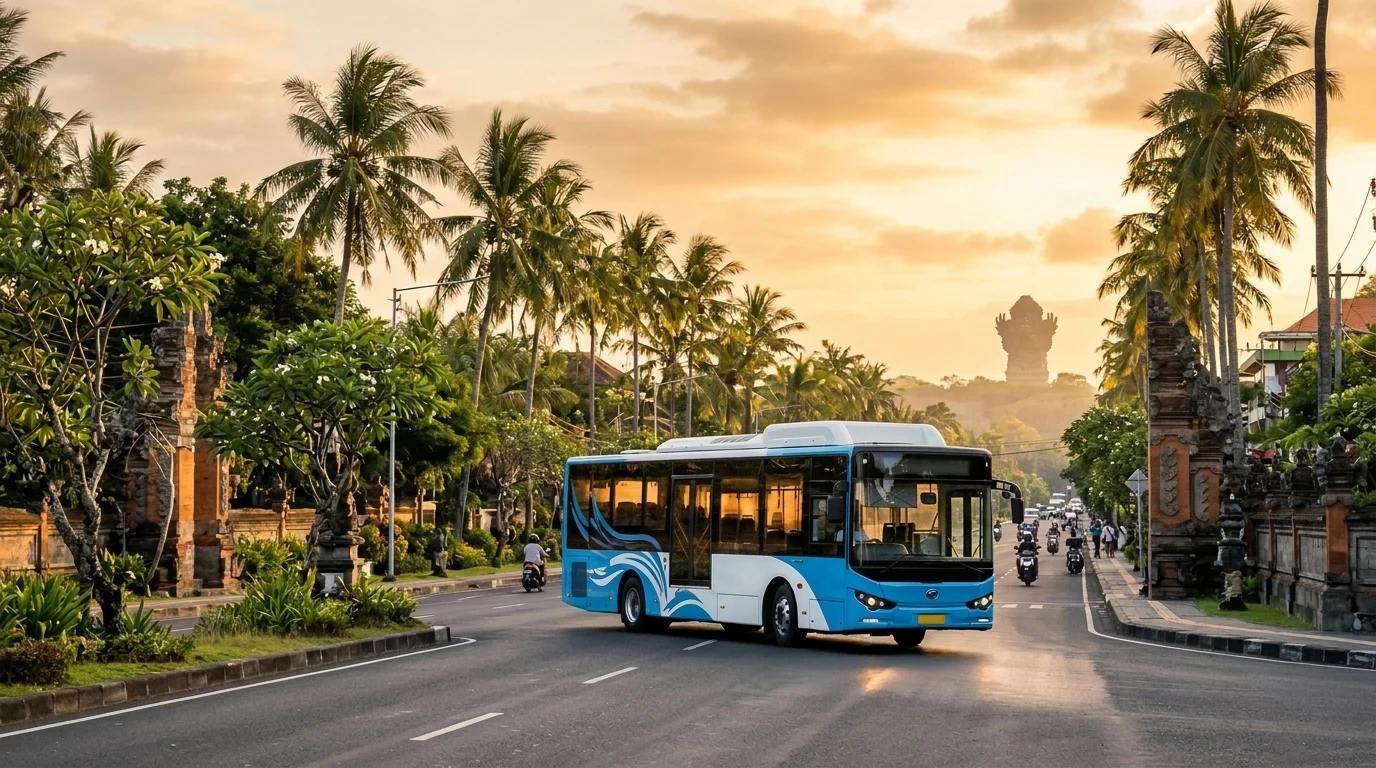
Traffic congestion in the southern corridor of Bali—from the center of Denpasar City to the hilly areas of Jimbaran and Uluwatu—often poses a particular challenge for tourists and locals alike. However, since mid-November 2026, the face of public mobility on the Island of the Gods has begun to shift toward a more modern and emission-free direction. The arrival of electric bus fleets on the main Trans Sarbagita corridor opens up a travel option that is far more economical, comfortable, and environmentally friendly.
For those of you planning to explore Denpasar to South Bali in the near future, understanding how this silent bus service works as well as the latest land transportation rules in Bali will make your travel plans much more efficient.
Getting to Know the Trans Sarbagita Electric Bus Trial on Corridor I
The Provincial Government of Bali officially launched the trial service of the Trans Sarbagita electric bus on the GOR Ngurah Rai to Garuda Wisnu Kencana (GWK) route starting November 9, 2026. This program is a concrete step in reducing carbon emissions while also reducing dependence on private vehicles on busy tourist routes.
During the introduction and evaluation period, the service operated by DAMRI is free for all passengers—both local residents and domestic and international tourists. Citing the latest report on the 14-day evaluation of the Trans Sarbagita electric bus trial, there are a total of 11 electric bus units on standby (10 units operating regularly every day and 1 unit as a reserve fleet).
Strategic Route and Stop Points
Corridor I stretches across the heart of Denpasar City to the tourist area of Bukit Jimbaran. Based on operational data summarized from the list of 46 stop points for the Trans Sarbagita electric bus on the Denpasar–GWK route, there are 46 stops from the direction of GOR Ngurah Rai toward GWK, as well as 41 stop points for the reverse route.
Several strategic points along the route include:
- East & Central Denpasar Area: The GOR Ngurah Rai area, Jalan Hayam Wuruk, and the office and city park area of Renon.
- Main Connecting Route: The Jalan Jenderal Sudirman to Sesetan corridor that connects the city center to the gateway of South Bali.
- South Badung Tourist Area: The main Jimbaran route to the entrance area of the Garuda Wisnu Kencana (GWK) Cultural Park.
Boarding Requirements and Estimated Travel Costs
Although the fare is set at Rp 0 (free) during the trial period, there are mandatory procedures you need to pay attention to on site so that your trip runs smoothly:
- Must Bring an Electronic Money Card (E-Money): Passengers must still tap in when boarding and tap out when alighting at the card reader machine inside the bus. This process is not for deducting balance, but for accurately recording the number of passengers. If you do not yet have a card, prepare a budget of around Rp 35,000 – Rp 50,000 to buy a starter e-money card (Mandiri e-Money, BCA Flazz, BRI Brizzi, or BNI TapCash) at the nearest minimarket or ask the accompanying officer on the bus about availability.
- Best Time to Ride the Bus: To avoid traffic congestion at the Sesetan and Jimbaran intersections, it is best to use the bus outside of commuting hours, namely between 09:30 – 15:30 WITA. If your goal is to enjoy the sunset at GWK or the Ungasan area, depart no later than 15:00 WITA from Denpasar.
- Additional Costs at the Destination: Upon arriving at the GWK final stop, if you want to enter the cultural park area to watch the Kecak dance performance or see the iconic statue up close, prepare an entrance ticket fee of around Rp 125,000 – Rp 150,000 per person for domestic tourists.
Comparison of South Bali Transportation Modes 2026
To make it easier to choose a transportation option that suits your vacation style and budget, here is a summary comparison of the land transportation modes commonly used on the Denpasar–South Badung route:
| Transportation Mode | Estimated Cost (Denpasar – GWK) | Main Advantages | Important Notes on Site |
|---|---|---|---|
| Trans Sarbagita Electric Bus | Rp 0 (free trial, must tap e-money) | Maximum savings, cool & quiet cabin, emission-free | Only stops at official stops; travel time depends on road congestion |
| Electric / Regular Taxi | Rp 110,000 – Rp 170,000 | Door-to-door, spacious luggage, comfortable for families | Some tourist spots have special queuing/pick-up zones |
| Online Motorcycle / Car | Rp 45,000 (motorcycle) – Rp 135,000 (car) | Flexible booking via app, clear price estimates | Pay attention to the pick-up point so as not to conflict with local bases |
| Official Motorcycle / Car Rental | Rp 80,000 – Rp 150,000/day (motorcycle); Rp 350,000+/day (car) | Freedom to set schedules and routes to hidden beaches | Must choose an officially licensed DK plate and obey traffic rules |
Latest Transportation Rules and Driving Etiquette in Bali
In addition to introducing electric buses, local authorities continue to organize the tourism transportation ecosystem to make it more orderly and safe. Referring to the transportation regulation information from the Bali Provincial Transportation Agency, there are several important things tourists must know before renting a vehicle or booking local transportation:
1. Make Sure Rental Vehicles Use DK Plates and Are Licensed
The regulation on organizing tourism rental transport in Bali requires the use of local Bali license plates (DK plates) as well as the official identity of the service provider. Before renting, make sure the rental company has an official business license, a valid vehicle registration (STNK), and SNI-standard helmets.
2. Transition of Taxi Fleets to Electric Vehicles
When booking a taxi at the airport or shopping centers in South Bali, you will now increasingly encounter electric car (EV) fleets. This environmentally friendly taxi fleet renewal policy makes trips feel quieter while also maintaining air quality in tourist areas.
3. Etiquette on Public Transportation & on the Road
- Respect Priority Passengers: Give priority seats to the elderly, pregnant women, persons with disabilities, and passengers with small children.
- Keep the Cabin Clean: Avoid bringing strongly smelling food or easily spilled drinks onto the bus.
- Do Not Force Yourself to Ride a Motorcycle: If you are not yet used to Bali’s narrow and congested roads in Canggu, Seminyak, or Ubud, combine the Trans Sarbagita bus with a taxi or a local daily driver.
Frequently Asked Questions (FAQ)
- Are tourists from outside Bali and foreign tourists allowed to ride the Trans Sarbagita electric bus for free?
Yes, the Rp 0 fare policy during the trial period applies to the general public, including domestic and international tourists, as long as they still tap their electronic money card when boarding and alighting.
- Where can I buy an e-money card if I don’t have one?
You can buy one at national chain minimarkets (such as Alfamart or Indomaret) throughout Denpasar and Badung for around Rp 35,000–Rp 50,000, or ask the officer on the bus about card availability.
- Does the Trans Sarbagita electric bus pass through I Gusti Ngurah Rai Airport?
Corridor I specifically serves the route from GOR Ngurah Rai (Denpasar) to GWK (Jimbaran/South Badung) via Renon, Sudirman, and Sesetan. If you are departing from the airport, you can first take an airport taxi to the nearest stop in the Tuban/Kuta area or Bypass Ngurah Rai according to the available corridor route points.
- Why are rental vehicles in Bali recommended to have DK plates?
Vehicles with DK plates that are officially registered with licensed service providers make it easier to monitor safety standards, compliance with local taxes for Bali infrastructure development, and consumer protection in the event of technical problems on the road.