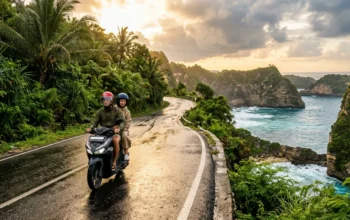


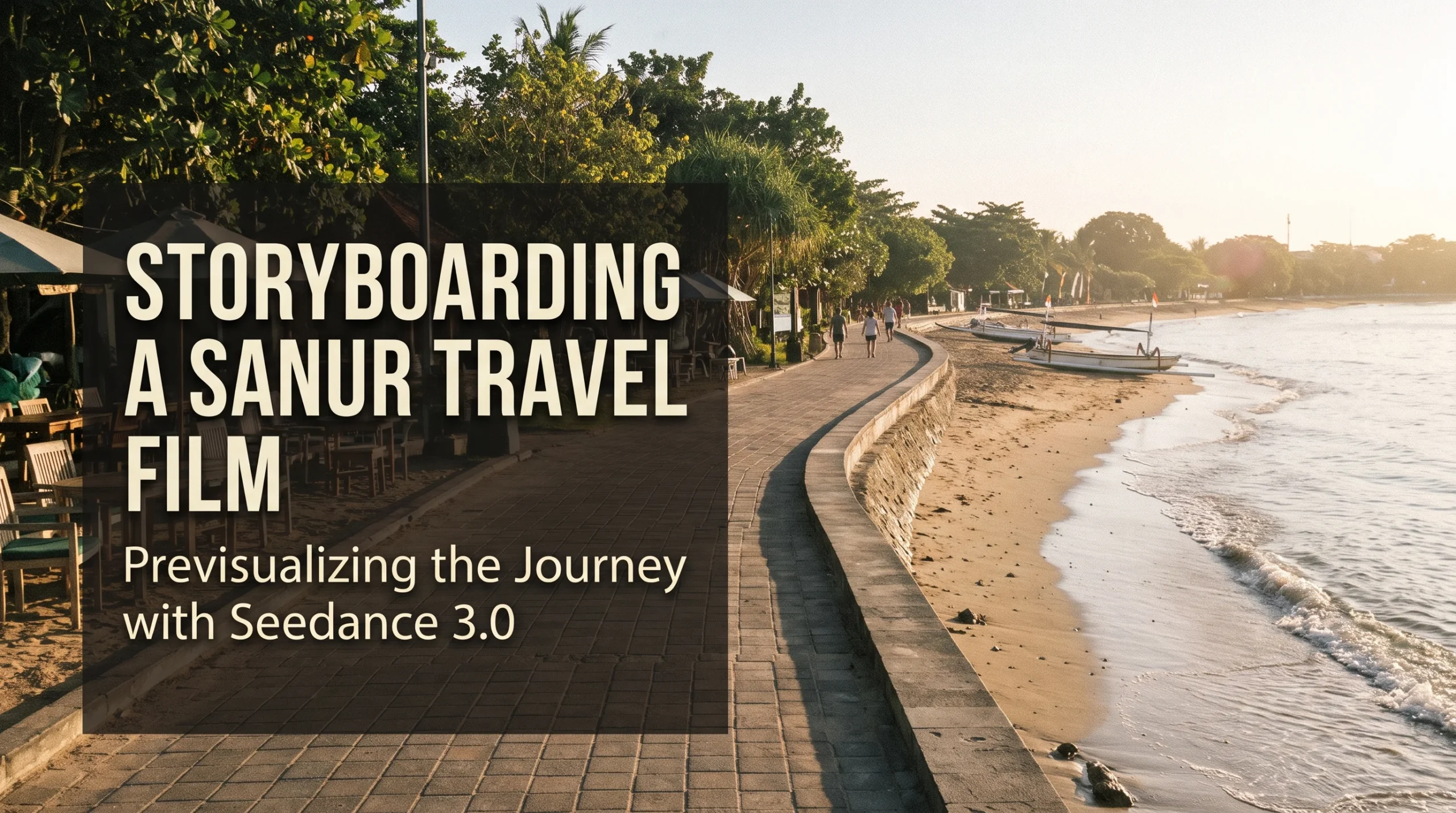
I’d set myself a narrow assignment for a first Sanur travel film: follow the change from a quiet shoreline to the first busy stretch of the path. The opening could be close enough to see small waves moving across the wet sand. Then the picture opens up and we find someone walking beside the water. Near the end, I want the light on the water to be bright enough to pull the eye back to the place where the film began. The route and footage come from the visit. I’d plan the sequence while I’m still packing the camera.
Begin With the Sound I Expect to Hear
My first frame would sit low at the edge of the beach, with the water rising just enough to soften an outline left in the sand. I’d let the sound of the wave arrive before the picture cuts to the shoreline. To previsualize that transition in seedance 3.0, I can combine a photo of an open beach, a video showing a slow lift of the camera and an audio clip of small waves. A prompt tells the model where the horizon should enter the frame. I’d make my real recording in Sanur and let its sound set the final timing.
I’d give that opening only one movement. The camera starts close to the sand and comes up as the water retreats. If the sketch turns into a wide aerial view, I’d make a shorter version and specify how little the lens rises. A low view can still show the distance to the horizon if I keep the foreground clear. Before filming, I’d check where I can set the camera without blocking anyone’s route along the beach.
Find a Reason to Cut to the Path
My second shot begins at walking height. I’d include a little of the sea at the edge of the frame so it’s obvious we’re still following the same stretch of shoreline. I can make the cut at the moment a wave withdraws and bring in the sound of a shoe on the path. If the two shots share a direction of movement, the switch in height feels easier to follow. I’d keep the lens pointed along the path for a second before looking out to the water again.
I’d preview two versions of that shot in Seedance 3.0. The first follows a person walking just ahead of the camera. The second keeps the camera fixed and lets the person pass through. I’m interested in whether the path looks like a place to walk or just another pretty background. If the following shot brings too much motion into the frame, I can film from beside the path, leaving room for the walker to move away from the camera. I’d film a companion or keep passersby in the distance.
Give the Middle One Everyday Detail
When I reach a place to stop, I’d look for something that belongs naturally to the morning. A cup goes down on an outdoor table. A hand turns it so the handle is easy to reach. For my rough sequence, that small action is a bridge from the moving shots to a wider view of the beach. I’d choose a table where I can still see the light in the direction we’ve been walking and ask before filming at a business.
To see whether that close-up can carry a cut, I’d make a Seedance 3.0 sketch from a plain photograph of a cup on a table. I can give the prompt a short hand movement and try it against the sound of a ceramic cup settling on wood. A close-up that shows only the cup and fingers leaves the real venue to the footage I bring back. If the texture of the table overwhelms the hand, I’d change the framing so the cup touches down in a patch of even light.
Leave Time for the Actual Morning
On the shoot, I’d begin by observing what the tide, light and traffic on the path are doing. The storyboard helps me know which images to look for, but I’d let the morning determine how to get them. In cloudy weather, a bright outline of sunlight on the water may never appear. A closing shot might instead show reflected light spreading underneath a cloud. I’d rather hold on that change for a moment than try to fit the morning to a drawing I made at home.
My Seedance 3.0 rehearsal for the last shot would be a wide view with the water occupying most of the picture. I’d keep a little of the path in the lower corner to bring back the earlier walk. In the edit, I can compare a gentle pan with a stationary frame. If the camera move has already carried two of the earlier shots, I’d finish on the stationary version and let the sea move on its own.
Put the Route Back Together in the Edit
I’d build a cut from the real sound before choosing any music. A wave recedes, steps enter, and a cup meets the table. The quieter sounds across the end of the sequence can leave room for the beach to return. If the Seedance 3.0 sketch suggested a cut that still works with the location audio, I’d keep that timing. If it feels rushed once the real water enters the frame, I can give it another second and shorten the cup shot instead.
Once I’ve replaced the Seedance 3.0 sketches with footage from the walk, I’d watch the final version with the travel article nearby. The words can identify the places and explain how the walk fits into a visit. The clip has one smaller job. It takes the viewer from the sound of a wave to the path, pauses over one everyday detail and leaves them looking out to sea. I’d end the video while the water is still moving. In the final seconds, I’d leave the sound of the shore audible and keep the location caption low enough to give the horizon the whole width of the screen.