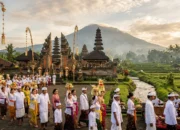


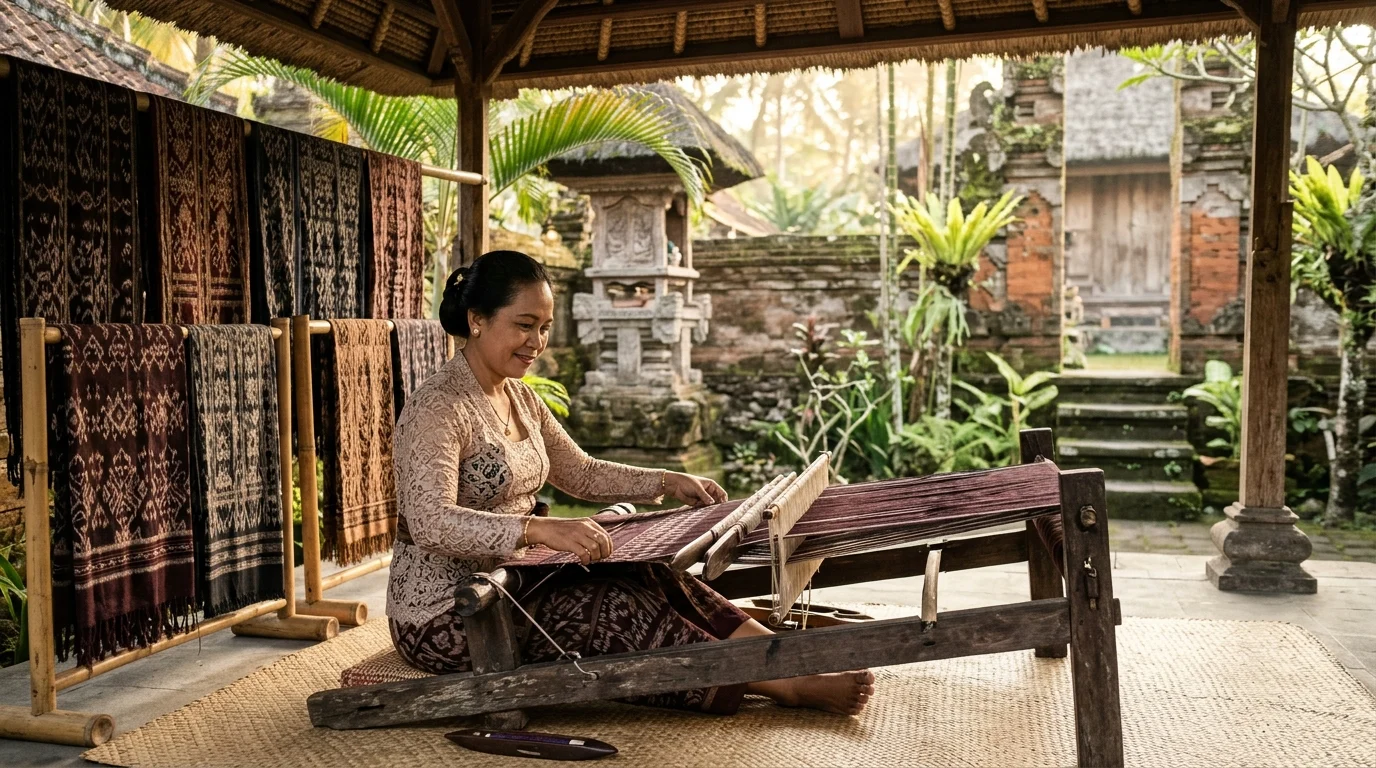
Behind the bustle of the southern coastal resorts, the pulse of Balinese culture at the end of November 2026 points to the heart of traditional villages and local artisans’ workshops. In the past week, public attention has focused on two main agendas: strengthening the woven fabric ecosystem through the Wastra Hita Kara movement and early preparations for the 2027 Bali Arts Festival (PKB), which once again places village classical arts as the foundation.
For travelers who want to understand Bali more fully, this moment is an important reminder. Buying a piece of woven cloth or watching a live art performance at its place of origin also supports the economy of traditional weavers against the influx of counterfeit products.
1. The Wastra Hita Kara Movement and Copyright Enforcement Starting 2027
The main highlight of the craft industry emerged through the eighth Dekranasda Bali Fashion Road Show “Wastra Hita Kara” Goes to Klungkung at Balai Budaya Ida Dewa Agung Istri Kanya on November 19, 2026. Quoting a report from Kabar18 about the Dekranasda road show in Klungkung, this event combined a fashion show featuring Klungkung endek, rang-rang, and Nusa Penida cepuk together with culinary MSMEs offering specialties such as serombotan and ledok.
Behind the fashion stage, there is a serious issue for the sustainability of Balinese clothing. Based on coverage by Bali Ilu regarding the strengthening of the Balinese wastra ecosystem, the market for Balinese-motif fabrics is still flooded with weavings from outside the region and factory-made printing fabrics that imitate motifs certified with Geographical Indication such as Gringsing and Endek. Therefore, the regional government together with Dekranasda plans to enforce copyright law on wastra more strictly starting in 2027 to protect the works of local weavers.
2. Bringing Traditional Village Arts to the PKB 2027 Stage and Historical Theater
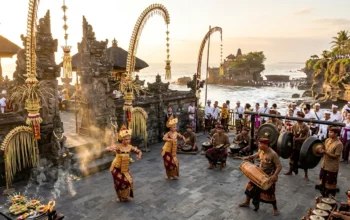
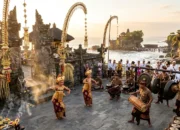
The commitment to preserving cultural roots is also rolling in the performing arts sphere. In the coordination meeting for the preparation of the 2027 Bali Arts Festival (PKB) at Jayasabha, Denpasar, the provincial government adopted the theme “Wana Kerthi” and gave about six months for district/city cultural offices to map classical arts that are rarely performed. As reported by JPNN Bali regarding the PKB 2027 theme Wana Kerthi, traditional village art works will be matured first through an art laboratory before being staged.
Meanwhile in North Bali, the Teater Selem Putih community staged the play “Berdjandji Bertempoer Teroes” in Buleleng on November 21, 2026 to commemorate the struggle of I Gusti Ngurah Rai. In a report by UpdateBali about the Teater Selem Putih performance, modern theater artists are also encouraged to combine elements of classical Balinese dance movement (agem, tandang, tangkis, and tangkep) to make their artistic character stronger.
3. Field Guide to Exploring Weaving Centers: Tenganan and Klungkung
To witness the weaving process directly and buy authentic cloth from the artisans, these two points in East Bali are ideal to visit in one day trip.
A. Tenganan Pegringsingan Tourism Village (Karangasem)
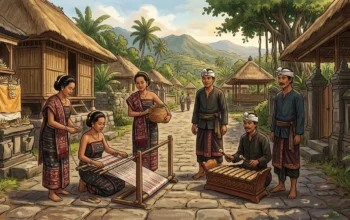
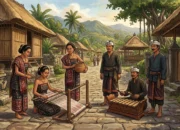
As an old Bali Aga village, Tenganan is the only place in Indonesia that preserves the double ikat technique to produce Gringsing Cloth. The process of tying the warp and weft threads and natural dyeing from mengkudu and candlenut roots takes months to years.
- Location & Access: Manggis District, Karangasem (about 65 km or 1.5–2 hours drive from Denpasar/Sanur towards Candidasa).
- Opening Hours & Best Time: Daily from 07:00–18:00 WITA. According to the guide from Bobobox about Tenganan Pegringsingan Village, come before 11:00 WITA when the air is still cool and weavers are actively working on the terraces of traditional houses.
- Field Fees (IDR): Entrance ticket or donation to the traditional village treasury Rp20,000–Rp25,000 per person, motorcycle parking Rp2,000, and car Rp5,000.
B. Endek Weaving Center & Klungkung Art Market (Semarapura)
About 35–40 minutes west of Tenganan, the center of Semarapura City in Klungkung is the main center for ATBM Endek cloth (Non-Machine Loom), Rang-Rang, and Cepuk Nusa Penida. Visit the artisan groups in Gelgel Village, Sulang Village, or the weaving stalls around Semarapura Market at 08:30–14:00 WITA so that natural lighting helps you check the fineness of the thread fibers.
4. Comparison of Original Balinese Wastra and Estimated Prices (IDR)
| Type of Wastra | Center Region | Production Technique | Estimated Original Price (IDR) | Main Distinguishing Features |
|---|---|---|---|---|
| Gringsing Cloth | Tenganan, Karangasem | Double ikat manual, natural dyes | Rp300,000 – Rp2,500,000 (small shawl); Rp3,000,000 – tens of millions (standard cloth) | Identical motifs on both sides, dense fibers, natural dye aroma |
| Standard Endek Cloth | Klungkung, Gianyar, Buleleng | Weft ikat weaving with ATBM | Rp120,000 – Rp250,000 per piece (±2 meters) | Motif edges with smooth gradation, back side still patterned |
| Special Endek / Silk | Klungkung (Gelgel, Sulang) | ATBM premium cotton, mastuli, or silk | Rp300,000 – Rp600,000+ per piece | Natural thread sheen, tight weave, and more supple drape |
| Cepuk & Rang-Rang | Nusa Penida (Klungkung) | Traditional geometric & porous weaving | Rp250,000 – Rp750,000 per piece | Contrasting red-yellow-white colors, thick thread texture |
A report by Detik Finance about the price of Gringsing weaving also notes that Gringsing cloth with rare motifs or antique collections of high historical value can reach tens to hundreds of millions of rupiah.
5. How to Recognize Authentic Weaving and Traditional Village Tourism Ethics
- Check the Back Side of the Cloth: Authentic ikat weaving shows equally strong colors and motifs on both the front and back, while printing fabric appears pale on the inside.
- Observe Color Boundaries (Feathering): Manual weaving always has a natural slight shift at the edges of the motif. Printing fabric looks too sharp, stiff, and uniform.
- Prepare Cash: Many senior weavers in traditional villages still prefer cash transactions, although some galleries have provided QRIS.
- Respect Traditional Village Ethics: Wear modest clothing covering shoulders and knees when entering Tenganan, ask permission before photographing weavers up close, and avoid touching looms or ceremonial facilities without the owner’s permission.
Frequently Asked Questions (FAQ)
1. What is the Wastra Hita Kara movement?
A fashion road show program by Dekranasda of Bali Province together with designers and local MSMEs to promote authentic Balinese weaving while encouraging copyright enforcement of regional wastra.
2. How much is the entrance fee to Tenganan Pegringsingan Village?
The entrance fee or traditional village donation is around Rp20,000–Rp25,000 per person, with motorcycle parking Rp2,000 and car Rp5,000.
3. Why is authentic Gringsing cloth much more expensive than Endek cloth?
Gringsing cloth uses the double ikat technique that ties both warp and weft threads before dyeing with natural dyes, so the making of one cloth takes months to years.
4. What is the theme and main focus of the 2027 Bali Arts Festival (PKB)?
PKB 2027 carries the theme Wana Kerthi with a focus on reviving traditional arts of traditional villages, especially classical dance and gamelan varieties that are rarely performed.