

If you happen to be on vacation in Bali during the Galungan and Kuningan holidays, you might encounter a unique sight on village streets or in front of residents’ houses. You will see a group of children or teenagers parading a figure resembling a Barong while enthusiastically playing gamelan. The atmosphere is lively, fun, but also feels magical. Well, this unique tradition is called Ngelawang.
For people outside Bali, Ngelawang might look like an art parade or an ordinary street performance. But for the Balinese, this is an ancestral heritage with deep spiritual meaning. Let’s delve deeper into what the Ngelawang tradition actually is!
What Exactly Is the Ngelawang Tradition?
Simply put, Ngelawang is the tradition of dancing the barong around the village, performed by a group of residents. If we break it down linguistically, the word “ngelawang” comes from the word lawang, which in Balinese means door or gate.
Why is it called that? Because in practice, the Barong is paraded on foot from one house to another, i.e., from door to door. This tradition is not just an art exhibition, but a sacred ritual believed by Balinese Hindus as a means to ward off misfortune, drive away evil spirits, and neutralize all negative influences in the surrounding environment.
When Is This Tradition Usually Held?
The Ngelawang tradition is not held arbitrarily every day. Its implementation time is very specific, namely during the series of Galungan and Kuningan holidays. Calculated based on the Balinese calendar, this tradition appears every six months (or about 210 days).
Usually, the Ngelawang parade starts to get busy on the streets in the days after Galungan until before Kuningan. This moment is chosen because the spiritual atmosphere in Bali is at its peak, where people celebrate the victory of good over evil.
The Deep Spiritual Meaning Behind the Festivity
Although the atmosphere looks festive and full of laughter, Ngelawang has a very important spiritual mission. Ngelawang is a tangible form of human effort to maintain the balance of the universe (Bhuana Agung) and humans themselves (Bhuana Alit).
When the Barong dances in front of residents’ houses, this ritual is believed to cleanse the environment of negative energies or “gering” (epidemics). This is very much in line with the meaning of Galungan, which is to strengthen the victory of dharma (goodness) against adharma (evil). Thus, the presence of Ngelawang becomes a protective blessing for the local village.
Barong Bangkung: The Main Star of Ngelawang
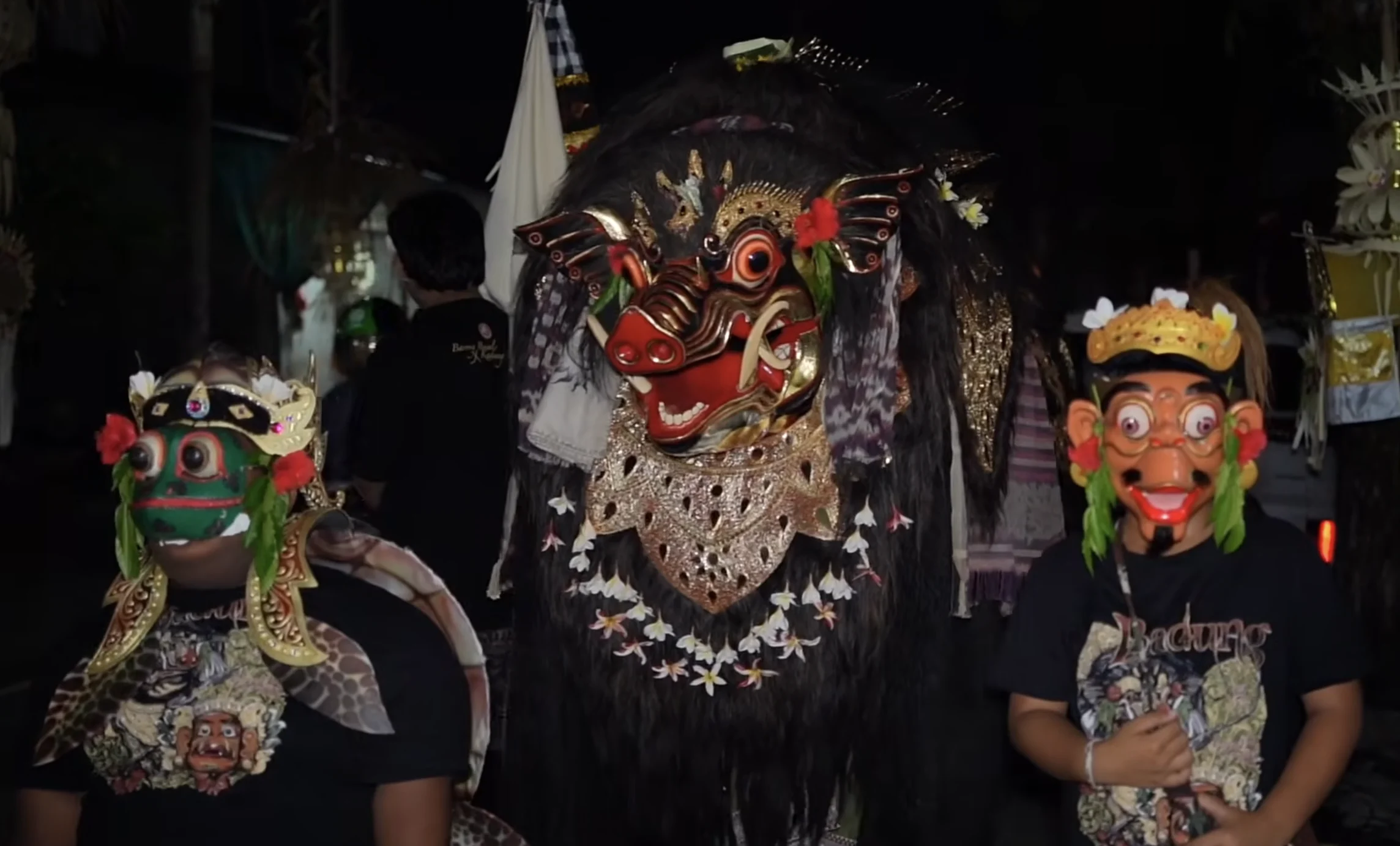
The type of barong used in the Ngelawang tradition is usually different from the Barong Ket often seen in large-scale formal dance performances. In Ngelawang, the most frequently appearing figure is Barong Bangkung.
Barong Bangkung is a barong that resembles a wild boar (bangkung). In Balinese mythology and culture, the Barong Bangkung figure is symbolized as a symbol of protection, fertility, goodness, and prosperity. Its sometimes humorous but dignified movement character makes its appearance always anticipated, especially by children.
This Is How the Ngelawang Procession Goes from House to House
The Ngelawang procession is usually driven by the younger generation, from children, teenagers, to a group of banjar members (village community group). They divide tasks: some are tasked with moving the Barong Bangkung, some carry ceremonial equipment, and there is a musician team playing simple gamelan like gamelan batel or bebonangan.
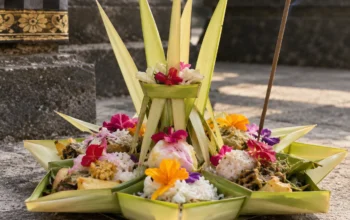
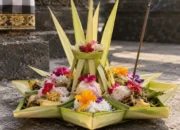
They will walk around the village area. Every time they pass in front of a resident’s house, the Barong will dance at the entrance. The homeowner who is visited usually prepares to welcome by offering offerings (canang) and giving a little money (sesari) as a form of gratitude and thanksgiving for the protective blessings brought by the Barong group.
More Than Just a Ritual: A Balinese Cultural Heritage
For the Balinese, Ngelawang is a complete package. This is not just about rigid religious rituals, but also an extraordinary vessel for cultural preservation. Through Ngelawang, traditional music (tabuh), dance, and barong-making arts remain alive from generation to generation.
Moreover, this tradition fosters a sense of togetherness, mutual cooperation, and strong solidarity among villagers from an early age. Children learn to work together as a team in a fun way.
Ngelawang Then vs. Ngelawang Now
Times keep changing, and so does the face of the Ngelawang tradition. In the past, Ngelawang was purely very sacred and only performed when the village was hit by an epidemic or thick negative aura. The barong used had to be a barong consecrated in the temple.
In the modern era like now, there has been a slight positive shift. Ngelawang is now also developed as a cultural attraction and creative performing art. The barong used is often a replica barong specially made for children’s practice. As a result, tourists can now also enjoy the beauty of this tradition on tourist streets, without losing its original spiritual value for the local community who still welcome it with prayers.
Ethical Guide for Tourists Who Want to Watch
Seeing the Ngelawang procession directly is certainly a very memorable holiday experience. However, because it is rooted in religious rituals, there are some basic ethics that you must follow:
Dress modestly: Wear closed clothing to respect the ritual proceedings.
Do not block the path: Give enough space for the Barong group and gamelan players so they can walk and dance freely.
Ask permission before taking photos: Taking photos or videos is allowed, but keep a safe distance and do not let your camera disturb the dancers’ focus.
Do not touch the Barong carelessly: For locals, the Barong is a sacred symbol, so avoid holding or touching any part of the barong without permission from the carriers.
Respect local residents: If residents are solemnly giving offerings in front of their house, give them space and peace.
By maintaining these ethics, you not only bring home great photos but also contribute to preserving the noble traditions of the Balinese people. Enjoy the beauty of the Island of the Gods’ culture!